Get Full Government Meeting Transcripts, Videos, & Alerts Forever!
Get email alerts on the Agriculture Buildings Exemption topic
No spam. Unsubscribe anytime.
Subcommittee delays bill to expand farm-building contractor-license exemption from 5,000 to 50,000 sq ft
Summary
A House Business and Commerce subcommittee heard testimony on a bill that would change an exemption from a 5,000-square-foot limit to 50,000 for certain agricultural and portable storage buildings, then voted to continue the measure after debate about life-safety and electrical oversight.
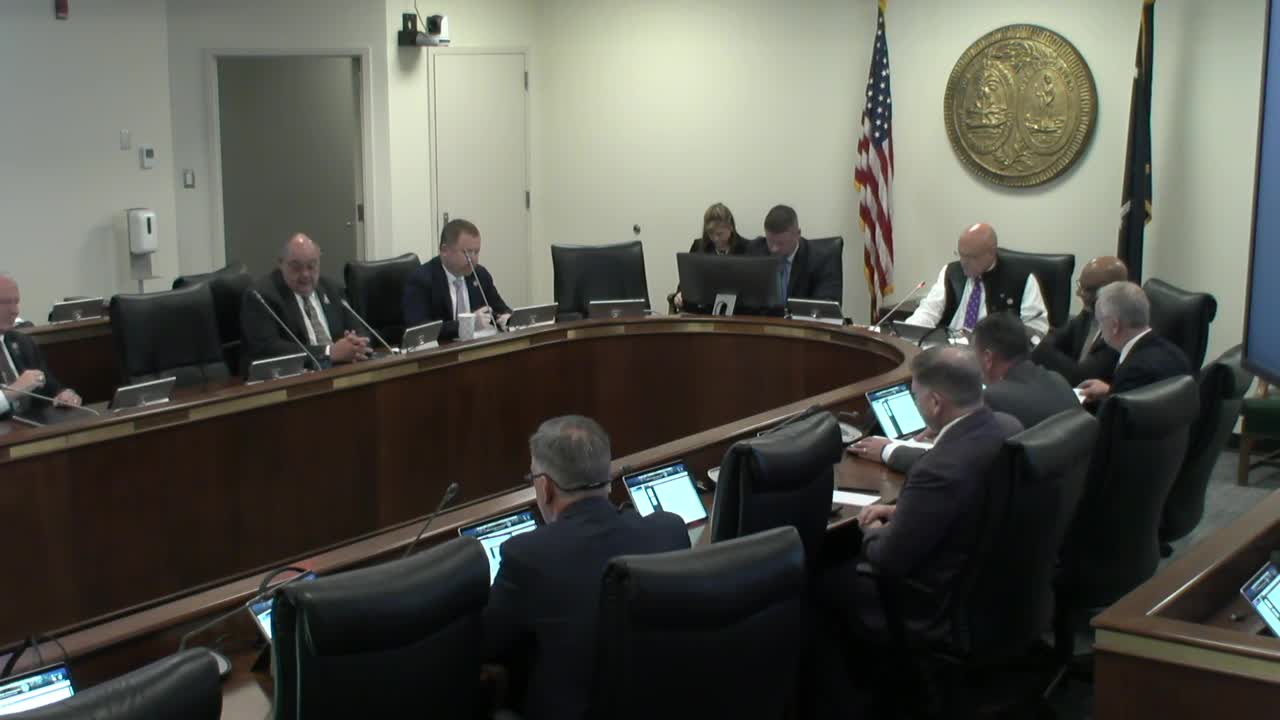
The Business and Commerce Subcommittee of the House Labor, Commerce and Industry Committee on March 5 heard testimony on a bill (filed as 40-11-360 amendment, referred to by sponsor as bill 3946) that would raise the floor-area threshold for a contractor-license exemption for certain farm buildings from 5,000 square feet to 50,000 square feet. The subcommittee voted to continue consideration of the bill.
The bill’s sponsor, Representative McCabe, told the subcommittee the change would let farmers perform work on large nonresidential farm structures without hiring a licensed contractor. McCabe said current South Carolina law already exempts many farm structures from national building codes under what he cited as “6-9-65,” and that extending the contractor-license exemption to 50,000 square feet would align the license requirement with that broader code exemption. “This is not a building or an office used for habitation,” McCabe said, describing the structures as used for livestock, poultry or storage.
The subcommittee’s architect-member, Representative Chapman, urged caution on safety grounds. Chapman described how building classification under the International Building Code (ICC) affects fire resistance and exit requirements and said life-safety concerns—especially electrical systems—make a broad exemption risky. Chapman said county building offices confirmed they typically do not require permits for agricultural structures, but that structures over 5,000 square feet often trigger electrical permitting and inspection. She noted that some poultry houses are financed and built to lender or integrator standards and therefore undergo inspections, but warned that a blanket increase to 50,000 square feet was excessive: “Going to 50,000, I think it’s excessive. I think it gets into a life-safety issue.”
A committee member who described having installed a “red iron” building on a farm said his local inspector required a permit because the structure would include power and be used as a shop for equipment repair, illustrating that counties interpret exemptions differently. Chapman pointed out that the meeting room’s footprint is roughly 33,000 square feet to illustrate the scale of a 50,000-square-foot exemption.
After discussion, a motion to continue the bill was made, seconded and approved; the subcommittee chair announced the bill would be continued for now.
The subcommittee did not adopt the bill or amend its text during the hearing. Witnesses and members raised unresolved questions about (1) where life-safety requirements such as exits and fire-resistive construction would apply if a contractor-license requirement is removed, (2) how counties are currently enforcing or interpreting the existing exemptions, and (3) whether the proposed change would have unintended effects where lenders, integrators or insurance require standards for financed buildings. Those topics were identified as reasons to carry the bill forward for further study rather than advance it at this hearing.
The hearing record shows the issue arose during the committee’s agenda item on bill 3946 and that Representative McCabe and Representative Chapman were principal speakers on the topic. The subcommittee scheduled no vote to enact the statutory change at this meeting and instead continued the item for further consideration.