Get Full Government Meeting Transcripts, Videos, & Alerts Forever!
Get email alerts on the Fentanyl Induced Homicide topic
No spam. Unsubscribe anytime.
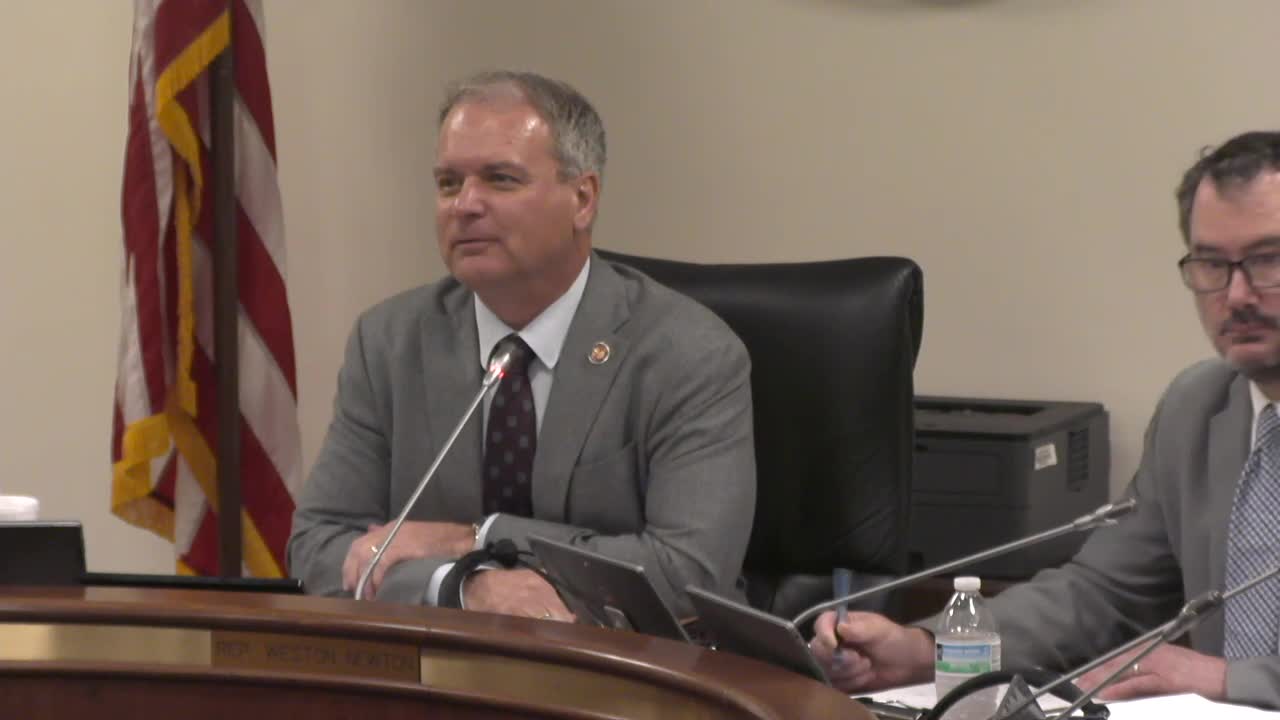
Subcommittee adopts amendment and advances fentanyl-induced homicide measure after debate over scope and causation
Summary
A House Judiciary subcommittee adopted an amendment to a fentanyl-induced homicide bill and gave the measure a favorable report after witnesses, prosecutors and the coroner urged changes to the wording to reach dealers while avoiding unintended prosecutions of peers and family members.
The Bridal Law Subcommittee on the Judiciary advanced legislation aimed at creating a fentanyl-induced homicide offense, adopting an amendment intended to target drug dealers while narrowing the causation standard that prosecutors must prove.
The committee reconvened after an earlier 9:00 a.m. session and took testimony on House Bill 3,591 (the transcript also refers to a later committee action referencing House Bill 3,924). Representative Jeffrey Rose offered an amendment that inserts "in exchange for anything of value" into a trafficking-related subsection and replaces the term "proximate cause" with "direct cause." The amendment was adopted; the committee then gave the bill a favorable report as amended.
Why it matters: supporters say the provision creates a tool to hold traffickers accountable for overdose deaths from fentanyl and fentanyl-laced products, while opponents and some prosecutors warned narrow wording could make convictions difficult or exclude deaths involving multiple substances. Family members urged enactment now; public-safety and forensic witnesses said the drug supply has grown more complex since earlier versions of the bill.
What the amendment does and why committee members changed it Representative Rose described the amendment as returning to language the committee approved last session, adding the phrase "in exchange for anything of value" to reach sellers who accept money or other items and swapping "direct" for "proximate" causation to tighten the prosecutor's burden. Rose said those changes "get at the drug dealers" and mirror language the House passed previously.
Solicitor Newman of Lancaster County, who testified for prosecutors, told the committee that "as written, this bill is is, in my mind, almost unusual unusable for prosecutors," arguing the bill's original wording could leave prosecutors without an effective charge. Newman asked the committee to consider either removing the requirement that the seller "knowingly" supplied fentanyl or broadening the statute to "controlled substance," saying overdose fatalities often involve mixtures of drugs.
Prosecutors and defense concerns about causation and proof Jennifer Wells, a former assistant solicitor and federal prosecutor now in private practice, supported the amendment. Wells said the goal is to "hold the person accountable who was responsible for that death and that person is always the drug dealer." She told the committee that making causation "direct" rather than "proximate" would reduce defense challenges about what "proximate" means in complex factual scenarios and help focus prosecutions on cases in which toxicology links the death to fentanyl.
Several lawmakers pressed witnesses on the practical effects of the word "direct." Representative Bailey asked whether a chain of medical events (for example, a cardiac arrest followed by pneumonia) could fall outside the statute if the death was not immediate. Representative Pope said medical examiners' reports often list a chain of events — which can make a strict "direct" standard narrower than prosecutors want.
Forensic evidence: fentanyl often co-occurs with other drugs Carla Deese, Lancaster County coroner, said fentanyl increasingly appears alongside other substances. "In 2022, the sole cause ... fentanyl intoxication ... 25 percent of them were only fentanyl. In 2023, that moved down to 17 percent. In '24, it moved down to 10 percent," Deese testified. She said mixed-drug deaths rose to roughly 90 percent of cases in 2024 and listed common co-occurring substances as xylazine, benzodiazepines, gabapentin and methamphetamine.
Family advocates urge broader or faster action Family members who lost relatives urged passage. Crystal Craft, a social worker and grieving mother, said investigators sometimes fail to pursue leads and pressed lawmakers to create a homicide charge for overdose deaths. "My son's death certificate should say homicide because he was murdered, poisoned by fentanyl," Craft told the committee.
Other advocates asked the committee to expand the statute beyond fentanyl. Holly Alserbrooks, co-founder of the York County group Fentanyl Kills You, said jurisdictions are seeing rising deaths from nonfentanyl mixtures and asked, "Why can't it be any controlled substance?" Lisa Catalanado (transcript: "Catalanado"), director of the South Carolina Commission on Prosecution Coordination, suggested alternative wording such as "provides fentanyl or any substance that contains fentanyl" or simply "controlled substance," but she acknowledged the committee's stated charge was limited to fentanyl.
Committee action and votes - Amendment: "Rose Amendment" (adds "in exchange for anything of value" and replaces "proximate cause" with "direct cause"). Motion to adopt the amendment was made and adopted by voice vote. - Final committee disposition: the committee ordered a favorable report on the bill as amended. A roll call was held; the transcript records the following votes: Chairman Johnson — Aye; Representative Bailey — Aye; Representative Robbins — Aye; Representative Rose — Aye. The committee announced the bill as "favorable as amended." The transcript does not list any votes opposed or abstentions.
What remains unsettled Witnesses and legislators flagged two unresolved drafting issues: whether the statute should be limited to fentanyl or extend to other controlled substances, and whether "direct" causation is too narrow in cases where the overdose begins a chain of events that leads to death days later. Several members suggested staff draft follow-up language for consideration in full committee. Representative Rose and Representative Robbins said they plan to present the amendment to the full Judiciary Committee for further consideration.
The committee's action moves the amended bill to the next stage of legislative consideration. Committee members said they intend to continue refining language to avoid unintended consequences while creating a tool prosecutors can use in overdose-related deaths.