Get Full Government Meeting Transcripts, Videos, & Alerts Forever!
Get email alerts on the Public Health Capacity topic
No spam. Unsubscribe anytime.
New Department of Public Health seeks staff and systems upgrades for facility oversight, moms and infectious diseases
Summary
Interim DPH director Dr. Edward Simmer asked the Senate Finance subcommittee for staffing and IT investments to speed facility complaint response, expand maternal health access with a mobile maternity unit and public education, and add frontline staff for tuberculosis, STIs and rabies response, plus IT modernization.
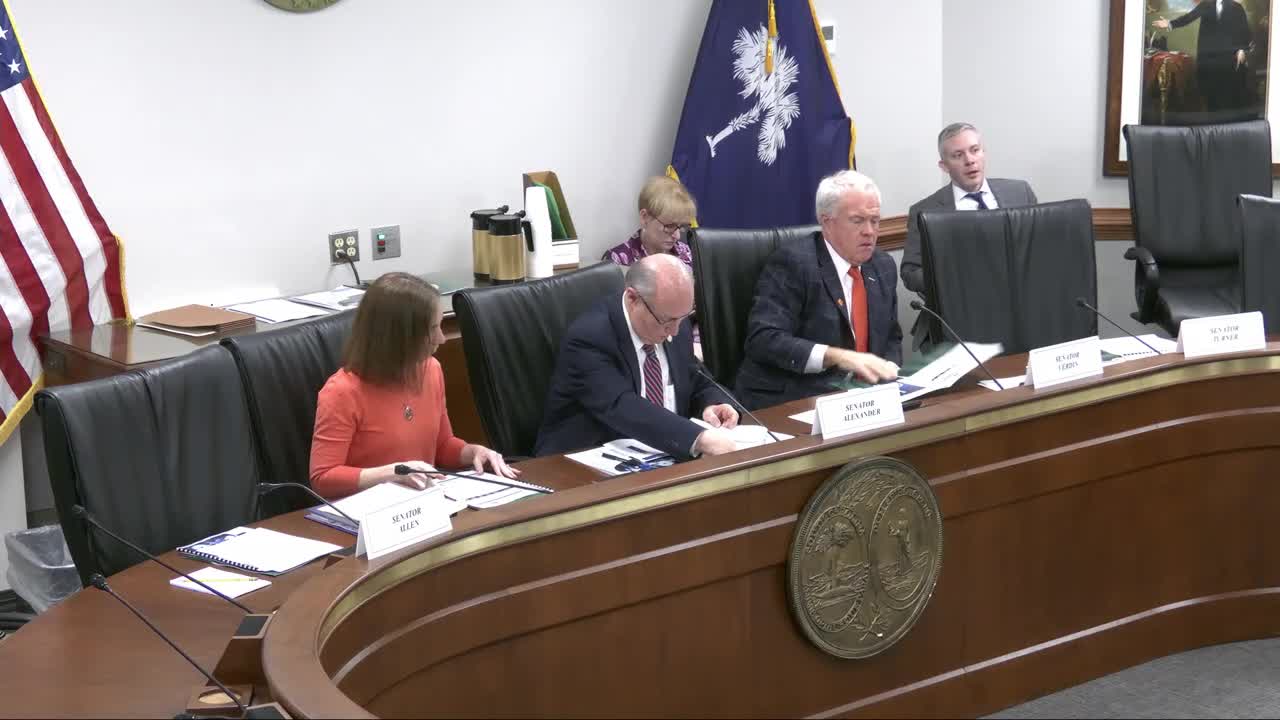
Dr. Edward Simmer, interim director of the newly formed Department of Public Health, presented four prioritized budget requests to the Senate Finance subcommittee on March 5 aimed at rebuilding public‑health capacity across inspection, maternal health, infectious disease response and IT.
Simmer said federal grants make up about 47% of the department’s funding and that, to date, those grants have not been interrupted. He described a first‑priority package to strengthen health‑care facility safety: 22 new FTEs, funding for eight existing FTEs that were previously unfunded, and $4,600,000 recurring to reduce complaint response times and expand evening and weekend unannounced inspections. “Our goal is to have every complaint addressed within 30 days,” Simmer said, noting current response times range from about 50 to 77 days depending on facility type.
The request also funds collaborative improvement teams that work proactively with facilities and aims to improve recruitment and retention of field inspectors by adjusting schedules so inspectors spend three weeks on the road and one week in the office for training, paperwork and time at home.
Simmer’s second priority focused on maternal and infant health. He described last year’s mobile maternity unit procurement and requested $1,250,000 recurring to operate it; the unit will provide prenatal and postnatal care, basic ultrasound, lactation support and mental‑health and substance‑use screening, and the department intends to contract operation to a major health system. Simmer also asked for $1,400,000 one‑time funding for a statewide expansion of the Hear Her public‑education campaign to teach pregnant women and families to recognize warning signs that should prompt urgent care.
The third package asked for 21 new FTEs, support for nine existing FTEs and $4,300,000 recurring to strengthen frontline public‑health response in tuberculosis, sexually transmitted infections (including a sharp increase in syphilis and congenital syphilis) and rabies control. Simmer said the state has seen about a 40% increase in active TB cases, a 55% rise in latent TB, an 80% increase in syphilis and an 800% rise in congenital syphilis; he described the work as labor‑intensive because TB treatment requires months of directly observed therapy and STI control depends on contact tracing.
Finally, the department requested $16,100,000 one‑time for IT modernization, citing legacy systems dating to the 1970s that create downtime, manual work and cybersecurity risk. Simmer said modernization would enable public posting of facility inspection reports and improve billing, data collection and security.
Committee members pressed on program choices and outcomes. President Alexander and other senators expressed interest in nurse‑family and in‑home models for maternal supports; Simmer said the department will work with the committee to evaluate models and emphasized immediate prenatal access via the mobile unit as a high priority.
Simmer said the department would notify the committee if federal grant conditions change and that the WIC program will bring a separate federal authorization increase of $12,000,000 that the agency will request permission to use. The committee did not take votes during Simmer’s presentation but signaled follow‑up on IT details, safe‑sleep outcomes and maternal‑health delivery models.