Get Full Government Meeting Transcripts, Videos, & Alerts Forever!
Get email alerts on the Public Health Emergency Law topic
No spam. Unsubscribe anytime.
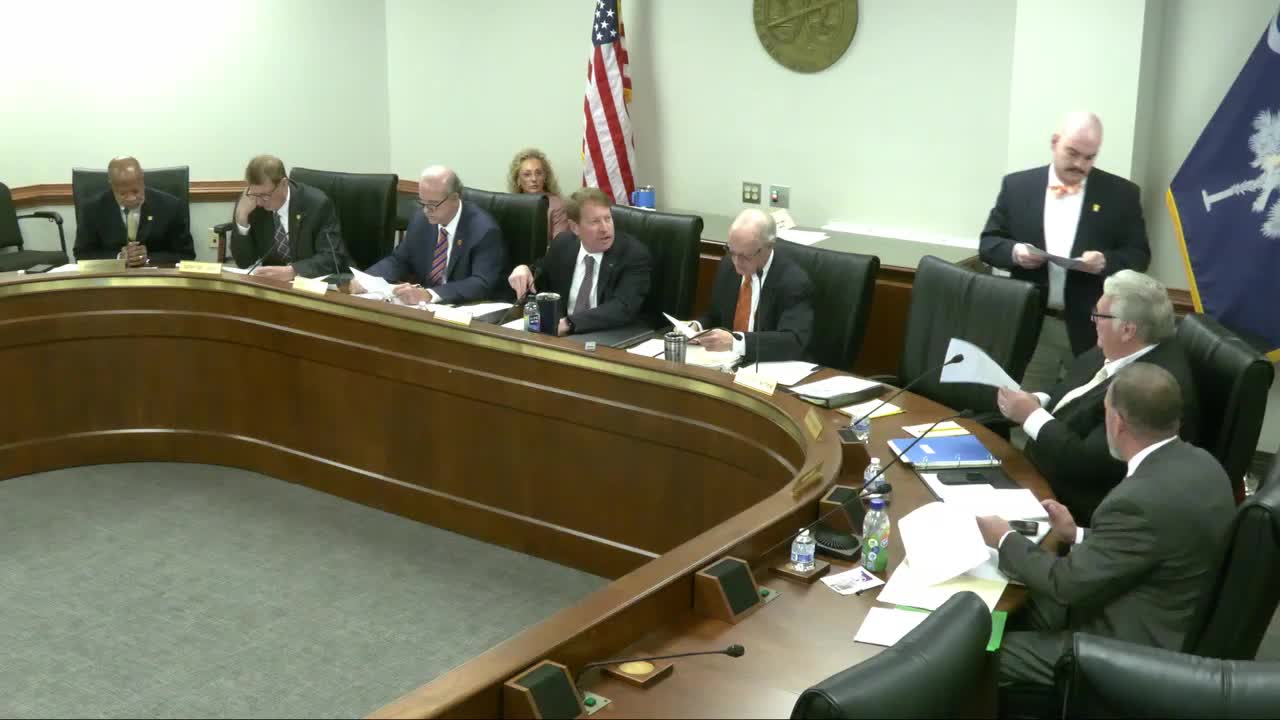
Medical Affairs panel approves changes to SB54 on vaccines, pharmacist refusals and quarantine limits
Summary
The Senate Medical Affairs Subcommittee voted to advance Senate Bill 54 with five amendments that clarify the childhood vaccination schedule, narrow the governor—s emergency powers, set limits on quarantine periods, and modify pharmacist refusal rules during declared public health emergencies.
The Medical Affairs Subcommittee voted to send Senate Bill 54 to full committee after adopting five amendments that clarify K-12 vaccination language, tighten definitions of the Department of Public Health—s authority, change how pharmacist refusals are handled during a declared public health emergency and set a limit on asymptomatic quarantine.
The amendments dropped the term "novel vaccine" from the bill nd adjusted sections affecting the K-12 immunization schedule, a move the chair said was made after pediatricians raised concerns the original wording could interfere with the Department of Public Health—s authority to set the childhood vaccination schedule. The chair told the committee the first amendment "cleans all of that up" and the panel adopted the amendment by voice vote.
Why it matters: Lawmakers said the changes were intended to preserve health-department discretion over routine childhood immunizations while creating specific limits when the state faces an emergency.
Substantive changes and debate
Amendment 1: K-12 vaccination language and "novel vaccine" The first amendment removed language the panel and several pediatricians said had created confusion about whether routine childhood shots could be affected. The chair explained the amendment "drops the term novel vaccine" so that the Department of Public Health can "keep its current childhood vaccination schedule and make recommendations," while requiring a separate assessment before any new vaccine may be mandated.
Amendment 2: Pharmacist refusal during public health emergencies A later amendment revised the bill—s language on a pharmacist—s right to refuse to fill prescriptions. As amended, a pharmacist may refuse to fill a prescription in ordinary circumstances, but the bill prevents refusal when a drug is FDA-approved and prescribed off-label to treat an infectious or life‑threatening illness during a state-declared public health emergency. The chair explained the change arose from the COVID experience and said the intent was to allow patients timely access to an FDA‑approved drug their doctor prescribes during an emergency.
Committee members raised multiple concerns: the senator from Williamsburg asked whether the amendment would require a pharmacist to fill a prescription in cases where the pharmacist believes the drug would "do more harm than good." The chair replied the restriction would apply only during a declared public health emergency and only for FDA‑approved drugs used off‑label for the emergency illness.
A separate amendment forwarded by Senator Garrett would require a pharmacist who refuses to fill a prescription to make and document an attempt to contact the prescribing physician; committee members discussed whether that additional detail should instead be handled by regulation rather than statute. The subcommittee did not adopt Garrett—s amendment on the floor of the subcommittee but the language was circulated for further consideration.
Amendment 3: Definition of "department" The subcommittee voted to strike language that would have defined "Department" as the Department of Public Health "or any person authorized to act on behalf of the department." The chair said the language risked conscripting power to persons not employed by the department and could be read as expanding quarantine/isolation authority beyond the agency.
Amendment 4: Narrowing grounds for a governor—s emergency declaration Another amendment moved the placement of the phrase "widespread illness" in the statute and clarified that the governor—s authority to declare a public health emergency must be tied to a condition with a "high risk of human fatalities" or an "incidence of permanent or long-term disability," not solely to the fact of widespread illness. Senators debated that change at length: some said it would prevent declaring an emergency for a run-of-the-mill influenza season; others cautioned against tying the governor—s hands in a fast-moving novel outbreak. The chair said the amendment was intended to prevent misuse of emergency powers while preserving the governor—s ability to act when fatalities or long-term disability are likely.
Amendment 5: Quarantine limits The subcommittee adopted an amendment that requires asymptomatic quarantined individuals be released after 21 days or at the end of the disease—s incubation period, whichever is sooner. The chair and staff said the 21‑day limit was selected after consultation and that the Department—s existing processes could extend isolation or quarantine in extraordinary circumstances and seek judicial review or other statutory routes if a longer period were truly required. One senator recorded a no vote on this amendment, but the amendment passed and was folded into the version forwarded to full committee.
Final action
After adopting the amendments by voice votes, the subcommittee voted to give SB54 a favorable report as amended and move the bill to full committee.
Public testimony and expert comment
The chair opened the meeting by noting the subcommittee had taken public testimony at a prior meeting and that pediatricians including Dr. Jonathan Brock and Dr. Shanna Ege had expressed concerns. When the amended bill passed, the chair invited comments from those who had testified earlier.
Dr. Robert Jackson, a physician from Spartanburg who testified during the pandemic, spoke briefly after the vote. He described his clinical view that patients value "their personal autonomy" and criticized pandemic-era mandates. Jackson said his policy in practice had been to delay novel vaccines to observe safety data, and he told the committee, "My patients value the ability to say no to a vaccine," and that the bill "protects the rights of patients to say no and have informed consent."
What the subcommittee did not decide
The panel debated but did not adopt, at least at subcommittee, a comprehensive statutory scheme for pharmacy refusals that some pharmacists sought; senators suggested many implementation details could be handled through regulation or board policy rather than statute. The Garrett-drafted documentation requirement was circulated but committee members suggested taking that language to full committee or pursuing it through regulation.
Votes at a glance
- Adopted amendment 1 (clarify K-12 vaccination schedule, drop "novel vaccine"): passed by voice vote - Adopted amendment 2 (pharmacist refusal rules for declared public health emergency; FDA‑approved drugs used off‑label cannot be refused during an emergency): passed by voice vote - Adopted amendment 3 (strike "any person authorized to act on behalf of the department" from "department" definition): passed by voice vote (mover: Senator from Greenville; second: Senator from Charleston) - Adopted amendment 4 (clarify emergency declaration requires high risk of fatalities or long-term disability): passed by voice vote - Adopted amendment 5 (release asymptomatic quarantined individuals after 21 days or at incubation end): passed by voice vote; one recorded no vote - Motion to give SB54 a favorable report as amended and move to full committee: passed by voice vote
Ending
The subcommittee advanced SB54 with the stated objective of balancing individual autonomy and public health authority; members signaled additional work on regulatory details would likely continue in full committee and through agency rulemaking.