Get Full Government Meeting Transcripts, Videos, & Alerts Forever!
Senate subcommittee hears broad challenges to House Bill H.3309 on energy planning, rates and oversight
Summary
A state Senate energy subcommittee received competing testimony on House Bill H.3309, debating changes to integrated resource planning, rate design, energy efficiency, wholesale market participation and regulatory oversight. Witnesses warned the bill could shift costs to residential ratepayers and weaken consumer protections unless amended.
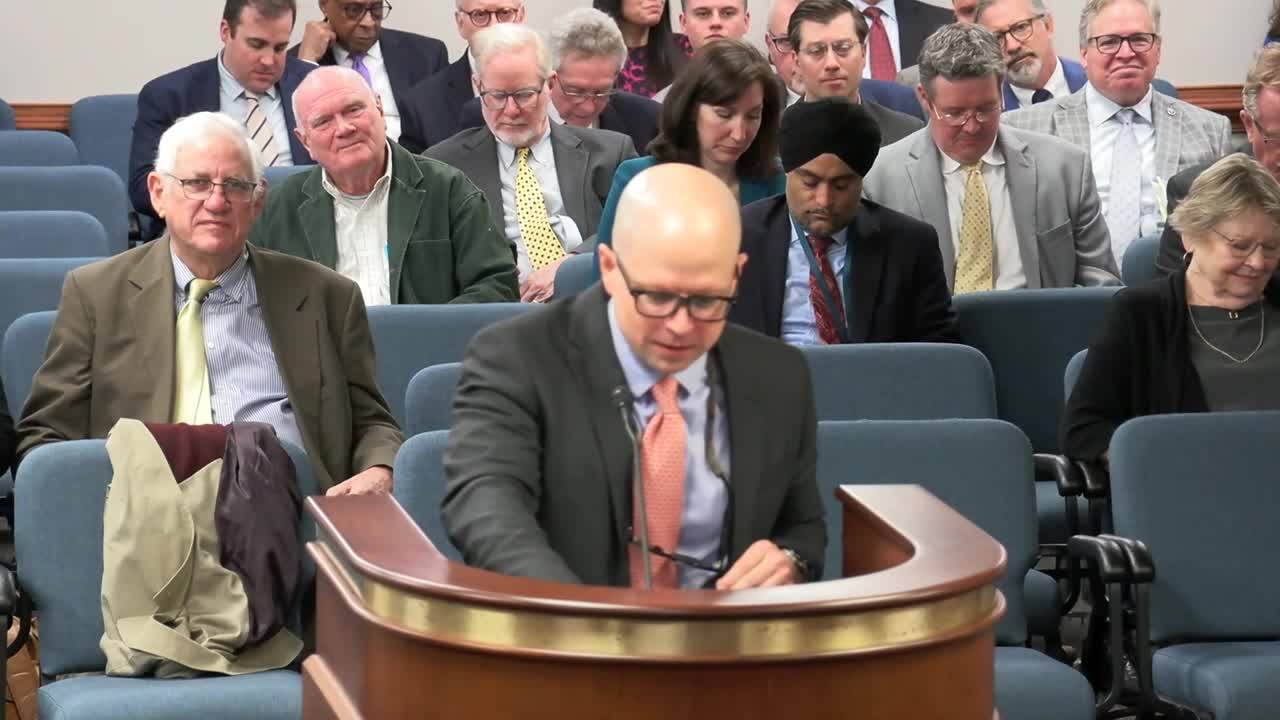
At a South Carolina Senate energy subcommittee hearing, lawmakers heard extended testimony about House Bill H.3309, an omnibus energy bill that would change how utilities plan, procure and price electricity in the state.
The bill drew sharply different views from conservation groups, solar developers, consumer advocates and utility-sector allies. Taylor Allred of the Coastal Conservation League said H.3309 "will increase ratepayers' risk of paying higher bills than necessary and delay the growth in clean energy resources" unless amended to protect customers and speed transmission planning. Hamilton Davis, vice president of regulatory affairs for EnergyRe and board member of the Carolina's Clean Energy Business Association, said the industry supports competitive procurement tied to approved integrated resource plans and argued for predictable rules that let regulators and markets find the lowest-cost options.
Why it matters: H.3309 would affect long-term planning and near-term costs for residential customers and large industrial users alike. Witnesses said the bill touches integrated resource planning (IRP) assumptions, rate-making for new large customers, energy efficiency targets, wholesale-market participation and permitting timelines — all levers that can change who pays for new capacity and how quickly new resources are added.
Key discussion points
- Resource planning and modeling: Allred urged stronger load‑forecasting and modeling requirements so utilities include large customers' clean-energy needs in…
Already have an account? Log in
Subscribe to keep reading
Unlock the rest of this article — and every article on Citizen Portal.
- Unlimited articles
- AI-powered breakdowns of topics, speakers, decisions, and budgets
- Instant alerts when your location has a new meeting
- Follow topics and more locations
- 1,000 AI Insights / month, plus AI Chat