Get Full Government Meeting Transcripts, Videos, & Alerts Forever!
Get email alerts on the Energy Policy topic
No spam. Unsubscribe anytime.
Senate subcommittee hears broad challenges to House Bill H.3309 on energy planning, rates and oversight
Summary
A state Senate energy subcommittee received competing testimony on House Bill H.3309, debating changes to integrated resource planning, rate design, energy efficiency, wholesale market participation and regulatory oversight. Witnesses warned the bill could shift costs to residential ratepayers and weaken consumer protections unless amended.
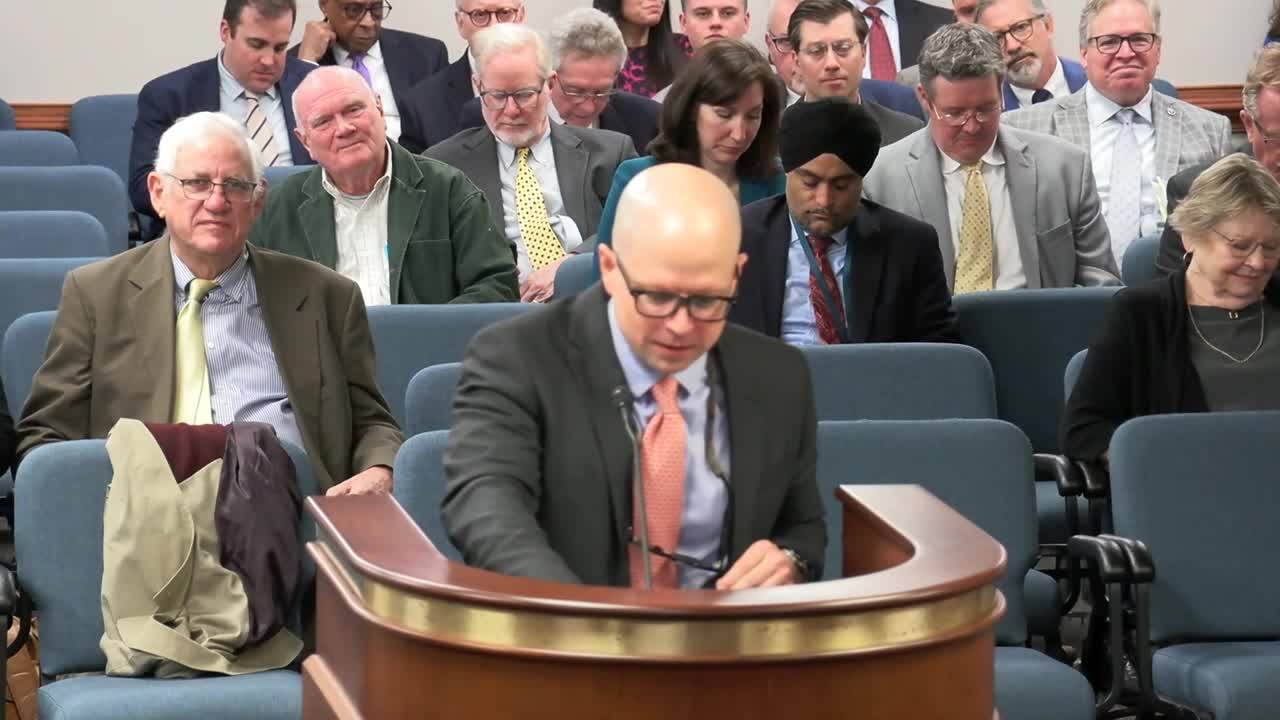
At a South Carolina Senate energy subcommittee hearing, lawmakers heard extended testimony about House Bill H.3309, an omnibus energy bill that would change how utilities plan, procure and price electricity in the state.
The bill drew sharply different views from conservation groups, solar developers, consumer advocates and utility-sector allies. Taylor Allred of the Coastal Conservation League said H.3309 "will increase ratepayers' risk of paying higher bills than necessary and delay the growth in clean energy resources" unless amended to protect customers and speed transmission planning. Hamilton Davis, vice president of regulatory affairs for EnergyRe and board member of the Carolina's Clean Energy Business Association, said the industry supports competitive procurement tied to approved integrated resource plans and argued for predictable rules that let regulators and markets find the lowest-cost options.
Why it matters: H.3309 would affect long-term planning and near-term costs for residential customers and large industrial users alike. Witnesses said the bill touches integrated resource planning (IRP) assumptions, rate-making for new large customers, energy efficiency targets, wholesale-market participation and permitting timelines — all levers that can change who pays for new capacity and how quickly new resources are added.
Key discussion points
- Resource planning and modeling: Allred urged stronger load‑forecasting and modeling requirements so utilities include large customers' clean-energy needs in IRPs and to avoid stranded assets if customers procure power elsewhere. He urged iteration between transmission and generation planning to reduce overall system costs.
- Rate design and large customers: Witnesses recommended rate reforms so large new customers pay their incremental cost rather than shifting capital costs to existing customers. John Ruth, representing AARP, said, "our principal concern really lies with rates and rate shifting onto residential consumers," arguing that discounts to attract industry are likely to raise bills for households unless ring‑fenced.
- Wholesale market and fuel-cost risk: Multiple witnesses urged reforms to allow limited wholesale competition and participation in an energy imbalance market (EIM). They also urged a fuel-cost sharing mechanism so investor‑owned utilities would share some difference between estimated and actual fuel costs with customers, reducing the incentive to over‑invest in gas plants that expose ratepayers to volatile fuel prices.
- Energy efficiency and third‑party administration: H.3309 would direct studies of third‑party administrators for efficiency programs. Allred said ORS (Office of Regulatory Staff) should study implementation mechanics and that minimum annual energy‑savings targets should be added.
- Procurement, siting and appeals: Industry witnesses urged statute to require competitive procurement for renewables and storage identified in approved IRPs. Developers said recent changes to appellate standing and limits on intervenor and expert testimony could reduce transparency. Hamilton Davis warned that changes to the definition of standing could have "unknown implications for the ability of affected parties to appeal." Several witnesses urged keeping local land‑use authority for solar siting rather than moving decisions wholesale to the Public Service Commission.
- Consumer protections and ORS mission language: Multiple witnesses opposed restoring or broadening ORS's directive to consider utilities' financial health in ways that could tilt oversight toward utility investors rather than consumer interests; Frank Knapp and others called that a rollback of reforms adopted after the VC Summer experience.
Numbers and evidence cited
- A Telos Energy transmission analysis referenced during testimony estimated Dominion ratepayers could save $231,000,000 by limiting a proposed large plant at Kennedy's to 600 megawatts and siting battery storage at another retiring coal site (source cited by witnesses).
- The U.S. Energy Information Administration was cited for a short‑term outlook that estimated gas burned in U.S. power plants could cost about 24% more this year than last year.
- Industry testimony said South Carolina has roughly 2,300 megawatts of installed solar and that utilities may reach 20–25% of system energy from solar over the next decade under current plans; developers said that would use a small share of agricultural land (figures provided by industry witnesses).
Stakeholder positions
- Conservation groups (Coastal Conservation League, Southern Environmental Law Center) recommended tighter safeguards on rate impacts, stricter IRP constraints and protections for communities near proposed large plants.
- The solar industry and developers pressed for statutory authority for competitive procurement tied to approved IRPs, greater predictability in siting and procurement, and preserving the ability of intervenors and the commission to rely on outside experts.
- Consumer advocates urged rules to prevent cost shifting to residential customers, including separate rate classes or marginal‑cost tests for data centers and other large users.
What the subcommittee directed or decided
No formal votes were recorded at the hearing. Senators asked witnesses to provide reports and studies cited in testimony; Taylor Allred and others agreed to share documents including the Telos analysis. Several senators signaled interest in further negotiation and stakeholder meetings to refine the bill's provisions.
Context and next steps
Witnesses repeatedly said IRPs are planning documents and are not project approvals; they urged full siting reviews and transparent cost estimates before any legislative endorsement of specific projects. Committee members said they will continue stakeholder meetings and amendments ahead of future markup.
Ending
The subcommittee heard widely divergent recommendations for how H.3309 should balance affordability, reliability and clean‑energy development. Lawmakers and stakeholders said more technical work and negotiated compromises are likely before the bill advances.