Get Full Government Meeting Transcripts, Videos, & Alerts Forever!
Get email alerts on the Affordable Housing topic
No spam. Unsubscribe anytime.
Council weighs use of roughly $450,000 in CET funds; staff recommends supporting Sparrow site and setting up a revolving homebuyer program
Summary
City staff asked the council whether to allocate Construction Excise Tax (CET) funds toward infrastructure for the Sparrow redevelopment or to seed a revolving loan/down‑payment assistance program; staff recommended splitting priorities and returning with program details in June.
Milwaukie — Staff asked the council for direction on how to use approximately $443,000–$450,000 in Construction Excise Tax (CET) receipts, recommending a balance between supporting infrastructure at the Sparrow redevelopment site and creating the structure for a revolving homebuyer assistance program.
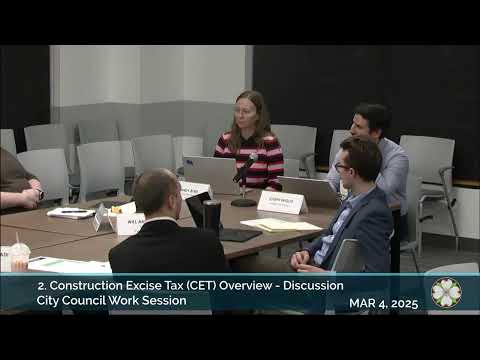
Joseph Brillio, Assistant City Manager, summarized the CET program and how funds are already split into several pots, including affordable housing. "The thing with $450,000 when it comes to development, it's just not much," Brillio said, noting that infrastructure work at Sparrow — especially access and utility upgrades — is expensive and that the CET amount would not pay for all needed improvements but could help defray studies, permitting and design costs.
Staff outlined three potential uses: (1) a local allocation to the Sparrow site to support access and infrastructure, (2) seeding a revolving loan or down‑payment assistance program for first‑time buyers compatible with the city’s Housing Production Strategy, and (3) land‑banking as part of a scattered‑sites strategy linked to the housing authority’s interest in converting some scattered sites to community land trust homeownership. Mandy Bird, Development Project Manager, joined Brillio for the briefing.
Staff recommended prioritizing Sparrow while developing a revolving loan program infrastructure so it can be activated when more funds arrive. Councilors asked whether the city could develop the revolving loan program without funding on hand so it is ready to deploy as CET receipts grow; staff said it could, but that third‑party administration and some initial funding would be needed to operate the program. Staff suggested a limited pilot approach (for example, an initial small allocation or matched funds) once program partners are identified.
Councilors discussed statewide funding options and pilot models: staff noted there are state revolving and competitive funds being proposed this legislative session, including larger infrastructure pools and a statewide revolving loan program for housing that cities might access or that could be administered through partner lenders. Council members asked staff to explore whether state funds targeted to first‑time homebuyers or infrastructure could be disbursed through the city or through local partners.
On timing, staff said the Sparrow parcel replat and legal‑lot clean‑up will take roughly two months before the city can advertise an RFP; that timeline would allow more outreach to neighborhood stakeholders while staff finalizes project details. Councilors agreed the Sparrow site has near‑term delivery potential and were generally supportive of using CET funds to help move the project; they also supported preparing a revolving loan program framework and returning with program options at a June work session tied to the council’s affordability goal setting.
Staff will return with a proposed allocation strategy and more detailed options for a revolving program, including recommended guardrails (income limits, loan terms, third‑party administration) and an estimate of administrative costs.