Get Full Government Meeting Transcripts, Videos, & Alerts Forever!
Get email alerts on the Insurance Coverage Regular Use Exclusion topic
No spam. Unsubscribe anytime.
Appeals court hears dispute over "regular use" insurance exclusion in Bellerado v. Pilgrim
Summary
The court considered whether an insurer properly raised a "regular use" exclusion late in litigation and whether plaintiff received adequate notice so she could pursue discovery; insurer argued its denial of coverage was timely and discovery could have revealed typical use of the vehicle.
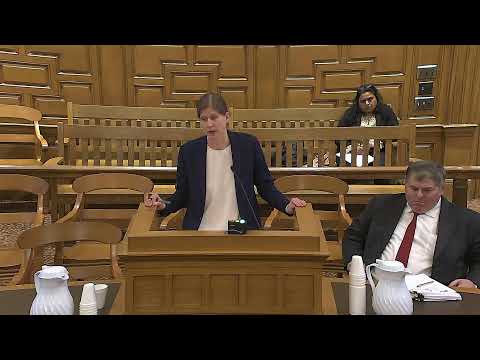
The appeals panel heard Kathleen Bellerado v. Pilgrim Insurance Company and Another (docket 24P575), a dispute over whether an insurer may rely on a “regular use” policy exclusion raised late in summary-judgment briefing and whether the insured received adequate notice to pursue discovery on that defense.
Appellant counsel Steven LaFortune said his client was surprised to learn — first in summary-judgment filings and only later in supplemental briefing at the trial judge’s invitation — that Liberty Mutual (and related carrier Pilgrim) planned to assert a “regular use” exclusion tied to whether the vehicle involved was regularly used by the policyholder or an excluded owner. LaFortune argued the insurer’s earlier correspondence and pleadings had emphasized a separate “business risk” exclusion, and the late change deprived the plaintiff of notice and an opportunity for targeted discovery.
Nut graf: The dispute implicates pleading and discovery practice in insurance coverage cases: if an insurer relies on a specific exclusion that hinges on facts outside the insurer’s own policy (for example, whether a non-listed vehicle is typically used by the insured or an affiliated company), then the insured argues the insurer must raise that exclusion affirmatively early so the insured can develop facts in discovery.
Counsel for Liberty Mutual (Lindsay Stoltz) said the insurer repeatedly denied coverage from the outset, documented its position in claim notes and an adjuster’s letter, and reasonably relied on the underlying record (including deposition testimony that the vehicle was “typically” used by the driver and that the vehicle was owned by a family business). Stoltz argued that the insurer’s belief about “regular use” involved third-party facts the insurer could not fully probe until depositions and that supplemental briefing at the judge’s invitation was an appropriate procedural step.
The panel asked whether Massachusetts requires insurers to plead particular exclusions as affirmative defenses, what constitutes adequate notice of a defensive theory, and whether the trial judge erred in allowing supplemental briefing before ruling. The judge allowed further briefing limited to whether the word “typical” equated to “regular” use for purposes of the exclusion.
Ending: The court took the coverage and procedural dispute under advisement; counsel were directed to rely on their briefs for further citation of precedent.