Get Full Government Meeting Transcripts, Videos, & Alerts Forever!
Get email alerts on the Legal Malpractice Statute Limitations topic
No spam. Unsubscribe anytime.
Appeals court probes when malpractice clock starts in disputed-fees trustee suit
Summary
Counsel disputed whether the statute of limitations on a legal-malpractice claim was tolled by continuing representation or whether the client knew at an earlier date that he had appreciable harm; the panel questioned whether a March 2017 injunction and later appellate rulings produced the triggering notice for limitations purposes.
The appeals court heard argument in James G. Gevaris v. Stephen LaFortune (docket 24P322) over whether a legal-malpractice claim was timely. The key contested issue was when the statute of limitations began to run: when the client first received adverse lower-court rulings and was ordered to return trust funds, or later when appellate rulings made clear there was an actionable loss.
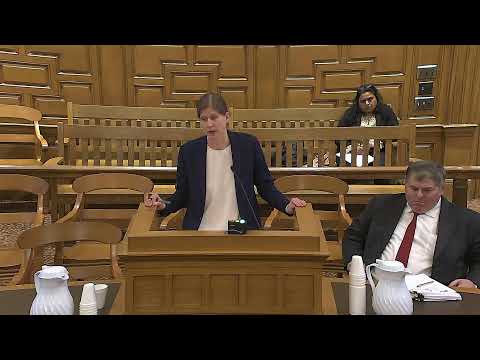
Appellant counsel (represented at argument by an attorney who explained the continuing-representation doctrine and the requirement of causation and appreciable harm) argued that although the client knew earlier of the attorney’s mistake, actual damages and causation did not crystalize until the appeals-court decision and post-judgment developments. The attorney relied on Murphy and related continuing-representation doctrine precedent and argued the statute was tolled while counsel continued to represent the client on related matters.
Nut graf: The dispute is essentially procedural but consequential: if the statute of limitations accrued at the time of the trial court’s early rulings (for example, a March 2, 2017 injunction about improper use of trust funds), the malpractice suit may be untimely; if accrual awaited later appellate dispositions or final determinations of causation/damages, the malpractice claim might be timely. The continuing-representation doctrine and the question of when appreciable harm was known are determinative.
Appellee counsel (Terrence Hamilton) and the cross-claimant Stephen LaFortune (appearing pro se on crossclaims) argued the statute began to run when the client had actual knowledge of appreciable harm — citing the March 2017 order and other contemporaneous rulings — and that representation ended in November 2017, meaning tolling could not extend beyond that point. The judge below applied the accrual and continuing-representation rules in favor of the appellee; the appellant seeks this court’s review of that conclusion.
The justices asked detailed questions about case law on accrual, the interplay between notice of a lawyer’s error and the later identification of damages, and whether the continuing-representation doctrine requires ongoing representation “in the matter” to toll the clock. The panel signaled the outcome could hinge on fine distinctions of when causation and damages became reasonably clear to the client.
Ending: After extended exchanges, the court took the matter under advisement and asked the parties to rely on their briefs for further citation of controlling precedent.