Get Full Government Meeting Transcripts, Videos, & Alerts Forever!
Get email alerts on the Civil Service Duty Status Suspension topic
No spam. Unsubscribe anytime.
Appeals court reviews suspension without pay for trooper tied to overtime fraud probe
Summary
The court heard arguments over whether a preliminary duty-status suspension without pay was supported by sufficient evidence and whether later full section 43 proceedings cured any procedural defect; the case raises civil-service, due-process and remedies questions including possible back pay and license-to-carry suspension.
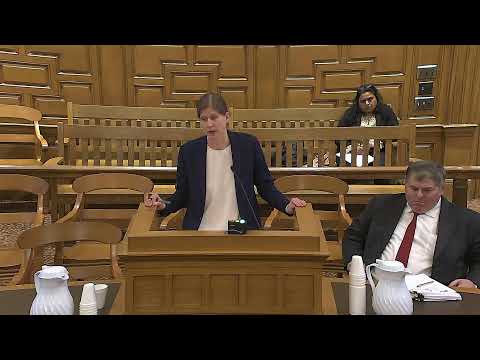
The appeals panel heard argument in John F. Adams v. Colonel Christopher Mason (docket 24P236) over the state police’s suspension of Trooper Adams without pay while an internal affairs audit into alleged overtime fraud proceeded.
Assistant Attorney General Rebecca Krumholtz, representing the state police, asked the court to correct what she called a superior-court legal error and to reinstate the colonel’s suspension decision because the later full and fair Section 43 hearing before the colonel (under chapter 22C, section 43) supplied the enlarged record needed to sustain the duty-status decision. Krumholtz said the relevant question is whether the evidence then available supported a reasonable decision to suspend without pay pending investigation.
Nut graf: The appeal turns on the interaction between a preliminary duty-status hearing — a short, administrative proceeding used to make immediate employment decisions — and the de novo Section 43 hearing before the colonel that provides fuller procedural protections. The court must decide whether any alleged procedural defects at the duty-status stage required relief where a later, fuller hearing was held and whether any deficiency was harmless.
Appellant counsel Daniel Moynihan, who represented Trooper Adams, argued the duty-status hearing was predetermined, provided too little notice and too little access to underlying records, and resulted in a de facto deprivation of pay and the trooper’s license to carry. Moynihan said those shortfalls caused real harm: Adams was suspended without pay for a significant period before subsequent proceedings and civil-service litigation provided only partial redress.
The panel asked whether the colonel has authority to remedy prior deprivations (for example, by awarding back pay) and whether the ultimately successful civil-service claim made this appeal moot. Counsel for the state police replied the allegation that later proceedings cured any preliminary defects was central and that a section 43 hearing is intended to expand the record and address such errors; the state argued any procedural defect at duty status would be harmless if the fuller hearing substantiated the suspension.
Ending: Justices described the issues as important for duty-status practice and civil-service procedure, asked about remedial pathways for a trooper who lost pay and was disarmed during the interim, and took the appeal under advisement.