Get Full Government Meeting Transcripts, Videos, & Alerts Forever!
Get email alerts on the Alimony And Marital Judgment topic
No spam. Unsubscribe anytime.
Appeals court considers whether amended marital judgment improperly removed annual alimony adjustments
Summary
Attorneys argued whether a probate and family court judge abused discretion by amending a divorce judgment to eliminate automatic annual alimony adjustments tied to the husband's rising income without changing the judge's findings; the appeal also consolidates contempt claims.
The appeals panel heard a consolidated appeal in Dorothy Luck v. Michael Luck (docket 24P438) challenging a probate-and-family-court amended judgment that eliminated previously ordered annual adjustments to alimony tied to the parties’ differing incomes.
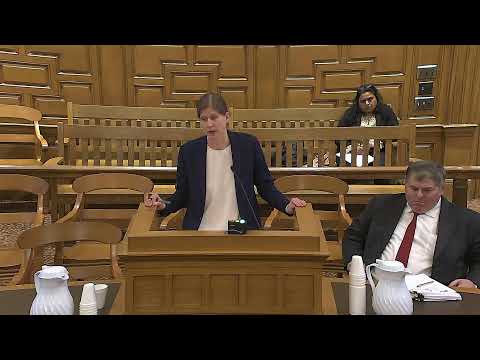
Appellant counsel Linda Ouellette told the court the trial judge originally set an alimony award that included annual adjustments to preserve the recipient spouse’s station in life, and later amended the judgment to remove those adjustments without changing the factual findings or rationale. Ouellette argued that the amendment lacked explanation and that the case falls within the limited exceptions, discussed in Young v. Young and other precedents, where post-judgment percentage or self-adjusting awards are appropriate.
Nut graf: The appeal raises whether a court may excise automatic, percentage-based adjustments from a judgment without making new findings, and whether accumulated debt, asset division and the husband’s subsequent bonuses and partnership track earnings created exceptional facts justifying periodic adjustments or a time-limited upward formula.
Counsel for the husband, Martin Kane, argued the trial judge acted within discretion and that the broader record — dozens of findings across a lengthy opinion — supports the amended award. Kane emphasized the court considered the statutory factors (including contribution, assets and debts), the parties’ significant debt levels at divorce, and the husband’s eventual partnership income when framing the award.
The justices questioned whether the lower court had adequately explained the November amendment and whether Young v. Young and its footnote exceptions applied; they also asked whether the asset division and assignment of liabilities (the record shows the wife received about 60% of the marital assets while the husband absorbed more debt) changed the appropriate alimony analysis under the Alimony Reform Act referenced in argument. Appellate counsel debated whether the amended judgment should have imposed a time limit for any graduated or compensatory adjustment.
On contempt claims consolidated with the appeal, counsel said the record showed a clear and unequivocal payment obligation and that the contempt judgment flowed from nonpayment and attempted procedural maneuvers involving superior-court filings. The panel reserved judgment and left the consolidated matters under advisement.
Ending: The court closed argument after extended questioning and took the consolidated appeal under advisement.