Get Full Government Meeting Transcripts, Videos, & Alerts Forever!
Get email alerts on the Family Court Parenting Time topic
No spam. Unsubscribe anytime.
Appeals court hears challenge to parenting-time modification in Cherry v. Regu
Summary
The appeals court heard arguments over a family-court judgment that suspended a mother's parenting time and ordered reunification therapy after findings about the parents' dispute and the child's relationship with the mother; attorneys debated whether the appeal properly raised the parenting-time issue and whether the trial judge erred.
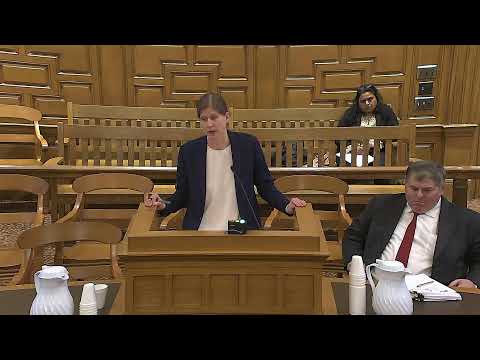
Chief Justice Amy Blake and the single-judge panel heard arguments Tuesday in Masha Cherry v. Dioni Regu (docket 24P361), a consolidated appeal over a family court ruling that removed parenting time from the mother and ordered reunification therapy before contact could resume.
The issue on appeal, appellant counsel Chris Neeshaw told the court, is “the issue of the modification of the judgment regarding parenting time specifically.” Neeshaw said the trial court recognized that the father had been adjudicated in contempt of court for denying parenting time but nonetheless eliminated the mother's parenting time without explaining why she had failed to meet the modification standard.
Nut graf: The appeal centers on whether the lower court properly required the mother to show a substantial change in circumstances and whether the judge plainly erred in crediting facts that resulted in permanent de facto suspension of parenting time. If the appeals court finds the judge applied the wrong legal standard or ignored adverse factual findings about the father's conduct, it could reverse or remand for further findings.
At argument, Chief Justice Blake pressed appellant counsel on preservation and notice questions. Blake asked whether the notice of appeal complied with the rules and whether the court was “handcuffed by the judge's credibility determinations” because credibility findings are normally reviewed only for clear error. Neeshaw acknowledged the credibility hurdle but argued the record contained an earlier adjudication that the father repeatedly and intentionally denied parenting time and that the final judgment effectively punished the mother for the parties’ inability to agree.
Appellee counsel Andrew Cantor (appearing for the father) told the panel the mother had not met the two-prong standard for modification — a material and substantial change in circumstances and a showing that modification is in the child's best interest — and that the GAL report and other evidence supported the trial court's judgment. Cantor emphasized the GAL report was admitted and contained “pretty significant” findings about the child's relationship with the mother and the child's special needs.
The justices asked questions about the weight the trial judge afforded the GAL report (some of which the transcript notes as impounded), whether the contempts relied on by the trial judge were properly before the court on appeal, and whether the remedy adopted — court-ordered reunification therapy before any parenting time — was within the judge's discretion. Chief Justice Blake observed that, as framed by counsel, “the ball's in your client's court” because the judgment gave the mother a path back through reunification therapy.
There was no decision from the panel at argument; Chief Justice Blake stated the case was under advisement. The court did not announce a timetable for opinion issuance.
Ending: The court heard the first three cases of the morning session before taking a recess; Cherry v. Regu remains under advisement.