Get Full Government Meeting Transcripts, Videos, & Alerts Forever!
Get email alerts on the Budget topic
No spam. Unsubscribe anytime.
Superintendent presents preliminary 2025–26 operating budget; projects $46,000 surplus against fixed costs after proposed efficiencies
Summary
Superintendent Locklear and budget staff presented a preliminary proposed budget for FY 2025–26 that assumes a county funding formula increase of 3%, projected fixed-cost increases, charter-school growth, and $570,000 in district efficiencies; staff recommended holding expansion items pending further board feedback.
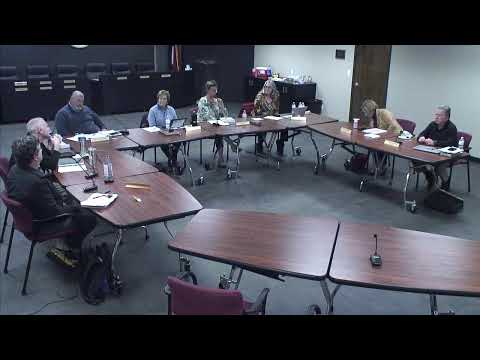
Superintendent David Locklear and assistant superintendent for budget and finance, Teresa (Tina) Evans, presented the superintendent’s preliminary proposed operating budget for fiscal 2025–26 at the March 3 Moore County Schools work session.
The presentation laid out three headline narratives: the impact of fixed-cost increases (salary and benefit mandates and other inflationary costs), one potential expansion item the board asked staff to evaluate (unfreezing a curriculum specialist / science specialist position), and a lean-budget approach intended to moderate the local budget’s impact on fund balance through identified efficiencies.
Evans briefed the board on a conservative revenue projection that uses a 3% increase from the county funding formula, consistent with the county manager’s and commissioners’ early guidance. The district applied a conservative 2% estimate for state-mandated salary increases and incremental estimates for retirement and health-insurance employer costs. The staff also included a per-pupil charter school growth estimate (90 students projected, using a five-year average) and vacancy-savings estimates from the current year.
The staff listed projected fixed-cost increases totaling $1.67 million under a 2% salary scenario, and identified $570,000 in line-item efficiencies after a technical “scrub” of the budget (examples: copier contract reconciliation, duplicate line items, and positions supported by other funds). The superintendent’s proposed continuation budget that incorporates those efficiencies would leave a projected net position of roughly $46,138 above fixed-cost increases when paired with the projected county revenue; staff therefore recommended no expansion items at this time but presented an option — unfreezing a 12-month curriculum specialist (science specialist) at about $90,000 — at the board member’s request for the board to consider before the April adoption timeline.
Evans described projected total proposed budgets across funds: an aggregated 2025–26 budget of approximately $165.7 million across state, local, federal, child nutrition and capital funds, with the proposed local fund (Fund 2) using $2.85 million of fund balance under the superintendent’s recommended assumptions and leaving an unassigned fund balance around $2.27 million in projection — just above the district’s fund-balance floor.
Board members pressed staff for clarification on line-item adjustments and how unsent budgeted line items had been treated, and several asked for a deeper briefing on specific initiatives embedded in the budget, in particular the “advanced teaching roles” compensation model. Mr. Hensley requested a board briefing specifically about the advanced teaching roles (the state-funded stipends, grant timelines and the district’s implementation steps) at next week’s business meeting; Mr. Hensley’s motion to add a briefing to next week’s agenda was seconded and noted in the session. Locklear and staff said budget revisions will be presented March 31 and that the board will consider a revised preliminary budget on April 7 with the goal of approving an initial appropriation before the county-level process.
Ending: Staff will return a revised preliminary budget March 31 for further board review; the board’s budget committee will continue to evaluate the curriculum specialist request and other priorities in the April adoption timeline.