Get Full Government Meeting Transcripts, Videos, & Alerts Forever!
Get email alerts on the Housing Adu topic
No spam. Unsubscribe anytime.
Council refers proposed ADU changes to Planning Board after members and residents urge removal of barriers
Summary
Salem City Council voted to refer proposed amendments to the city’s accessory dwelling unit (ADU) ordinance to the Planning Board for a joint public hearing, with councilors and residents urging removal of owner-occupancy and other limits to spur construction.
The Salem City Council on Feb. 27 voted to refer proposed amendments to the city’s accessory dwelling unit (ADU) ordinance to the Planning Board for a joint public hearing.
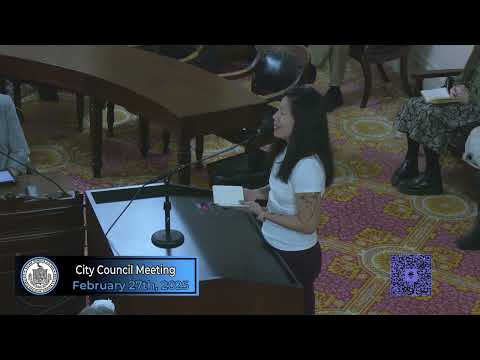
Supporters and several councilors said the ordinance changes are needed to increase the supply of smaller, naturally affordable homes. "The goal is to get housing built," said Christine Madore, a former councilor, who urged removing hurdles that keep ADUs from being created. Madore said the ordinance gives tenants and homeowners options and urged the council to focus on building homes rather than symbolic measures.
Council members framed the referral as the next step in a multi-stage process. Several councilors noted the state’s Affordable Homes Act requires some changes — including removal of owner-occupancy requirements — in any zone that allows single-family homes. Councilor Stott provided a brief history of the city’s ADU rules and said only 13 ADUs have been completed since 2021 under the current ordinance, an outcome he called insufficient given current housing pressures.
Councilors described the referral as an opportunity for further public comment. Councilor Hepworth said the proposal will go to a joint public hearing with the Planning Board and then return to the council and other committees for subsequent votes. The council did not adopt ordinance language on first or final passage at the meeting; it only referred the proposal for the joint public hearing.
Next steps: the Planning Board will schedule the joint public hearing and the council will receive that board’s recommendations before any final vote.