Get Full Government Meeting Transcripts, Videos, & Alerts Forever!
Get email alerts on the Wastewater Infrastructure topic
No spam. Unsubscribe anytime.
Sarpy County wastewater agency details finances, wins approval to seek WIFIA loan modification
Summary
The Sarpy County and Cities Wastewater Agency reported strong early connection-fee revenue, ongoing loan draws and a proposed repurposing of remaining WIFIA funds for design/permitting; the County approved sending a letter to WIFIA to request a loan modification.
The Sarpy County and Cities Wastewater Agency reported March 4 that connection-fee revenue has exceeded early projections and the agency is requesting a modification of its WIFIA loan to use remaining funds for design, permitting and easement acquisition for future lines.
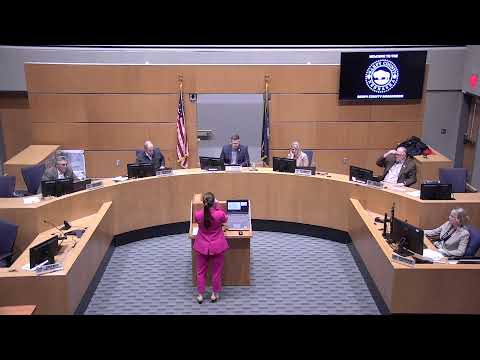
The update came at a Sarpy County Board of Commissioners meeting in Papillion where agency representative Dan Hollins reviewed a recently approved master plan, a new public financial dashboard and the agency’s near-term financing picture. County Administrator Bonnie Moore presented a resolution authorizing the county to submit a formal request to WIFIA to modify the loan; the board approved that step unanimously.
Why it matters: the wastewater project is a multi‑phase regional infrastructure effort intended to serve long‑term growth across Sarpy County and partner cities. Early connection fees have provided substantial up‑front cash, but long-term revenue depends on measured “flow” fees that are still ramping up; any change in how revenues are allocated or in the growth‑management plan can affect the county’s backstop obligations and loan security.
Hollins told commissioners the agency launched a public financial dashboard and that connection fees have been “substantially above what we projected.” He said the agency has collected an additional $900,000 in connection fees since November and that connection fees have driven the agency to roughly 58.33% of its budgeted revenue picture for the year while expenses are about 43% spent. Hollins reported total loans drawn to date of about $88,000,000 and said the agency has fully drawn the planning loan and has drawn roughly $16,000,000 of the WIFIA loan.
Hollins said grant money from the Nebraska Department of Natural Resources and other federal grants have been used; he told commissioners the agency has finalized receipt of federal grant funds referenced in the agency’s financials and that pilot fund revenue for the current year totaled about $713,000 (life‑to‑date pilot funds shown as approximately $1.9 million). He said cash‑on‑hand moved from roughly 9.1 to 9.3 months and that the agency submitted a $250,000 reimbursement request through the WIFIA loan during the period he reported.
Hollins described the agency’s plan to request that remaining WIFIA funds — roughly $20 million — be repurposed for design, permitting and easement acquisition (DPE) work on about 13.6 miles of pipeline (the green and blue lines on the agency master plan), which he said would reduce future schedule risk by advancing project readiness. He said the agency’s target for substantial completion of phase 1a is December 31, 2025, with commissioning and decommissioning steps following.
Commissioners pressed for clearer comparisons between current actuals and the project’s original projections. Commissioner Burmeister asked whether the dashboard shows the original projections versus current year actuals; Hollins said the agency now uses a rate study completed by Corello and Associates as the operating economic baseline and that he will work with county staff to add a surplus account balance and other comparative columns to the dashboard.
Hollins also addressed how the agency is handling requests from local jurisdictions, including a pending request from the city of Gretna to change growth‑management plan boundaries. He said Omaha has agreed in concept to temporarily accept flow from parts of the basin until the agency can extend its green line, and that the agency’s prior agreements with Gretna require payment of connection fees now and agreed‑upon rates while the temporary flow arrangement is in place. Hollins cautioned that any change that would reduce the agency’s expected area served could affect debt service and that amendments to loan agreements would be required if member terms or the project scope are changed.
Bonnie Moore said the county and the agency had a preliminary discussion with WIFIA staff and that WIFIA requires county and agency approval to modify the loan terms. Moore read the agency’s resolution language to the board, clarifying that the county’s approval authorizes submission of a request to WIFIA but does not itself amend the loan. "With this resolution today, you're not agreeing to amend the WIFIA loan," Moore said. The board voted 5–0 to authorize the county administrator to submit the letter to WIFIA.
Other items Hollins reported: the FY 2023–24 audit issued an unmodified (clean) opinion with a material weakness related to ledger entries from multiple treasurer transitions that the agency corrected; state legislation under consideration that could change sales and use tax exemptions may affect pilot revenues, though staff said the legislation appeared unlikely to advance out of committee; and billing and flow metering issues remain with Springfield, where baseline measurements are still being established.
Next steps: county staff and agency administrators will prepare the formal WIFIA modification request and further refine the public financial dashboard to add comparative projections and the surplus balance. Commissioners asked agency staff to return with additional visuals and comparative data on the budget versus original projections once the fiscal year closes and the agency can finalize its surplus calculation.