Get Full Government Meeting Transcripts, Videos, & Alerts Forever!
Get email alerts on the Water Resources topic
No spam. Unsubscribe anytime.
Public Utilities updates council on snowpack, reservoirs and potential impact of House Bill 81 (fluoride prohibition)
Summary
Salt Lake City Public Utilities reported near‑median snowpack and reservoir conditions with two months of the water accumulation season remaining and urged continued conservation; staff also briefed the council on pending House Bill 81 Sub 1, which would prohibit municipal addition of fluoride if signed into law.
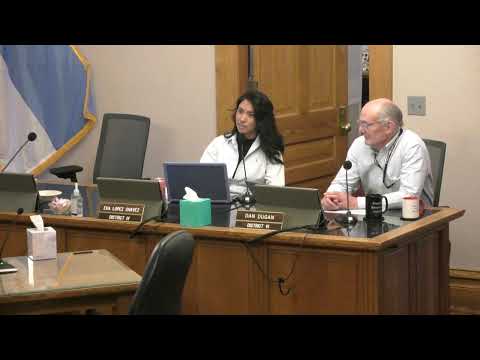
Salt Lake City Public Utilities hydrologist John Wells and director Laura Briefer briefed the council on March snowpack, reservoir storage and ongoing water resources monitoring.
Wells described current conditions as near median for snow water equivalent across the city—s watershed, with recent field observations showing a ripened upper snowpack and normal runoff expectations; two months of accumulation remain in the typical water‑supply season. He said short‑term (1–7 day) projections were favorable and that NOAA three‑month outlooks showed slightly warmer and drier conditions that support continuing conservation messaging to residents.
The city manages Little Dell and Mountain Dell reservoirs and holds interests in regional reservoirs such as Jordanelle and Deer Creek through interagency partners. Mountain Dell is being managed with construction impacts this season and Little Dell will be used to maximize storage. Wells stressed the long continuity of the city—s snow‑course record—data used in regional climate and hydrology studies.
Laura Briefer summarized conservation achievements: the community has reduced overall water consumption while the population has grown (the administration described growth of 15% with a 30% reduction in water use over recent years, a reversal noted in the briefing). She urged continued year‑round wise use and referenced city programs (water checks, rebates, indoor and outdoor conservation education).
Councilmembers asked about impacts to the Great Salt Lake, drought risks, wildfire impacts to watersheds and how residents can respond. Wells and Briefer said the city factors climate change into long‑range water planning (a planning factor around 10% was mentioned), is working with universities and federal partners on vulnerability planning, and is investing in conservation and watershed mitigation. Briefer encouraged residents to use city water‑conservation programs and noted possibilities for partnerships to track public health impacts.
In a separate policy update during the briefing, staff discussed House Bill 81 Sub 1, a state bill that, if signed, would prohibit Salt Lake City and other municipalities from adding fluoride to drinking water for public health purposes. The department said the bill was on the governor—s desk and explained the city currently adds fluoride per Salt Lake County health guidance (up to 0.7 ppm, CDC recommendation). Staff expressed concern that a statewide prohibition would disproportionately affect lower‑resource populations and recommended partnering with Salt Lake County Health Department and the state to track outcomes if the law takes effect and to examine mitigation options such as pharmacist‑distributed fluoride tablets.