Get Full Government Meeting Transcripts, Videos, & Alerts Forever!
Get email alerts on the Land Evaluation Site Assessment topic
No spam. Unsubscribe anytime.
LaSalle County soil-and-water official reviews LISA scoring as members raise concerns about state solar siting law
Summary
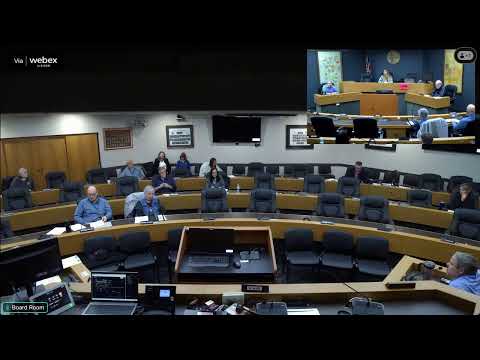
Vicki Heath, with the LaSalle County Soil and Water, told the End Use Committee on March 5 that the county—s Land Evaluation and Site Assessment, known as LISA, combines a soils-based land-evaluation score (0–100) prepared by the Natural Resources Conservation Service with a site-assessment score (0–200) the county assigns to yield a 0–300 total used to guide conversion of farmland to nonagricultural uses.
Vicki Heath, with the LaSalle County Soil and Water, told the End Use Committee on March 5 that the county—s Land Evaluation and Site Assessment, known as LISA, combines a soils-based land-evaluation score (0–100) prepared by the Natural Resources Conservation Service with a site-assessment score (0–200) the county assigns to yield a 0–300 total used to guide conversion of farmland to nonagricultural uses.
The LISA is "an impartial system that helps determine the value for ag in the county," Heath said. She walked committee members through the scoring method using a 29-acre example near the Walmart in Ottawa: soils alone scored 97 of 100, the site assessment scored 85 of 200, and the combined total was 182 of 300.
Committee members asked whether the county should change LISA criteria given an Illinois law they said limits counties— ability to deny solar projects. "Going from my recollection of the recent Illinois solar act ... it said something to the effect that LISA's scores cannot be taken into consideration," Committee member Dave Torres said. Heath replied that the scores themselves "are still the score of that physical property," but she said her office now emphasizes other parts of the county's natural resource inventory, such as erosion, tiling and federal-program enrollments, because "our hands are kinda tied" when state statute governs solar approvals.
Torres asked why the LISA does not explicitly consider electrical grid proximity. "Why doesn't it list power grid?" he asked. Heath said the LISA is not written for one specific use and that adding a power-grid question would risk favoring a single use; she suggested the committee could consider wording that would include grid access without excluding other uses.
Members also discussed ag areas—voluntary local designations formed by owners of at least 350 contiguous acres and recognized by the Illinois Department of Agriculture—and how those areas factor into decisions. Heath said LaSalle County has five ag areas totaling about 5,300 acres and described the process to remove land from an ag area as lengthy and requiring public hearings and state review.
The committee and staff discussed potential revisions to specific LISA questions. Heath said the county typically updates the LISA about every decade (the last NRCS soils update for the county was made digital in February 2006) but could consider more frequent revisions; she recommended review cycles of about four to five years if the committee wanted quicker updates.
Separately, Mark Anderson, staff member, said he drafted a resolution expressing the county's concerns about state law limiting local control over solar siting. Anderson presented the draft as a template and said it drew language from an approach used by State Senator Balcom and others. The committee agreed to hold the draft over for further review and to discuss it again at the next meeting; no formal action was taken on the draft resolution at the March 5 meeting.
Why it matters: Committee members said LISA scores have been a long-standing tool to steer development toward municipalities and away from productive farmland. But members also said statutory changes on solar siting have reduced the weight such local tools carry in final zoning decisions, prompting the county to consider both technical edits to LISA and possible formal statements to state lawmakers on local impacts.
Next steps: Heath offered to return in a month with a revised draft and to accept written comments from committee members before the next Zoning Board of Appeals review. Anderson said he could finalize a resolution draft for the full county board by the following meeting if the committee wanted to move quickly.
Quotes (selected): "I'm Vicki Heath with the LaSalle County Soil and Water," Heath said at the start of her presentation. "The Lisa is an impartial system that helps determine the value for ag in the county," she added. "I will look into that," Heath told members who raised the question of a statutory conflict with federal farmland-protection policy. "I did. I can hand out, this is clearly a draft and careful, the ink is still a little wet," Anderson said when presenting his draft resolution.
Context and limits: The committee—s discussion reflected how local advisory tools such as LISA interact with state statute; Heath said the LISA itself does not create binding prohibitions but provides evaluative information the Zoning Board of Appeals and county board have used in decisions. Committee members repeatedly emphasized the difference between the LISA assessment (informational) and formal zoning decisions (made later in the process).