Get Full Government Meeting Transcripts, Videos, & Alerts Forever!
Get email alerts on the Municipal Finance Sustainability topic
No spam. Unsubscribe anytime.
Council hears updated sustainability model; staff adds 0.1% sales‑tax option for transportation benefit district
Summary
City staff updated the long-term financial sustainability model with 2024 actuals and added policy options, including an HB 1791 provision and a potential 0.1% sales tax through a Transportation Benefit District. Staff will send a worksheet estimate to council and schedule follow-up discussion.
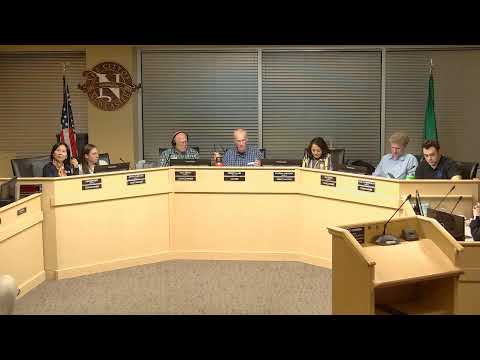
City Manager Pingel and Director Chambers briefed the Newcastle City Council March 4 on an updated financial sustainability model reconciled to 2024 actuals and on new revenue options to reduce general fund transfers to the street fund.
Pingel described the changes as an effort to present council members with an accurate starting point for long-range planning and to allow them time to work with the model ahead of summer capital-improvement-plan discussions. He said staff added options that would reduce general‑fund support for streets, including an HB 1791 pathway that, if approved, “would essentially allow for $100,000 or 25% of revenue to be used for maintenance and preservation costs,” language Pingel used to describe a pending state bill’s potential local effect.
Director Chambers told council staff is evaluating a Transportation Benefit District revenue option beyond the previously discussed car‑tab fee: a point‑1 percent (0.1%) sales tax. Chambers said the sales‑tax option would capture spending by nonresidents who shop in the city and that she was working with a sales‑tax consultant to develop a conservative estimate, which staff expected to share with council the following morning.
No vote was taken. Staff said the model, reconciled through 2024, will be distributed to council members for review so they can test scenarios ahead of a future study session and the 2026–2030 planning window.
Why it matters: The model and new revenue options inform council choices about how to reduce transfers from the general fund to streets, the timing of capital projects and tradeoffs between car‑tab fees and a sales‑tax approach that reaches nonresident shoppers.
Next steps: Staff will circulate the updated worksheet and a prepared estimate for the 0.1% sales‑tax option and return for council discussion before capital planning and budget work this summer.