Get Full Government Meeting Transcripts, Videos, & Alerts Forever!
Get email alerts on the Budget Fiscal topic
No spam. Unsubscribe anytime.
Milton committee debates revised FY26 budget, balances new curriculum and ELL requests against proposed cuts
Summary
Committee members on Feb. 26 discussed a revised FY26 budget that combines prioritized needs (ELA curriculum investment and added ELL teaching staff) with reductions from the non-override list; members signaled support for presenting a 'revised level service' request to the Select Board but took no formal vote.
Milton School Committee members spent much of their Feb. 26 meeting debating a revised FY26 budget that attempts to combine the district’s top-priority needs with reductions identified in the non-override list. Committee members and staff described the package as a “revised proposed budget” that lowers the previous level-service ask by reallocating certain items and adding prioritized needs such as ELA curriculum development and increased ELL teaching staff.
Superintendent Burrows and central-office staff told the committee they began with the non-override reduction list and identified roughly $1 million of potential cuts; they also proposed adding back investments judged essential, including curriculum development for ELA and 1.4 full-time-equivalent (FTE) ELL teaching positions. As presented, the package reallocated about $400,000 to prioritized needs and produced a net reduction compared with the district’s earlier level-service number; committee discussion referenced a net change of about $600,000 below the prior level-service ask, while percentages mentioned at different points in the meeting ranged from roughly 8.5% to 9.5% increases compared with the current budget year (transcript did not include a single consolidated dollar figure for the final ask).
Why it matters: Committee members said the district must balance voters’ willingness to approve an override with the level of service the committee believes the schools need. Members emphasized the need to present a number to the Select Board and to the public that is “sustainable” across multiple years while also funding top priorities such as literacy curriculum adoption and supports for a growing English-language learner population.
Key proposals discussed: - Curriculum: The administration proposed funding ELA curriculum adoption and supporting curriculum-development time for teachers, which leaders said requires both the one-time selection/purchase process and ongoing professional development (coaching) to implement with fidelity. - ELL staffing: The administration recommended 1.4 FTEs of teaching staff to respond to projected enrollment growth and to avoid spreading current staff further beyond capacity; this allocation would be in the bargaining-unit teaching ranks rather than an administrative director post. - Reductions and process: The administration said it identified roughly $1 million in cuts from the non-override list as a starting point and was continuing to analyze programmatic and positional changes; select-board direction prompted the district to re-evaluate its request to try to lower the townwide number while keeping core services.
Committee position and next steps: Members generally welcomed the effort to combine level-service needs and priority additions and asked staff to produce more detailed impact statements that explain precisely which positions or services would be affected by further reductions. Several committee members said they would prefer to lead with a revised level-service request that includes prioritized needs rather than present deeper personnel cuts at this stage. No formal committee vote was taken on the budget at the Feb. 26 meeting; members agreed to continue the discussion next week and to present the revised level-service request and impact statements as part of the public budget hearing process.
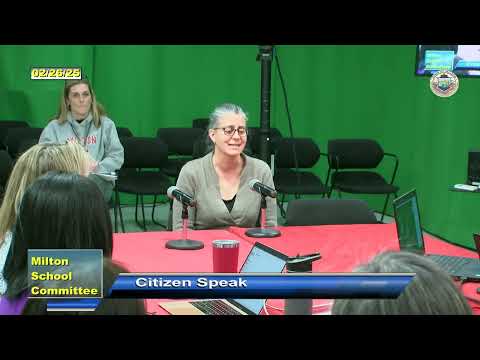
Public comment and transparency: A public speaker earlier in the meeting warned that cuts to nursing positions would harm students’ ability to attend school safely; committee members said that impact statements prepared for the community should make clear what each proposed reduction would mean for students and staff.
Ending: The committee did not adopt a final number on Feb. 26 but signaled a preference for presenting a revised level-service request that folds in top priority needs while continuing to search for non-positional efficiencies; staff will return with detailed impact statements and a refined recommendation for the next meeting and the scheduled budget hearing.