Get Full Government Meeting Transcripts, Videos, & Alerts Forever!
Get email alerts on the Disability Accessibility topic
No spam. Unsubscribe anytime.
Senate Human Services panel advances study on access to services for people who are deaf or hard of hearing
Summary
The Senate Human Services Committee voted to give House Bill 1097 a “do pass” recommendation after testimony calling for an interim study on improving access to government services for people who are deaf, hard of hearing or have hearing differences.
The Senate Human Services Committee voted to advance House Bill 1097, which would direct a legislative interim study on accessibility of government services for people who are deaf, hard of hearing or who have other hearing differences.
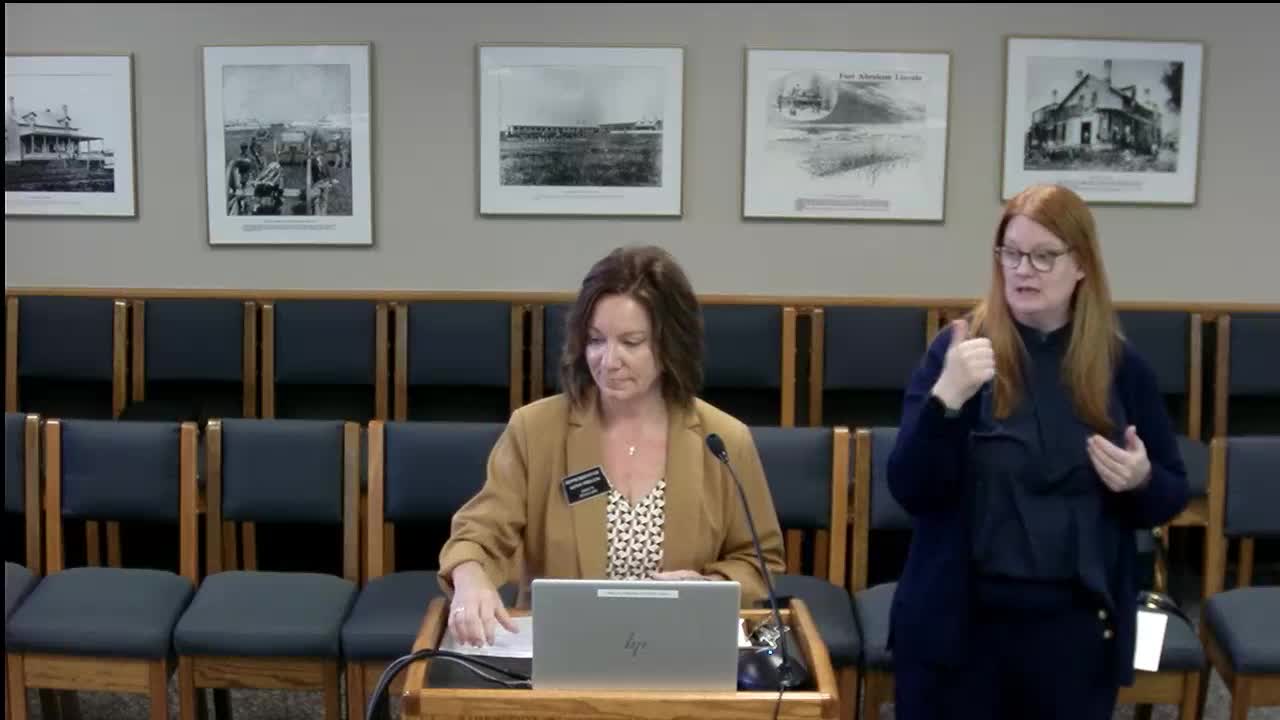
Representative Kathy Fraylock, who identified herself as representing District 15 and said she works in adult outreach at the North Dakota School for the Deaf in Devil’s Lake, told the committee she drafted the bill after repeatedly helping clients navigate services that are not accessible. “Under the Americans with Disabilities Act, title 2 entities — state and local government services — and title 3 entities — businesses and nonprofits — must provide accessible communication,” Fraylock said, and she submitted a U.S. Department of Justice summary describing the “equally effective” communication standard.
Why it matters: Committee members heard that North Dakota has very limited interpreter capacity and widely varying local practices for serving people with hearing loss. Fraylock told lawmakers the state currently licenses about 20 interpreters, compared with hundreds in neighboring states; she urged a study that would bring together deaf community members, IT and transit staff, and service providers to identify low-cost, technology-based fixes and training needs.
Committee discussion and examples: Fraylock outlined scenarios the study should examine: a deaf rider who cannot make or receive transit calls, a deaf applicant who lacks access to video-relay services when an agency promises a follow-up phone contact, and older adults with severe hearing loss attending public meetings without amplification or captioning. She pointed to modern, low-cost options — video relay, speech‑to‑text apps, instant-text systems integrated with agency computers — and said a study could identify which technologies agencies should adopt.
Several senators praised the proposal as practical and non‑prescriptive. Senator Lee and others noted the bill’s framing distinguishes between people who use American Sign Language, people who are hard of hearing, and people with “hearing differences,” and members asked about preferred terminology. Fraylock recommended “deaf” for ASL users and “hard of hearing” for other groups, and she said she added “hearing differences” to capture people who do not fit either label.
Formal action: Senator Rohrs moved a “do pass” recommendation; Senator Weston seconded the motion. The committee called the roll and advanced the bill for further consideration.
What’s next: The bill, as advanced, would direct legislators to study how state and local programs deliver communications access and what practical, low‑cost steps could improve access. Supporters emphasized the study’s potential to identify fixes that may require little or no additional state spending.
Ending: Fraylock thanked the committee and stood for questions; Senator Weston agreed to carry the bill forward.