Get Full Government Meeting Transcripts, Videos, & Alerts Forever!
Get email alerts on the Behavioral Health Regionalization topic
No spam. Unsubscribe anytime.
Senate Bill 2096 would fund regional psychiatric beds, supporters say; opponents urge balanced investment
Summary
A hearing on Senate Bill 20‑96 drew competing views on whether $16 million in grants should be used to build regional acute psychiatric and residential supportive housing or whether the state should instead prioritize a new state hospital and sustained community services.
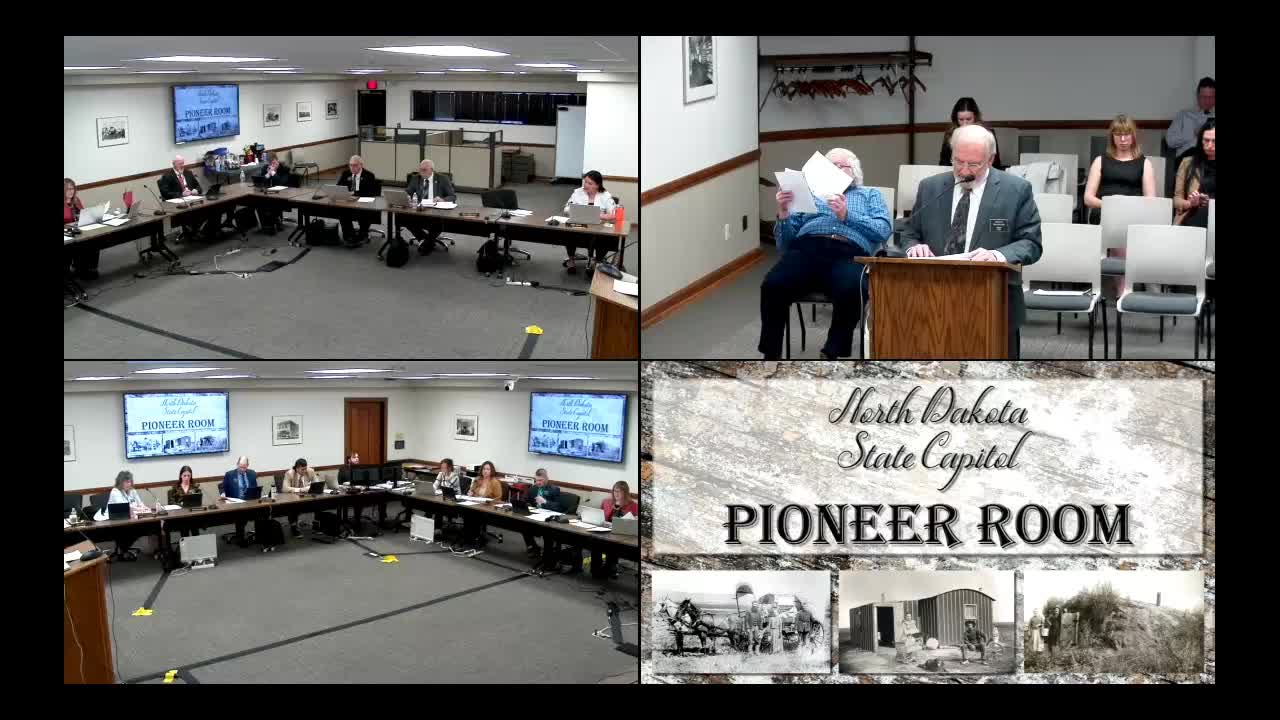
Sen. Tim Mathern, D‑District 11, urged the House Human Services Committee on Monday to support Senate Bill 20‑96, a plan to distribute grants for regional acute psychiatric treatment and residential supportive housing across the state’s four quadrants. Mathern said the original Senate Human Resources plan proposed $64 million but was reduced by the Senate appropriations committee to $16 million to meet appropriation targets.
Mathern told the committee the bill would let the Department of Health and Human Services (DHHS) award grants to build or modernize facilities where local need exists — for example, $2.5 million to finish a hospital psychiatric unit in Williston, and potential projects in Minot and Grand Forks. Mathern said grants would require any recipient to operate behavioral health facilities for at least 10 years.
“Decentralized care is supported by research,” Mathern said, adding that local facilities connect patients to family and community resources that aid recovery. He described the bill as complementary to other reforms including certified community behavioral health clinics (CCBHCs) and a Medicaid plan amendment aimed at growing capacity.
Clinical psychologist Dr. Stefan Padraigula of Minot, testifying in support, argued regional residential options and hospital wards within community hospitals would be cheaper and more effective than building a single large new state hospital. “If you need emergency immediate hospitalization, you need it now,” Padraigula said, describing long transports and delays he has encountered in rural calls.
Student and systems‑focused testimony from Madison Hansen and organizational testimony from Carlotta McClary of Mental Health America of North Dakota framed the bill as an evidence‑based step toward community‑rooted care. Hansen cited studies and local court concerns about lengthy waits and repeated hospitalizations that, she said, reflect a system struggling to provide community alternatives.
Opposition witnesses and DHHS staff urged caution. Representative John Nelson and Pam Sagness, Executive Director of Behavioral Health at DHHS, told the committee DHHS already contracts with multiple hospitals for acute inpatient care, reimbursing nearly 6,000 hospital bed‑days per year and funding expansions in Bismarck (CHI) and Grand Forks (Altru). Sagness also said the state hospital functions as a safety net for patients private hospitals will not serve — including civilly committed forensic patients and others with long average stays in specialized programs.
Nelson and Sagness noted the House already recommended a new state hospital project at roughly $330 million to replace aging facilities and preserve specialized services. Nelson described a 61‑bed plan for the new facility and said building a new state hospital and investing in community services were complementary, not mutually exclusive.
Several witnesses warned about the federal IMD (institution for mental disease) exclusion and Medicaid funding limits if new stand‑alone inpatient facilities exceed 16 beds. Mental Health Advocacy Network cautioned that expanding IMD‑style institutions without careful Medicaid planning could divert funds away from community services.
Committee members asked about workforce and sustainability. Mathern and Padraigula acknowledged recruiting clinicians to rural facilities will be difficult and said regional anchors in larger cities could partner with nearby smaller communities. Padraigula described recent efforts to expand psychiatric residency training as part of a broader workforce strategy.
The hearing closed with no vote on the bill. Committee members were left to weigh the tradeoffs between targeted regional grants, the larger state hospital replacement proposal, workforce constraints, IMD funding limits, and the ongoing CCBHC expansion already funded in the department’s budget.