Get Full Government Meeting Transcripts, Videos, & Alerts Forever!
Get email alerts on the Passenger Rail Expansion topic
No spam. Unsubscribe anytime.
Advocates tell committee passenger rail expansion should be part of Ohio's transportation budget
Summary
The Greater Ohio Policy Center testified in favor of investing in passenger rail as part of a connected statewide transportation network and urged the Legislature to support rail studies and planning in HB54.
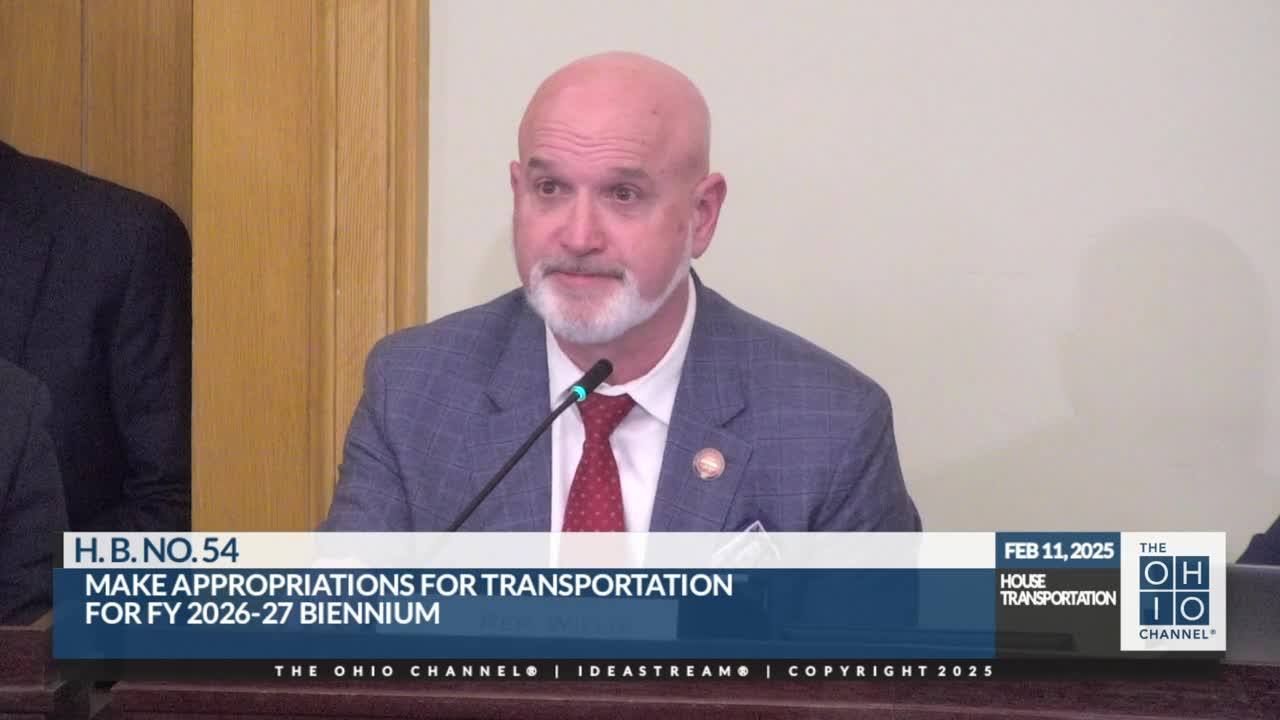
Columbus — Jason Warner, director of strategic engagement for the Greater Ohio Policy Center, urged Ohio lawmakers on Feb. 11 to include passenger-rail planning and investment in the state transportation budget, arguing that rail connections would link Ohio cities, reduce demand for roadway expansion and attract federal funding opportunities.
"Expanding passenger rail service in Ohio will increase connections between and within the state's regions and connect Ohio to the rest of the Midwest," Warner told the House Transportation Committee in proponent testimony on House Bill 54. He said investing sooner rather than later is important because federal funds for rail are available now and the cost of delaying projects will rise over time.
Warner framed passenger rail as part of a broader strategy: maintain the existing highway system, prioritize safety and invest in public transit while studying corridors where intercity and regional rail could be viable. He said passenger rail could ease pressure for highway expansion and better support freight logistics on existing rail infrastructure.
Committee members asked about the business case and statewide benefits; Warner said passenger rail would improve travel options for work and recreation and would support cross-state connections among Ohio cities and to Midwestern hubs such as Indianapolis and Chicago. He offered the Greater Ohio Policy Center as a technical resource for planning and outreach.
Warner's testimony was advisory; the committee did not vote on rail-specific language at the Feb. 11 hearing.