Get Full Government Meeting Transcripts, Videos, & Alerts Forever!
Get email alerts on the Transit Safety Assaults topic
No spam. Unsubscribe anytime.
Transit agencies press lawmakers to make assaults on transit workers a felony after multiple attacks
Summary
Cincinnati Metro, TARTA and other transit leaders urged the House Transportation Committee to amend Ohio law to make assaulting transit operators a felony, citing recent attacks on drivers and staff and concerns about recruitment and retention.
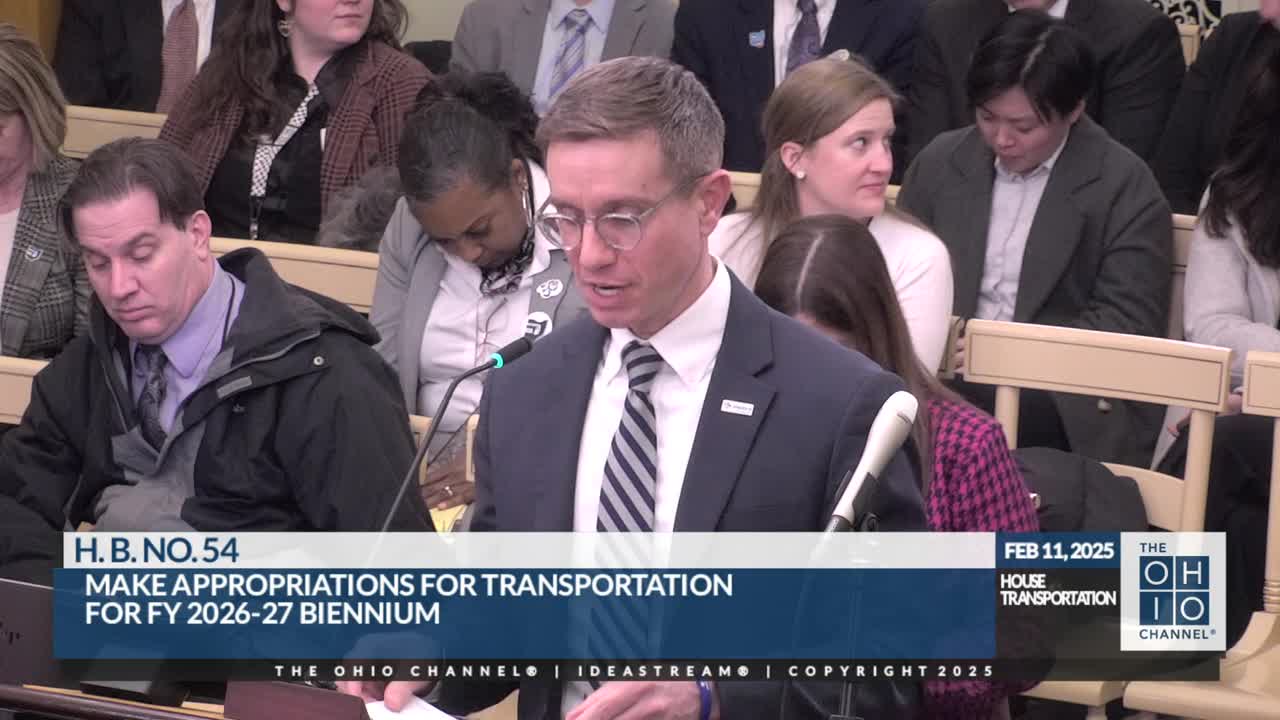
Columbus — Several Ohio transit agencies told the House Transportation Committee on Feb. 11 that assaulting public transit workers should carry felony penalties under Ohio law, and they urged lawmakers to amend the Ohio Revised Code to give transit operators protections similar to those for school bus drivers.
Andrew Aiello, deputy general manager of the Southwest Ohio Regional Transit Authority (Cincinnati Metro), said the agency "strongly support[s] stiffer penalties for those who choose to assault a transit worker in the line of duty." Aiello said operators have suffered career-ending injuries and that transit workers have no physical buffer or lobby to protect them when an attack occurs.
Laura Kaprowski, CEO of the Toledo Area Regional Transit Authority (TARTA), described a Dec. 2 incident at TARTA's downtown transit hub in which an assailant attacked multiple employees: "It was December 2. It was about 6PM and 3 TARTA female employees were assaulted by a habitual offender at our downtown transit hub." Kaprowski said two drivers and a security ambassador were injured and one required hospital transport.
Witnesses linked the safety issue to broader workforce concerns. Agencies said assaults and threats undermine recruitment and retention — problems transit systems already face — and recommended changes to state law as one option to reduce attacks and signal support for frontline transit staff. Several testified that agencies have also adopted physical protections (barriers, cameras, panic buttons) and training programs, but that stronger criminal penalties are a needed complement.
No statutory text was offered at the hearing; witnesses asked lawmakers to consider amending the Ohio Revised Code to raise penalties for assaults on transit workers to felony level, comparable to protections school bus drivers already receive. Committee members expressed sympathy and said they were tracking the request as HB54 advanced.
No committee action occurred at the Feb. 11 hearing.