Get Full Government Meeting Transcripts, Videos, & Alerts Forever!
Get email alerts on the Public Transit Funding topic
No spam. Unsubscribe anytime.
Transit authorities ask Legislature to raise annual transit funding to $85M and restore $15M workforce mobility program in HB54
Summary
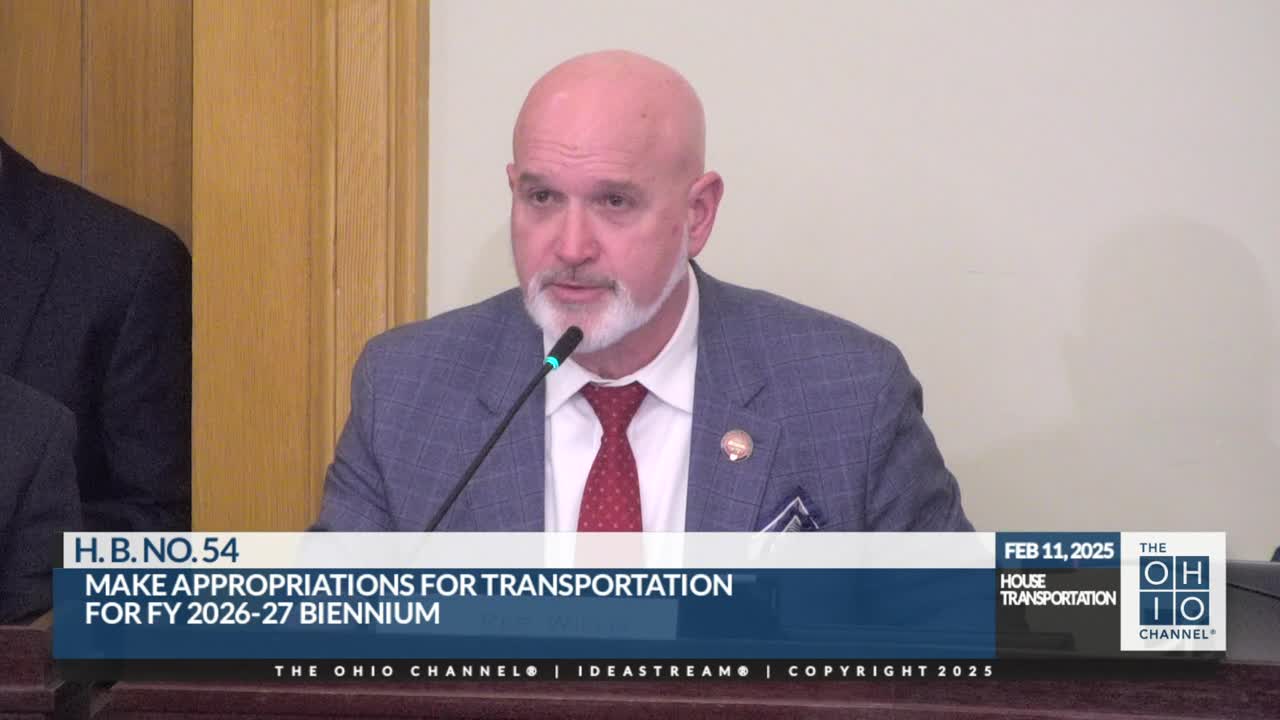
Columbus — Representatives of more than a dozen Ohio public transit providers urged the House Transportation Committee on Feb. 11 to raise annual state transit funding to $85 million and to reauthorize the Ohio Workforce Mobility Partnership Program at $15 million per year as part of House Bill 54, the proposed state transportation budget for fiscal 2026–27.
Columbus — Representatives of more than a dozen Ohio public transit providers urged the House Transportation Committee on Feb. 11 to raise annual state transit funding to $85 million and to reauthorize the Ohio Workforce Mobility Partnership Program at $15 million per year as part of House Bill 54, the proposed state transportation budget for fiscal 2026–27.
At the committee hearing, Patrick Harris, chief external relations officer for the Central Ohio Transit Authority (COTA), told lawmakers: "We respectfully request that the transportation budget recognized public transit's pivotal role in serving Ohio's growing economy and increased funding to $85,000,000." Several other transit CEOs and general managers delivered similar asks and described projects and service gaps that, they said, depend on continued or increased state support.
The request comes as the draft budget maintains $70 million in annual transit funding from the previous biennium. Witnesses from urban, suburban and rural systems said the larger appropriation and a continuing workforce mobility program are needed to match federal funds, support capital projects and pilot service types such as microtransit and to connect workers to large new employers.
COTA said additional funds would help a new mobility center at Rickenbacker and other workforce-transportation efforts. The Greater Cleveland Regional Transit Authority (RTA) emphasized that it is replacing an aging rail fleet, citing a roughly $393 million cost to replace vehicles and that the RTA has identified about $400 million but will need additional support to complete the program. Portage Area RTA, Dayton RTA, Toledo (TARTA), Akron Metro and smaller rural providers described how state funding leverages federal grants and local matches to maintain facilities, replace vehicles and operate paratransit and on-demand microtransit programs.
Several witnesses described the Ohio Workforce Mobility Partnership Program, created in the previous budget cycle, as particularly valuable for planning and pilots that cross jurisdictional lines. Patrick Harris and others asked specifically for the program's reinstatement at $15 million annually, saying those funds allow agencies to study and pilot services that connect workers in suburban or rural areas to employment centers that fixed routes do not reach.
Not all budget details were specified in testimony. Witnesses provided program- and project-level totals in some cases (for example, RTA's rail replacement cost) and left other figures unspecified. Committee members asked about program administration and the ability of agencies to pull down federal funds; transit leaders said agencies are using state funds to leverage federal awards and that flexible state match is important for smaller providers.
If lawmakers adopt the increase requested by witnesses, agencies said the extra funding would be used for a mix of capital (fleet replacement, shelters, facility rehab) and operating investments (service hours, microtransit pilots, paratransit). Several witnesses urged that the workforce mobility program remain flexible to allow rural authorities to provide the local matches required for federal grants.
No committee action or vote occurred at the hearing; testimony was for the committee's consideration as HB54 proceeds through the legislative process.