Get Full Government Meeting Transcripts, Videos, & Alerts Forever!
Get email alerts on the Reentry Services topic
No spam. Unsubscribe anytime.
Nonprofits, reentry programs and juvenile advocates press committee for sustained reentry, DYS reforms and human‑trafficking funding
Summary
A range of nonprofit and workforce organizations told the House Public Safety Committee continued and expanded state funding for reentry programs, community juvenile alternatives and anti‑trafficking grants is needed to lower recidivism and support returning citizens.
A series of nonprofits and reentry organizations urged the House Public Safety Committee to invest in reentry services, community‑based juvenile alternatives, workforce training and continued funding for anti‑human trafficking work.
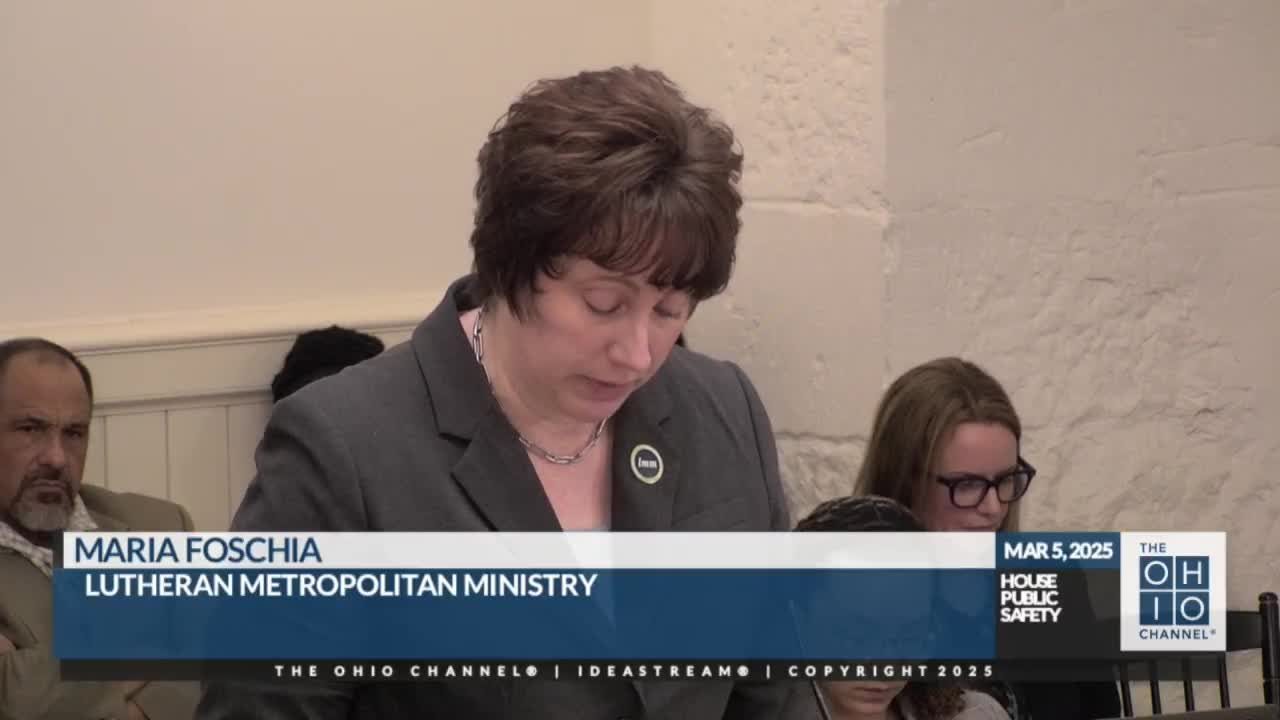
Who testified: witnesses included Maria Focia, president and CEO of Lutheran Metropolitan Ministry (LMM); Oluwatosa (Olu) Martins, Midwest regional director of Center for Employment Opportunities (CEO); Sasha Naiman of the Children's Law Center; Kirsty Muncy of the Collaborative to End Human Trafficking (Cuyahoga County); and grassroots speakers (Project Lift Services, Voices of Injustice, Northeast Ohio Coalition for the Homeless) who emphasized local, culturally competent reentry services and mental‑health supports.
Main asks: advocates asked the committee to continue or expand state funding for proven reentry workforce programs, support the Department of Youth Services (DYS) shift to smaller regional and community corrections facilities, restore and sustain state grants that the Office of Criminal Justice Services uses for anti‑trafficking prevention, and ensure reentry funding supports housing, mental‑health continuity, Medicaid enrollment at release and wraparound services.
Evidence and program outcomes cited: LMM described its Chopping for Change culinary vocational program (more than 400 graduates since 2016; program graduates had an under‑3% recidivism rate in LMM reporting). CEO said it serves justice‑impacted people in Cincinnati, Cleveland and Columbus and requested $1 million over the biennium to restore transitional job funding; CEO noted its placements and credentialing work and said advanced training yields wage increases (a 30% increase for participants who finish advanced training). Children's Law Center urged DYS investments in smaller, regional facilities and community alternatives for youth, citing evidence that community‑based placements reduce recidivism and improve reentry outcomes. The Collaborative to End Human Trafficking asked that OCJS anti‑trafficking line items be maintained, noting prior allocations of about $4.5 million per fiscal year in the last budget.
Grassroots and lived‑experience testimony: multiple witnesses with lived experience of incarceration said state reentry dollars should flow to grassroots providers with community credibility and lived experience. Voices of Injustice and Project Lift advocated for funding to support trauma‑informed mental‑health care, pre‑release planning, restorative justice programming inside facilities and post‑release housing assistance. A speaker who was wrongfully incarcerated urged specific allocations to community groups that provide immediate housing, clothing and mental‑health supports on release.
Juvenile justice points: Sasha Naiman of the Children's Law Center urged funding to shift DYS away from large institutional settings toward smaller regional facilities and community corrections facilities (CCFs) in counties with the most DYS commitments; the center recommended continued funding for staffing and for programming that addresses developmental needs and reduces reliance on seclusion.
Medicaid, continuity of care and MAT: speakers urged strengthened continuity of care at release, including Medicaid enrollment before release where possible; the DRC director had earlier told the committee that Medicaid continuity reduces recidivism and that maintaining federal funding streams is critical.
Committee response and context: committee members broadly engaged with witnesses, asked for details about program scale and cost per participant, and discussed whether reentry funding should prioritize statewide or local allocations. Several members noted that prior biennia included reentry investments and asked for specifics on how many people programs can serve per dollar.
Provenance: testimony excerpts appear across the hearing transcript where each witness introduced their organization and recommendations.