Get Full Government Meeting Transcripts, Videos, & Alerts Forever!
Get email alerts on the Agency Overview topic
No spam. Unsubscribe anytime.
Ohio natural resources director outlines agency operations, cites recreation and conservation gains
Summary
Mary Mertz, director of the Ohio Department of Natural Resources, briefed the House Natural Resources Committee on the agency’s 11 divisions, recent recreational and conservation statistics, and upcoming resource requests, highlighting parks, fisheries, forestry, water monitoring and H2Ohio projects.
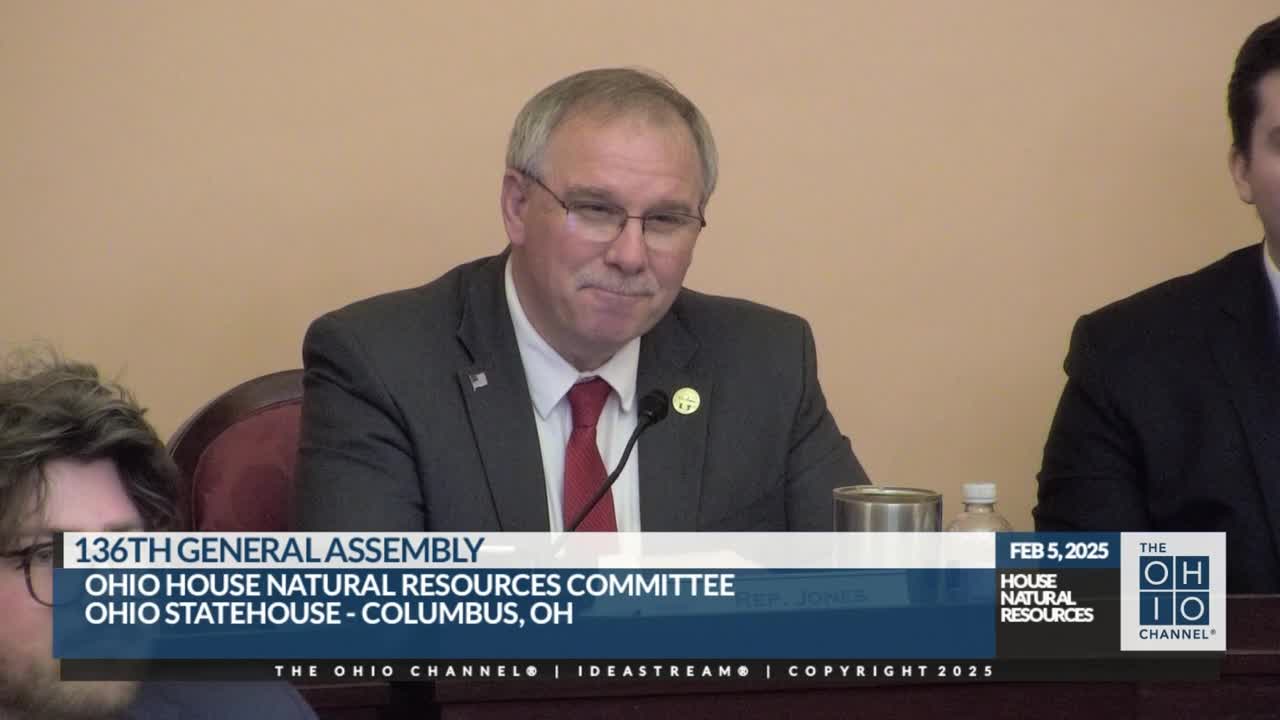
Mary Mertz, director of the Ohio Department of Natural Resources, told the House Natural Resources Committee on Oct. 12 that the agency operates 11 divisions and manages extensive land and water assets across the state.
Mertz said ODNR’s mission is to “ensure a balance between the wise use and the protection of our natural resources for the benefit of all,” and she outlined visitor, licensing and staffing statistics that she said underscore the agency’s scale and statewide reach.
The director told the committee ODNR employs “something over 2,500, 2,600 people at the height of our seasons,” manages 76 state parks, 24 state forests, 147 nature preserves and 189 wildlife areas, and recorded more than one million overnight stays on its properties in 2024. She noted 630,000 active watercraft registrations last year — including about 330,000 paddle craft — and said the agency issued roughly 850,000 fishing licenses and 360,000 hunting licenses in the same period. “This is a big system,” she said.
Mertz laid out the agency’s major land-holding divisions: parks and watercraft (which runs 9,300 campsites and 10 state park lodges), wildlife (which operates six fish hatcheries and stocked about 46,000,000 fish last year), natural areas and preserves (which includes designated scenic rivers and 147 nature preserves), and forestry (which provides technical assistance to private landowners and urban foresters and runs wildfire prevention and volunteer fire assistance grant programs). She said the agency added 24 natural resource officers in the most recent biennium.
She described supporting divisions as well: the geological survey (research and core samples dating to the 1800s, and a statewide seismometer program), engineering (capital construction and infrastructure support), and real estate and land management (which administers federal Land and Water Conservation Fund grants and the department’s capital special-project contracts). Mertz said ODNR coordinates often with the U.S. Army Corps of Engineers.
On specific programs, Mertz highlighted H2Ohio work that uses natural infrastructure such as constructed wetlands to reduce phosphorus and improve rivers; she said more than 200 H2Ohio projects have been completed or are underway in the last five years. She also described investments in the Appalachian region, including upgrades at Jesse Owens State Park and the Appalachian Hills Wildlife Area — cabins with amenities, expanded campgrounds, a visitor center and an eventual 33-mile backpacking loop that will include the Buckeye Trail.
The director framed parks and wildlife work as also supporting economic development and tourism, citing examples such as Maumee Bay State Park’s large birding events and charter fishing activity along the Lake Erie coast.
Mertz concluded by saying ODNR will return to the committee with detailed resource requests during the agency’s budget hearing cycle. She invited members to visit sites and review the information the department will submit for the coming capital and operating budgets.
Committee members asked several follow-up questions during the session about specific local needs, safety services at high-traffic parks and partnerships on historic properties; Mertz said she would provide additional data and work with members on localized issues.