Get Full Government Meeting Transcripts, Videos, & Alerts Forever!
Get email alerts on the Public Comment Civil Rights topic
No spam. Unsubscribe anytime.
Residents urge Twinsburg board not to "over comply" with federal 'dear colleague' guidance on diversity and equity
Summary
Three residents spoke during public comment opposing early or broad compliance with a U.S. Department of Education "dear colleague" letter; speakers said they will submit materials from the NAACP Legal Defense Fund and urged the district to post federal communications publicly.
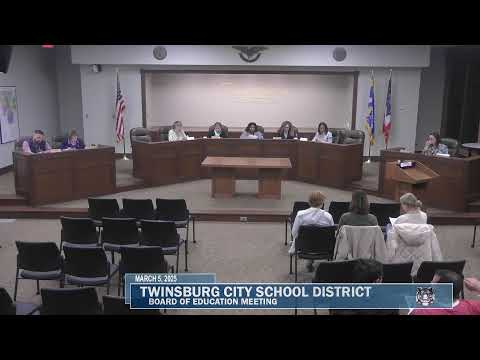
During public comment at the March 5 meeting, residents asked the Twinsburg Board of Education not to "over comply" with a recent Department of Education "dear colleague" letter on civil-rights guidance and urged the board to publish federal communications on the district website.
Sarah Chapel of Demi Drive said she would submit a fact sheet from the NAACP Legal Defense Fund in response to the district's receipt of the federal letter and asked the board to "do the bare minimum" if it chooses to respond. Chapel referenced an American Civil Liberties Union press release published March 5 saying the ACLU is suing the U.S. Department of Education over its guidance, and she said she values the district's diversity and asked the board to protect inclusion efforts.
Nora Suda Riley and Marty Frankter, identifying themselves as parents, retired Twinsburg teachers and community members, also addressed the board, saying the new federal interpretation is a systemic shift that could "gut" protections and programs. They told the board they understood the district could lose federal funds if it does not comply and suggested Twinsburg could face the loss of roughly $1,300,000 in funds (as stated in their remarks). They asked the board to post federal communications publicly and invited community engagement on the topic.
Board members did not take action during public comment; Chapel and Riley/Frankter said they would provide copies of materials to the board and encouraged public participation in ongoing dialogue.