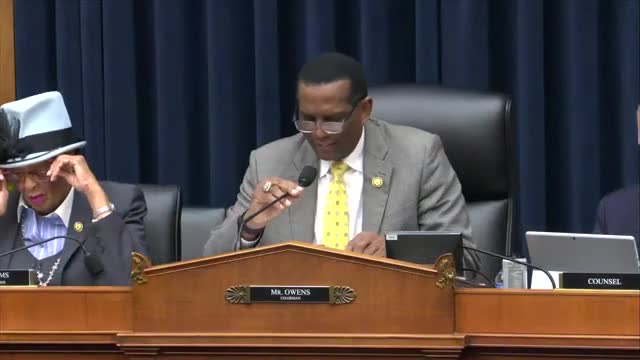
House Subcommittee Hearing Pushes Reauthorization of WIOA and 'Stronger Workforce for America'
Get AI-powered insights, summaries, and transcripts
SubscribeSummary
The House Education and Labor Subcommittee on Higher Education and Workforce Development heard testimony emphasizing reauthorization of the Workforce Innovation and Opportunity Act, or WIOA, and consideration of the bipartisan Stronger Workforce for America Act during a congressional hearing.
The House Education and Labor Subcommittee on Higher Education and Workforce Development heard testimony emphasizing reauthorization of the Workforce Innovation and Opportunity Act, or WIOA, and consideration of the bipartisan Stronger Workforce for America Act during a congressional hearing. Committee leaders, state officials and education and nonprofit witnesses outlined provisions they said would better align training with employer demand and expand services for youth, dislocated workers and adults.
Witnesses described why the reauthorization matters and what changes they want. "Too many WIOA participants finish training without securing a good job," said Stephen Morey, president and CEO of Strata Education Foundation. He urged improved outcomes data, including occupation, hourly pay and job location in quarterly wage records, to show whether training matches employer needs.
The bill discussed would require at least 50% of local adult and dislocated worker funding be used for skills development and expand individual training account (ITA) vouchers for displaced workers to a minimum of $5,000, witnesses said. "This provision puts employers in the driver's seat," Molly Dodge, senior vice president for workforce and careers at Ivy Tech Community College, said of a proposed critical industry skills fund that would reimburse employers or intermediaries for upskilling workers in state-prioritized industries.
Panelists cited specific state and local challenges. "For program year 2022, almost 44% of Alabama's WIOA Title 1 allocation was spent on administration," Nicholas Moore, director of the Office of Education Workforce Transformation for Alabama, told the subcommittee, adding that only about 34% of Alabamians who exited training were later employed in training-related occupations. Moore and other witnesses supported pilot authority to allow some states to consolidate local WIOA areas into single-state local areas to reduce administrative layers and focus funds on training.
Witnesses and members pressed the committee on measures to strengthen youth and reentry programs. Robert Saenz, executive director of New Ways to Work and board chair of the National Youth Employment Coalition, said nearly 4,300,000 U.S. young people ages 16–24 are disconnected from school and work. "If we were to reconnect all 4,300,000 opportunity youth in the United States, this will contribute $51,000,000,000 per year to the economy," Saenz said, and he voiced support for codifying the Reentry Employment Opportunities program and a competitive youth apprenticeship readiness grant discussed in the bill.
Multiple witnesses highlighted community colleges and employer partnerships as essential delivery partners. Dodge said Ivy Tech serves more than 200,000 students and tracks graduate earnings; the college is developing industry-aligned certificates and credential transparency tools to help learners and employers evaluate programs. Witnesses also urged better recognition of prior learning and competency-based credit to avoid redundant training.
On data and accountability, Morey recommended codifying and expanding Workforce Data Quality Initiative (WDQI) grants so states can implement enhanced wage records. "By helping states that want to add these three data points to quarterly wage records, we can gain a clear picture of how well workforce programs meet participant needs," he said. Several members and witnesses said improved data would help employers see the value of engaging with workforce programs and allow training providers to focus on credentials of demonstrated labor-market value.
Members raised operational concerns: reducing paperwork on one-stop partner agreements, modernizing technology for intake and assessments, and clarifying eligible training provider lists so jobseekers can identify quality programs. Witnesses described employer-driven approaches — industry advisory boards, incumbent worker training caps, and performance-based critical industry funds — as ways to align supply and demand.
There were no formal committee votes at the hearing. Multiple members urged the panel and the full committee to advance the bicameral Stronger Workforce for America Act; several witnesses said the bill had been close to law in the prior Congress but was removed from an end-of-year package. Committee members emphasized bipartisan cooperation and asked witnesses to continue providing implementation details to inform legislation.
The subcommittee hearing gathered testimony and questions; it did not produce legislative action on the record. Members left the record open for written statements for 14 days, as announced at the hearing.
Ending: The hearing served as a policy and technical review aimed at preparing a WIOA reauthorization proposal. Witnesses and members signaled bipartisan interest in moving the Stronger Workforce for America Act forward, while asking for more state-level data, clearer eligible-provider standards, and funding flexibility to expand apprenticeships, community college partnerships and supports for opportunity youth and returning citizens.