Get Full Government Meeting Transcripts, Videos, & Alerts Forever!
Get email alerts on the Education Physical Activity topic
No spam. Unsubscribe anytime.
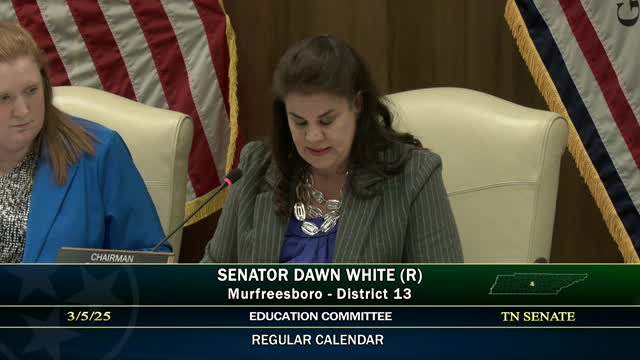
Committee approves bill to increase elementary recess and PE minutes; amendment reduces original proposal
Summary
The Senate Education Committee voted 8–1 to move a bill requiring 40 minutes of daily physical activity for elementary students (as amended). Supporters cited academic and health research; some local directors warned it may require schedule changes or longer school days.
The Senate Education Committee approved an amendment to Senate Bill 158 that increases the minimum daily unstructured physical activity for elementary-school students from the current statutory minimum of 15 minutes to 40 minutes per day. The committee adopted the amendment (which reduced an initial 60-minute proposal to 40 minutes) and passed the bill 8–1; it will move to the Senate calendar.
Senator Hensley, the bill sponsor, said research links regular recess and physical activity to improved attention, cognitive performance and social skills. "Recess represents an essential planned respite from rigorous cognitive tasks," Hensley told the committee. Supporters included the Say Yes to Recess advocacy group; witnesses described research showing higher test scores, reduced behavioral incidents and improvements to health markers after extended recess programs.
Opponents raised scheduling and instructional-time concerns. Several school directors told the committee that adopting 40 minutes could require districts to lengthen the school day or compress instructional blocks that are "strongly recommended" by the Department of Education, such as 90-minute ELA/mathematics blocks for some grades. Department staff said the statutory instructional-time minimum is 6.5 hours per day and that districts would need to examine schedules; department officials did not take a position for or against the bill.
Committee action and outcome: The committee approved amendment 3853 (which sets the requirement at 40 minutes) and reported the bill to the Senate calendar by recorded voice and roll-call (final tally: 8 ayes, 1 no). Testimony and written materials cited the LINC/Link Project results and other research associating recess expansions with reductions in off-task behavior and gains on standardized measures in participating districts.
What to watch: Districts will need to align the new requirement with existing instructional targets and local schedules. The Department of Education indicated that districts currently have the flexibility to meet the instructional minute requirements but warned that some divisions may need to lengthen the day, reduce other discretionary time, or rework schedules to provide the additional recess minutes.