Get Full Government Meeting Transcripts, Videos, & Alerts Forever!
Get email alerts on the Land Use And Planning topic
No spam. Unsubscribe anytime.
Subcommittee advances bill changing vesting of development rights, offers optional administrative path for conditional use permits
Summary
House Bill 1326 would shift the start of vesting rights from permit approval to application submission and allow municipalities to adopt an administrative process for conditional use permits. The Cities & Counties Subcommittee voted 5-2 to move the bill to the next calendar.
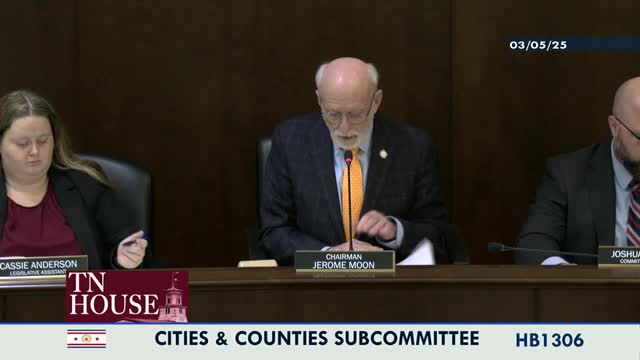
On March 5, 2025, the Cities & Counties Subcommittee advanced House Bill 1326 to the next available State and Local Government calendar by a recorded 5-2 vote. Chairman Vaughn presented the bill, which would change the legal timing of vesting for development rights and permit a permissive administrative route for conditional use permits.
Chairman Vaughn said the bill would "move that 3 year period back from approval to submission," explaining the change is intended to prevent a jurisdiction from altering land‑use rules after an applicant has submitted a complete permit application and before the permit is decided. The sponsor said the change is prospective only and would apply to actions after July 1, 2025.
Committee members debated the practical implications. Representative Mitchell described a local example in which a planned unit development (PUD) sat dormant and local rules changed in the interim; he asked whether the bill would reach back to revive older vesting. Chairman Vaughn answered it would not apply retroactively and reiterated the effective date. Another committee member and a presenting lawyer noted that jurisdictions vary in what constitutes a "complete" application and that moving the vesting clock to submission could shorten the effective entitlement period if application processing takes time.
The bill also permits — but does not require — municipalities to adopt an administrative approval process for conditional use permits, rather than treating those permits as a de novo or discretionary public hearing process; the sponsor said the change is optional for local governments.
The clerk reported 5 ayes and 2 nos; the chair declared the ayes prevail and moved the bill to the next available State and Local Government calendar.