Get Full Government Meeting Transcripts, Videos, & Alerts Forever!
Get email alerts on the Capital Budget topic
No spam. Unsubscribe anytime.
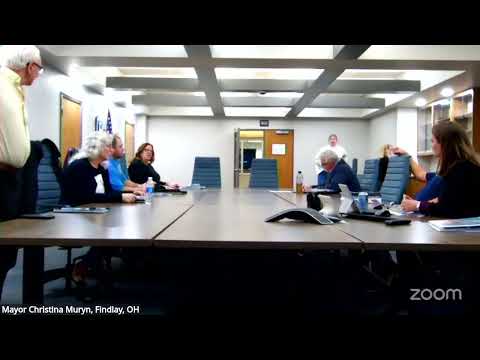
Appropriations Committee approves Findlays proposed 2025 capital plan, directs further planning on major projects
Summary
Findlays Appropriations Committee voted to accept the proposed 2025 capital plan after a detailed presentation of multiyear projects, revenue assumptions and prioritized investments in water/sewer, streets, fleet and facilities. Staff were directed to continue work on master plans and the sewer long-term control plan.
The Findlay City Appropriations Committee voted March 5 to accept the administrations proposed 2025 capital plan, a spending framework that the administration said pairs roughly $9.5 million of grant and program funds with $3.7 million in local funding and a $5.3 million projected capital revenue allocation.
The plan matters because it sets the citys multiyear capital priorities and spending envelope for infrastructure, facilities and equipment and frames next steps on larger, multi-year projects including sewer control work, an airport master plan and public-works facility planning.
City staff presented the document as a living 10-year capital outlook shaped each year by department requests, grant opportunities and carryover project money. The presentation summarized recent capital work since 2019, staff priorities for 2025 and a list of larger projects the administration is tracking for the next decade. Committee members pressed for clarity on debt levels, project timing and what items would be carried forward.
The administration said the city allocates 20% of income-tax collections to capital; that allocation is the source behind the plans $5.3 million capital revenue projection for 2025. Presenters said roughly $13.3 million is forecast for infrastructure investments in 2025, with about $9.5 million expected to come from identified grants and programs and $3.7 million from local sources.
Staff outlined key near-term items and multiyear efforts: an Arcadis-led water master plan, an FAA-funded airport master plan and runway work, multiple water- and sewer-line replacements, phased sewer pump replacements, a continuing rollout of geographic information system (GIS) asset data, dispatch radio and 9-1-1 upgrades, and ongoing street resurfacing and traffic-signal equipment replacement. The sewer program includes a planned long-term control program that staff estimated at about $42 million over 10 years; staff said project-level commitments and timing will be developed during 2025 and entered in the capital book when identified.
Committee member Andrew (role not specified), who reviewed the plan with staff, praised the documents detail and the citys low reliance on annual debt for the capital program: "You have a great capital plan. I want to commend you for that because you do a wonderful job of spending a lot," he said, while noting the need to monitor operational deficit trends that rating agencies may review.
Members discussed a number of programmatic choices rather than making immediate line-item spending commitments. Staff described the capital book as a working tool: projects often carry forward between years, some line items are seed amounts for later engineering or design work, and appropriations will be brought forward during the year as revenue and schedules firm up. Staff also said some large projects (public-works building replacement, a potential secondary raw-water line, and interchange aesthetic improvements) remain on the administrations radar but lack final cost or schedule details.
On the funding side, staff catalogued common grant and program sources: the Ohio Public Works Commission, JobsOhio, ODOT large-city funds, FAA airport funding, rural community funds, permissive-license-fee revenues, and vehicle-registration fees. Presenters said some recurring programs are relatively predictable and that the city uses a mix of grant funding and local dollars to manage the multiyear program.
The committee approved the plan by voice vote. The motion was recorded as "accept the proposed capital"; committee members answered "aye," and staff said the approved framework and supporting materials will be posted online.
Next steps specified by staff include finalizing the water and airport master plans (each described as 12—18 month efforts), developing detailed project lists and budgets for the sewer long-term control plan, and returning to council with development agreements or funding requests for any projects that require additional appropriations or debt. Staff also said they will continue to update the capital booklet throughout the year as projects are scoped, bid and funded.
The presentation and the approved capital-book framework will be posted to the citys public channel, and staff will bring specific appropriation ordinances to council as needed throughout 2025.