Get Full Government Meeting Transcripts, Videos, & Alerts Forever!
Get email alerts on the Public School Support Budget topic
No spam. Unsubscribe anytime.
Committee reviews public school support budget; analysts flag enrollment, funding shifts
Summary
The Joint Finance‑Appropriations Committee received a presentation on March 4 detailing why Idaho’s public school support appropriation has shifted, with analysts citing changes in how student counts are measured, the winding down of federal COVID‑era funds and pending legislation that could change facility and funding formulas.
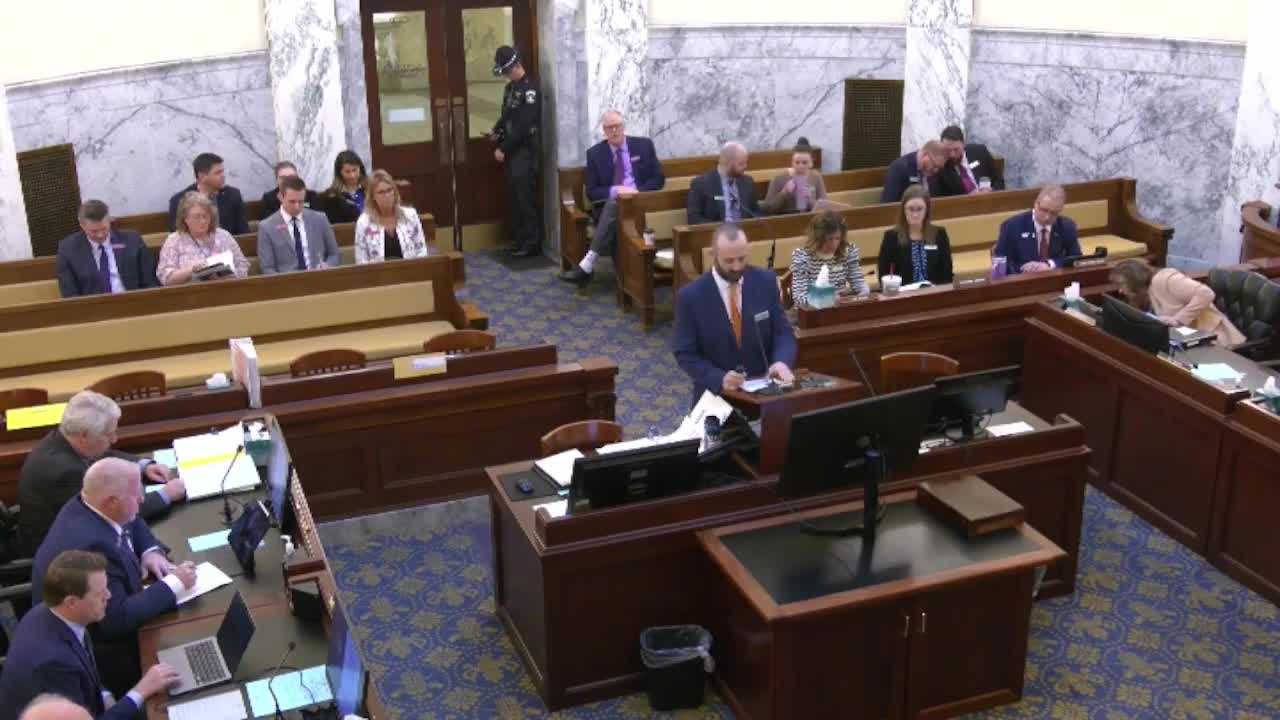
Boise — The Joint Finance‑Appropriations Committee on March 4 heard a high‑level briefing on the state’s public school support program, including drivers of year‑to‑year change and pending statutory issues that would affect next year’s appropriation.
Jared Tetrault, deputy division manager with the Legislative Services Office Budget and Policy Analysis Division, told the committee the public school support program serves 115 local school districts and about 75 public charter schools and is organized into six budget divisions, including a new student support division. "For every support unit the state will fund 1.55 full‑time equivalent positions," Tetrault said, describing how the state distributes much of its school funding.
The briefing centered on why appropriations moved in recent years. The LSO presentation noted that a shift back to Idaho law’s requirement that funding distributions use average daily attendance rather than enrollment has produced an effective reduction in support units. That change, combined with the end of ARPA/ESSER one‑time funds and other formula effects, contributed to a net drop in funded support units — the presentation referenced an estimated 200 fewer support units for the coming year.
The change in units was a frequent topic during questions. Senator Ward‑Engleking asked why support units fell despite similar total enrollment; Tetrault explained that pre‑COVID counts of attendance as a percentage of enrollment averaged about 95 percent, rose during the pandemic and have since settled closer to 94 percent under the required attendance‑based counts. He said those percentage changes affect the number of support units the state funds.
Tetrault also walked the committee through fund sources and notable line items in the budget book "big sheet": general fund, dedicated funds (including public school other income and endowment‑derived revenue), and federal funds. He said the 2025 appropriation reflected a general fund in the neighborhood of $2.7 billion, dedicated funds roughly $277 million and federal funds about $260.6 million; the presentation also called out a roughly $99.9 million remaining in ESSER/ARPA for the current year.
Committee members questioned how specific program dollars are distributed. Tetrault said statutory formulas in Idaho Code Title 33 and specific code sections (presentation cited 33‑1006 for pupil transportation) determine the distribution method for several line items, and he pointed to House Bill 292 as the statutory vehicle creating a school district facilities fund that has been brought on budget. He noted House Bill 374 would make that facilities fund a continuous appropriation if enacted and that the committee would need to consider whether to remove the fund from the annual appropriation if HB 374 passes.
Superintendent Debbie Critchfield framed the budget discussion around maximizing local control and aligning state dollars with student outcomes. She said districts have used federal one‑time funds in multiple ways, including salary and personnel; after reviewing district reporting she said roughly 80 percent of districts used some federal dollars for personnel. "I sent a letter to our district and charter leaders advising them that the period of those federal funds were coming to an end," Critchfield said, adding that the department chose not to request a federal extension of ESSER timelines.
The committee also heard about compensation adjustments in the proposed budget. Tetrault and department staff described both cost‑of‑compensation (CEC) adjustments and career‑ladder equivalents that affect salary apportionments for administrators, classified staff and teachers. For the personnel component, members asked for supplemental data about how health‑insurance allocations are applied at the district level and whether the state can report how many district employees receive health coverage under the state plan versus local plans.
Members pressed for more detail on three pending pieces of legislation that the analysts tied to budget action: bills on a weighted student funding formula, a transportation funding formula (the report noted the transportation bill was scheduled for committee the following day), and a special‑needs student fund that was slated for an education committee hearing. Tetrault said those funding changes, if enacted in germane committees, would create appropriations or necessitate committee action.
Why it matters: the public school support budget is the largest portion of the K‑12 appropriation and is driven by statutorily defined formulas. Small shifts in attendance percentages, endowment receipts, or legislative changes to funding formulas can materially change how money is allocated among teachers, student support, facilities and transportation.
The committee requested additional, district‑level detail on several items, including the distribution of the school district facilities fund, a breakdown of districts’ professional‑development and federal professional‑development dollars, and a report on how many district employees are covered through the state health plan versus local plans. Analysts said they would provide those materials to the committee.
The hearing was primarily informational; committee members indicated they would reconcile the department and LSO materials with pending bill action and follow up with requests for data to inform appropriation decisions.