Get Full Government Meeting Transcripts, Videos, & Alerts Forever!
Get email alerts on the Housing topic
No spam. Unsubscribe anytime.
Council approves $1.06 million gap loan to convert historic Giffen School into affordable housing
Summary
The council authorized up to $1,059,400 from the Affordable Rental Development Fund to Historic Giffen LP to support conversion of the vacant Giffen School and construction of associated buildings into affordable housing; neighborhood speakers and the developer described a larger 77‑unit project.
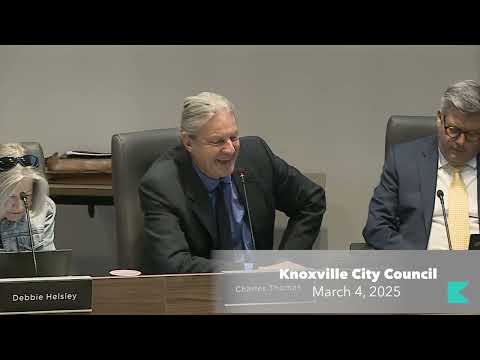
The Knoxville City Council voted to award up to $1,059,400 from the city’s Affordable Rental Development Fund to Historic Giffen LP to support redevelopment of the Giffen Grammar School property at 1834 Beach Street into affordable rental housing.
The resolution was introduced as agenda item 11F and approved by voice vote.
The city’s funding will fill a gap in the project financing for a development proponents described as a larger effort to restore and reuse the historic school building. Benjamin Case, representing Case Enterprises, said the overall Historic Giffen Square project restores about 30,000 square feet of the existing historic building and will produce a total of 77 units citywide — 35 inside the existing school and 42 in two additional buildings. “Historic Giffen Square delivers in both regards,” Case said, calling the development both a preservation and housing outcome.
Neighbors who spoke in support said developers worked closely with the South Haven community to reduce density and preserve neighborhood trees. Kara Strauss, a South Haven resident, said the developer “has altered their plans, heard community voice, decreased density… increased parking” and that neighborhood residents now ask, “When’s the development going to start?” Anna Parmley, another resident, described the vacant school as dilapidated and said returning it to use will benefit access to neighborhood resources.
City staff and council members highlighted the project’s preservation and affordability features. Councilwoman Parker noted the city subsidy is tied to units affordable to households below market, and Kevin DuBose of Housing and Neighborhood Development explained how the city’s gap financing works: the program contributes funding per unit only as needed and ties the city subsidy to specific units. DuBose said the “35 number is just related to gap financing” and that the project expects to include project‑based vouchers that will benefit deeply affordable households.
Project details and timeline offered in the meeting: the school building is about 98 years old and listed on the National Register of Historic Places; the developer said the affordability term for units supported by the city is 30 years. Benjamin Case estimated construction could start in a conservative timeline around June, with an 18‑month build time once under way.
Next steps: the city’s award provides gap financing; final project timing depends on funding partners and construction contracts. Council members praised the public‑private partnership and the neighborhood engagement that led to the current plan.