Get Full Government Meeting Transcripts, Videos, & Alerts Forever!
Get email alerts on the Comprehensive Plan Housing topic
No spam. Unsubscribe anytime.
Raymore council debates housing targets, land-use tradeoffs in comprehensive plan review
Summary
City staff presented comparative housing data and a market study to inform a draft comprehensive plan; council members debated whether to codify target ranges for single-family, multifamily and commercial land and directed staff to include the consultant’s table as an exhibit and to bring the plan forward to Planning & Zoning.
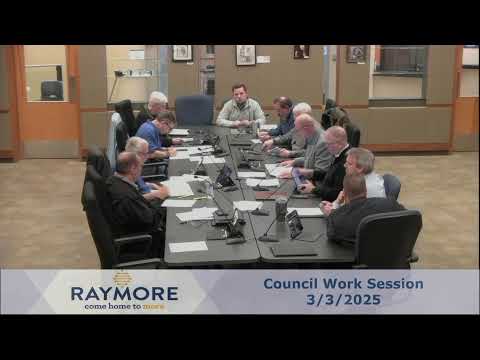
City staff presented updated housing and land-use data during a Raymore City Council work session and asked for direction on whether to codify target ranges for housing types in the draft comprehensive plan that the council expects will guide development through 2045.
David Gress, the city’s development services director, reviewed comparative charts and two market studies that use 2020 U.S. Census and 2023 ACS data. Gress told the council the studies show Raymore continues to be a net residential growth market: staff reported 220 permits issued in 2024 and said roughly 600 new single-family lots have been approved across five Raymore neighborhoods.
Gress and other staff told the council the consultant provided both conservative and optimistic growth scenarios and estimated that, under current market projections, the city could support about 80 acres of new commercial development by 2045. “The pork chop alone is 132 acres,” a staff presenter said, adding that the city needs to be mindful of the limited acreage that can be devoted to retail and commercial uses and the evolving retail environment.
City staff suggested using ranges rather than fixed percentages for the plan’s long-term housing targets. “You might want to look at ranges,” a staff presenter said, noting that housing percentages “are a living thing” and will change as new permits are issued. Staff proposed including the consultant’s housing table as an exhibit to the comprehensive plan and then beginning the formal adoption sequence with the Planning and Zoning Commission before returning the full plan to the City Council for adoption.
Council members debated how prescriptive the plan should be. Councilmember Mills said the city should explicitly protect single-family housing and proposed a minimum single-family percentage; Councilmember Tolan cautioned that market forces — including housing affordability for younger residents — argue against hard caps. Councilmember Baker stressed the city’s “pull factor” and said capturing more retail visitors would broaden the tax base.
Council direction recorded in the work session included: staff will present the comprehensive plan with the consultant table as an exhibit; staff intends to schedule Planning & Zoning Commission consideration of the land use and transportation framework before returning the full plan to the council; and staff said it will compile current ward-by-ward breakdowns of housing types using GIS, a task that will require additional labor and time.
No formal vote to adopt the plan occurred at the work session. Staff said the comprehensive plan and its supporting exhibits will be forwarded for the next steps in the formal adoption process.