Get Full Government Meeting Transcripts, Videos, & Alerts Forever!
Get email alerts on the Strategic Planning topic
No spam. Unsubscribe anytime.
State Water Board outlines 2025 strategic work plan: SAFER funding, Bay–Delta planning, PFAS, Sigma and infrastructure funding highlighted
Summary
The State Water Resources Control Board reviewed a 2025 update of its strategic work plan on March 4, highlighting about 24 near-term priorities including SAFER funding for failing water systems, Bay–Delta plan work, water-rights modernization and stormwater permit updates.
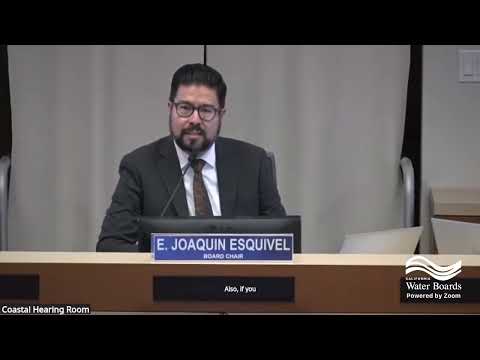
The State Water Resources Control Board on March 4 reviewed and discussed its 2025 strategic work plan — an update staff said reflects continuing priorities across four themes: protect public health; protect and restore watersheds and marine environments; increase statewide resilience to climate change; and strengthen relationships, systems and internal capacity.
Executive Director Eric Oppenheimer told the board the plan catalogs roughly 70 actions staff will focus on during the next two to five years; roughly 24 of those are marked as high priorities for the coming year. Chief deputies and division leaders summarized where staff expect progress in 2025.
Key priorities and near-term milestones highlighted by staff include: - Drinking water equity and SAFER funding: continue to implement the Safe and Affordable Funding for Equity and Resilience (SAFER) program, with a focus on failing systems on the 2019 human-right-to-water list and solutions for domestic-well communities. Staff said they would pursue clearer goals and timelines for long-term solutions and consolidation for private-well communities. - Bay–Delta plan update: staff reiterated that 2025 will be a major year for the Bay–Delta Water Quality Control Plan update with additional workshops and outreach planned. - Water rights modernization: staff said the new water-rights data system will be launched in 2025 to make records more accessible and to facilitate reporting. - SIGMA/SGMA implementation: staff described ongoing work implementing the Sustainable Groundwater Management Act, including probation and basin interventions where plans are inadequate. - Nutrients and harmful algal blooms: staff described work to prioritize actions addressing harmful algal blooms, biostimulatory substances, and ocean acidification/hypoxia. - Utility and wildfire orders: the board continues to work on orders governing utility activities for wildfire preparedness and response to protect water quality. - Infrastructure funding: staff will develop guidelines and coordinate distribution of Proposition 4 funds and other sources for drinking-water, wastewater and water-reuse projects with an emphasis on disadvantaged communities. - Stormwater and permits: staff reported ongoing work on the industrial and Phase II municipal stormwater permits, site-specific objectives for copper and zinc, and a cost-of-compliance policy (noted as completed and to be removed from the “starred” list). - PFAS and manganese: Division of Drinking Water noted MCL rulemaking for PFAS (PFOS/PFOA) remains a priority and the division plans a manganese study to better quantify distribution-system impacts.
Board members and public commenters urged additional clarity and stronger commitments in several areas: explicit prioritization and long-term solutions for domestic wells, greater attention to secondary contaminants (for example manganese, total trihalomethane), and faster timelines for reissuing or updating stormwater permits.
Public commenters — including representatives of Community Water Center, Central California Environmental Justice Network, California Coastkeeper Alliance and local mayors and officials — urged the board to align the plan with SAFER expenditure priorities and to emphasize funding and capacity-building for disadvantaged and tribal communities.
Board members praised staff for producing a practical document while noting there are more items than can be starred as “high priority.” Several members said safe drinking water and the Bay–Delta plan should be the top priorities. Staff said the draft work plan is informational and still open for changes requested by the board before a final posting.
Staff said they would correct minor typographical and capitalization issues (for example, capitalizing “Tribe/Tribal” where appropriate), remove completed items from the starred list, and consider board direction on adding or reprioritizing items following the meeting’s public comment and board discussion.