Get Full Government Meeting Transcripts, Videos, & Alerts Forever!
Get email alerts on the Childcare Rules topic
No spam. Unsubscribe anytime.
Senate committee debates bill to revise child-care administrative rules; concerns raised about background checks and federal funding
Summary
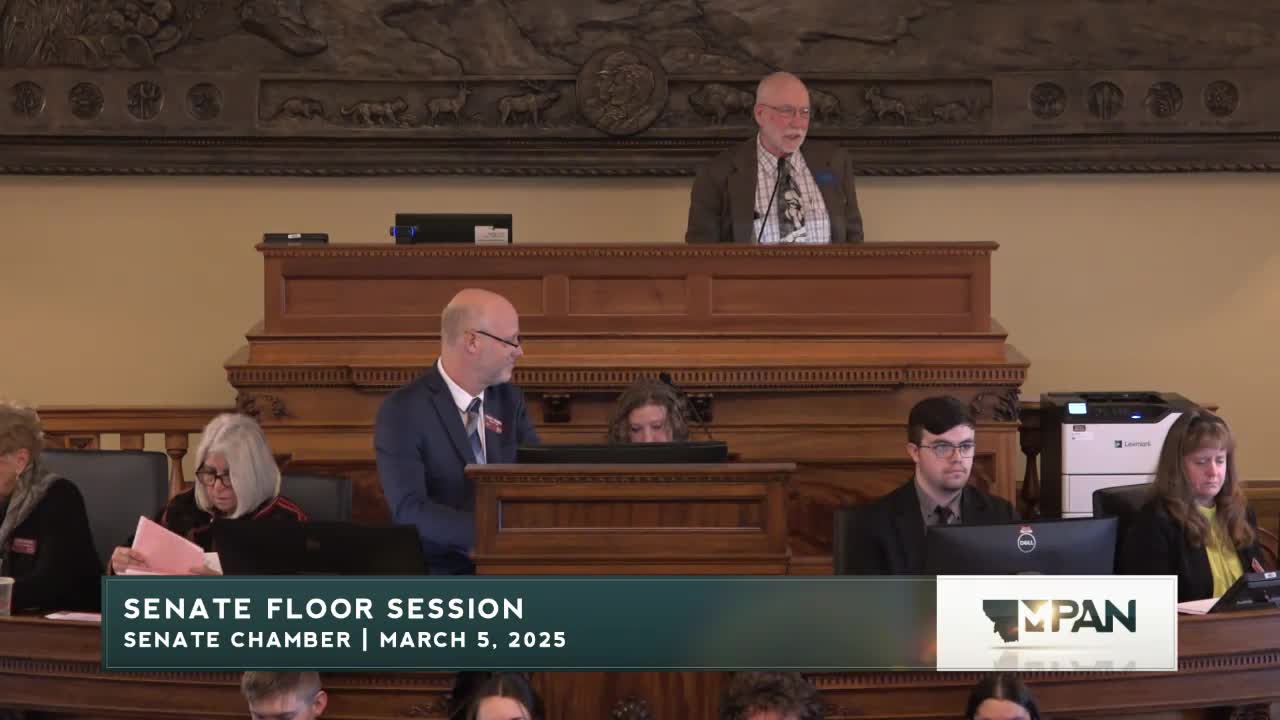
Senate committee considered Senate Bill 285 on second reading, a measure introduced as a legislative response to a 90‑page package of administrative rules from the Department of Public Health and Human Services (DPHHS) that govern school‑age care and child care.
Senate committee members considered Senate Bill 285 on second reading, a measure introduced as a legislative response to a 90‑page package of administrative rules from the Department of Public Health and Human Services (DPHHS) that govern school‑age care and child care.
The bill’s sponsor said the measure would give the Legislature a greater role in rules that the executive branch is writing and would revise Administrative Rules of Montana (ARM) references related to school‑age care. "What this does is it looks into the legislature having a say in these rules," the sponsor said, arguing that the interim committee had formally objected and that the 90‑page package was excessive.
Why it matters: senators who spoke in opposition said the rule package reflected input from hundreds of stakeholders and that rolling parts of it back could reduce safeguards for children and imperil federal funds that support child‑care subsidies in Montana.
Discussion and key points
- Stakeholder process: Senator Kirk Carpenter noted the agency’s administrative rule‑making process included "700 stakeholders, from inside the industry, parents, small business owners, industry groups," and said that process produced "an over 90 page document" that included both rule text and explanatory material. He argued the Legislature cannot replicate that stakeholder work in a short floor window.
- Background checks: Members warned the bill would change background‑check timing. Carpenter said the bill would move from annual background checks to a maximum interval of five years, and described that change as "just not good" for people caring for children. The sponsor said the bill sets a maximum of five years because five years is referenced in federal law.
- Infant care and ratios: Opponents said the bill could eliminate specific protections for infant care and make supervision standards less strict. Carpenter emphasized that infant care requires more staff and closer supervision, and said removing those requirements could create practical safety and regulatory problems for providers.
- Federal funding risk and fiscal note: Several senators raised the possibility that changes to the rule package could jeopardize federal funding that supports child‑care subsidies, repeatedly citing a figure of about $41,000,000. Committee members also noted there was no fiscal note on the bill in committee records; one senator said that producing a fiscal note now would highlight an "undetermined financial impact."
- Scope of change: The sponsor said the bill does not touch some department provisions that were intended to prevent the loss of federal dollars, and that it "only modifies these rules." In closing, the sponsor said, "It only modifies these rules. It doesn't the world is not falling. Federal funds are not gonna go away."
Outcome and next steps
A committee motion was made that the committee, after considering Senate Bill 285, recommend the bill "do pass." The clerk recorded a tally during the committee vote period: "23; 5 being definitely postponed" (recorded text). The committee motion and the recorded tally were entered into the record; the transcript does not provide a clarified roll‑call of individual aye/no votes in committee within the excerpt provided.
Context and background
Senate Bill 285 was presented as a legislative response to the DPHHS rule package governing child care and school‑age care. The rule packet cited in the debate was described on the floor as more than 90 pages long, of which roughly 57 pages were rule text and the remainder explanatory material. Multiple senators said the agency engaged a broad stakeholder group in developing the rules during the interim.
What was not resolved in the excerpt
The transcript excerpt does not include a final chamber‑level vote on Senate Bill 285, a complete roll call of committee members with named votes, or a formal fiscal‑note text. Several senators said a fiscal note was not produced in the interim record.
Tally (committee record as spoken in the transcript)
Recorded at the committee desk: 23 (yes); "5 being definitely postponed" (recorded phrasing in the transcript).
Speakers quoted in this article appear in the meeting record and are identified by their on‑record statements.