Get Full Government Meeting Transcripts, Videos, & Alerts Forever!
Get email alerts on the Public Safety Radios topic
No spam. Unsubscribe anytime.
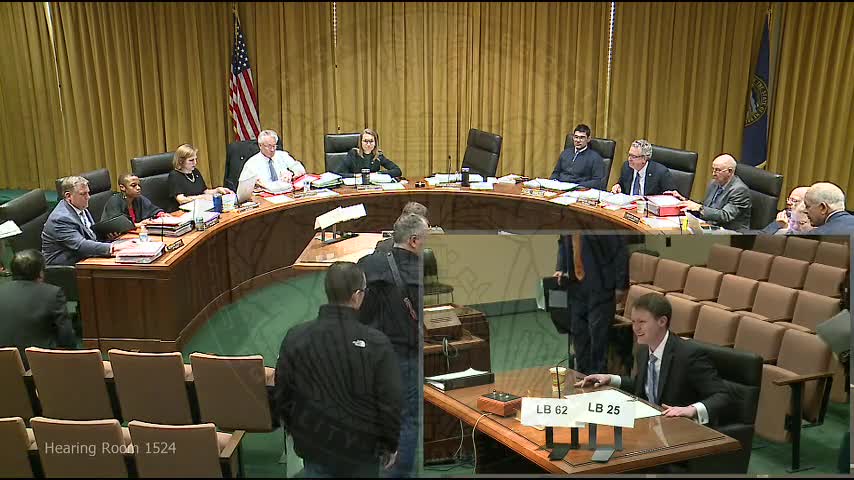
Lawmakers hear bipartisan push to fund statewide radios for volunteer fire departments (LB25, LB62)
Summary
Senators Beau Ballard and Tom Brandt and multiple volunteer chiefs urged the Appropriations Committee to fund radios and matching grants so volunteer fire departments can join the statewide radio system. Testimony described dangerous mutual-aid incidents in which responders could not communicate because departments used different frequencies; kit
Senators Beau Ballard and Tom Brandt asked the Appropriations Committee to fund equipment and grants to improve radio interoperability for Nebraska’s volunteer fire departments. Ballard introduced LB25, a 1:1 local matching grant proposal to help counties and fire districts buy and install radios and related equipment. Brandt’s LB62 would appropriate $19 million from the General Fund for fiscal 2025–26 to the Department of Administrative Services (DAS) for the Office of the Chief Information Officer (OCIO) to expand the Statewide Radio System (SRS) kits to volunteer departments.
Senator Ballard said the bills respond to practical safety failures. “The bill mitigates interoperable operational issues and appropriates additional dollars to Nebraska public safety communication system and bolsters local investments through the establishment of a 1 to 1 matching grant program,” Ballard told the committee. Several volunteer chiefs and emergency responders described incidents in which communications were ineffective: Linwood Rural Fire Chief Joel Cerny said an April 2022 field fire response involving departments from four counties became “a disaster, as each of the counties were using a different frequency.” Dan Ripley, a volunteer EMT, said the Broken Bow fires showed how an interoperable system “allowed agencies to communicate,” and that mismatched equipment has real consequences: “Time is muscle,” he testified about cardiac and traumatic medical calls.
Officials and association representatives described the funded kit the state has distributed: a typical kit includes a vehicular/mobile radio, a vehicular repeater (to link hand-portable radios to the statewide system) and portable radios. OCIO manager Dave Colllett said each portable radio costs about $8,000–$9,000 and a full kit previously distributed runs about $25,000; vehicular repeaters allow lower-power portables to connect in areas where portable radios alone have insufficient coverage. Testimony and county officials emphasized that some areas remain dead zones because of tower coverage gaps; several neutral testifiers from Merrick and Central City said a kit will not function if local tower coverage is inadequate.
Proponents described prior funding rounds: the Legislature appropriated $5 million in 2023 and $2 million in 2024 and those initial distributions reached more than 175 departments, proponents said, but demand outpaced available funds. Lancaster County witnesses said the county used $500,000 in ARPA funds to buy equipment and commissioned a local study that estimated Lancaster-only upgrade costs ranging from about $1.48 million to $9.15 million depending on scope.
Several volunteer organizations and county officials urged passage to close a statewide safety gap; OCIO staff offered technical clarifications in a neutral capacity. No opponents testified.
Ending: Committee members asked technical and coverage questions; sponsors and proponents said funding would prioritize interoperability and training. The committee took no floor action at the hearing.