Get Full Government Meeting Transcripts, Videos, & Alerts Forever!
Get email alerts on the White Bagging Specialty Drugs topic
No spam. Unsubscribe anytime.
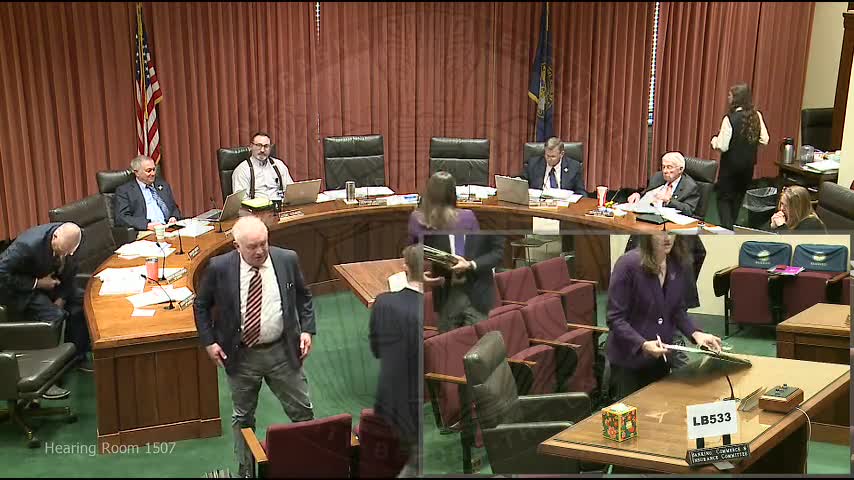
Bill to set rules for ‘white‑bagging’ specialty drugs prompts insurer and provider debate
Summary
LB533 would require process, shipping and communication standards when specialty pharmacies deliver clinician‑administered drugs to clinical sites. Insurers and health plans supported standardized rules; some hospitals and pharmacists expressed safety and operational concerns and asked for stronger guardrails.
Senator Kathleen Kauth introduced LB533 to set statewide standards for the delivery of clinician‑administered specialty drugs by specialty pharmacies — commonly called "white‑bagging" — and to require communication and handling safeguards intended to preserve patient access and lower costs.
Proponents, including the Nebraska Insurance Federation, Blue Cross and Blue Shield of Nebraska and several patient advocates, said the bill would add clarity and predictable procedures so specialty pharmacies, clinicians and payers can coordinate deliveries safely and on time. Robert Bell of the Nebraska Insurance Federation described LB533 as a "good faith attempt" to strike a balance between safety and cost containment and pointed to plan examples of large price differentials between hospital‑sourced drug billing and specialty pharmacy acquisition.
Patient families described practical examples in which rapid specialty pharmacy logistics avoided treatment delays, but also noted that miscoordination could produce large surprise charges. Samantha Clinkenbeard, who testified earlier about her son with severe hemophilia, said a hospital dose was provided while a specialty pharmacy overnighted a supply, but "we were hit with a bill of about $15,000 to $20,000" and characterized the experience as stressful.
Hospitals and some pharmacists urged caution. Elizabeth Bullshively, a critical‑access hospital pharmacist, told the committee LB533 does not add sufficient operational safeguards for cases where doses are weight‑ or lab‑dependent or where a shipment arrives unusable or not at all. She said small hospitals often lack the cashflow or storage capacity to stock high‑cost drugs for every potential case and that the practical appeal process in LB533 lacked specifics on timing and financial responsibility.
LB533 would require specialty pharmacies to comply with federal shipping rules, to provide 24/7 access for a pharmacist or nurse, to enable five‑day advance notice of delivery details, and to establish a signature on delivery. The bill also requires an appeals or exception process so a treating clinician can obtain medication promptly when there is a delivery failure or an immediate need.
Supporters argued the bill protects patients and plan‑sponsor dollars while addressing safety concerns raised in past hearings. Opponents said the bill needs clearer operational language and stronger enforcement mechanisms before hospitals can agree.
No committee action was taken during the hearing; senators indicated willingness to work with stakeholders to refine technical language.