Get Full Government Meeting Transcripts, Videos, & Alerts Forever!
Get email alerts on the Copay Accumulators topic
No spam. Unsubscribe anytime.
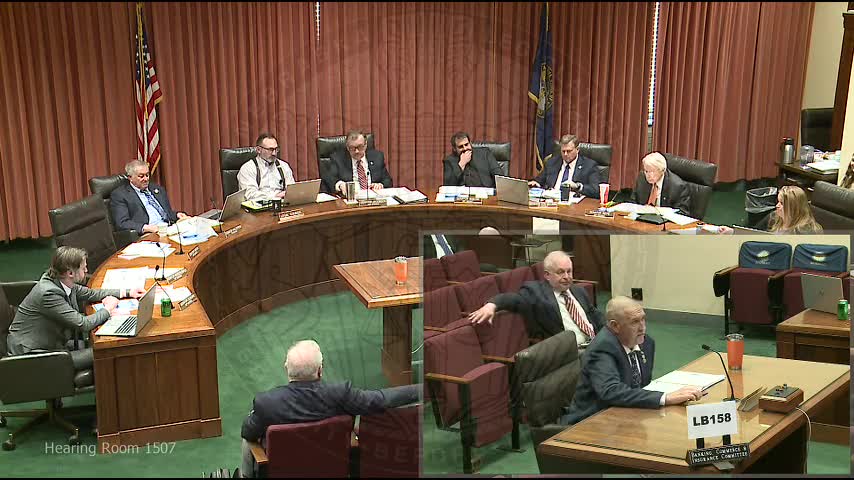
Committee hears LB158 to stop copay accumulators for patients with high‑cost drugs
Summary
Sen. Dave Wardekemper introduced LB158 to require insurers to count third‑party copay assistance toward patients' deductibles and out‑of‑pocket limits; families and bleeding‑disorder advocates urged passage, while insurers warned of higher premiums and cited federal constraints.
Senator Dave Wardekamper presented LB158 at a public hearing of the Banking, Commerce and Insurance Committee, seeking to prohibit health insurers from excluding third‑party copay assistance from a patient’s deductible and out‑of‑pocket accumulation. Supporters said the practice of so‑called "accumulator adjustment" programs can leave patients with chronic or rare conditions unable to afford ongoing treatment.
Wardekamper told the committee the policy primarily affects Nebraskans with high‑cost chronic and rare diseases and described common consequences: skipped doses, abandoned treatment and increased emergency care. "This primarily affects Nebraskans with chronic and rare diseases who already face significant health challenges and high treatment costs," he said.
Family members and national patient advocates described personal and financial impacts. Dale Gibbs, a board member of the Nebraska chapter of the National Bleeding Disorders Foundation and father of a person with hemophilia, described medication costs that can ‘‘be as high as $300,000 a year’’ depending on severity and weight, and opposed using manufacturer assistance to count as anything other than patient help.
Multiple family witnesses described near‑term risks when copay assistance runs out and insurers then require full deductibles and out‑of‑pocket payments. Sam Clinkenbeard, father of a 13‑year‑old with severe hemophilia, said a single monthly copay for a specialty medication jumped to $10,000 overnight; he described a short‑term grant that covered the immediate need but warned of recurring exposure when assistance ended.
Supporters argued that counting third‑party assistance toward a patient’s deductible prevents double charging: they said insurers effectively collect the same dollars twice when manufacturers pay copay assistance and the plan later seeks the patient’s deductible as if that assistance had not existed.
Opponents included insurers and industry trade groups. Robert Bell of the Nebraska Insurance Federation warned that LB158 could eliminate plan design tools that help keep premiums lower and that coupon‑style assistance may encourage selection of higher‑priced brand drugs over generics in some cases. Jeremiah Blakey of Blue Cross and Blue Shield of Nebraska said federal programs prohibit manufacturer coupons in Medicare and raised concerns about shifting costs to premiums.
Committee members asked technical questions about alternatives such as direct payments from family members, the interaction of manufacturer assistance with formulary design and the potential federal policy overlap. Wardekamper and witnesses emphasized that many of the drugs affected have no generic equivalents and that adherence saves downstream costs from hospitalizations and disease progression.
No committee action or vote was recorded at the hearing. Several senators indicated an interest in further technical review and in fiscal impact analysis before advancing legislation.
Ending: LB158 frames a common state‑level response to accumulator programs that 21 other states have adopted; the committee hearing surfaced strong personal testimony from affected families as well as insurer warnings about cost and federal constraints.