Get Full Government Meeting Transcripts, Videos, & Alerts Forever!
Get email alerts on the Pharmacy Benefit Managers topic
No spam. Unsubscribe anytime.
Nebraska hearing spotlights PBM reforms as pharmacists warn of rural closures
Summary
Sen. Tony Sorrentino detailed LB198 to regulate pharmacy benefit managers, prompting widespread testimony from Nebraska pharmacists who linked PBM practices to pharmacy closures and access problems; PBM trade groups warned of higher costs and legal complexities.
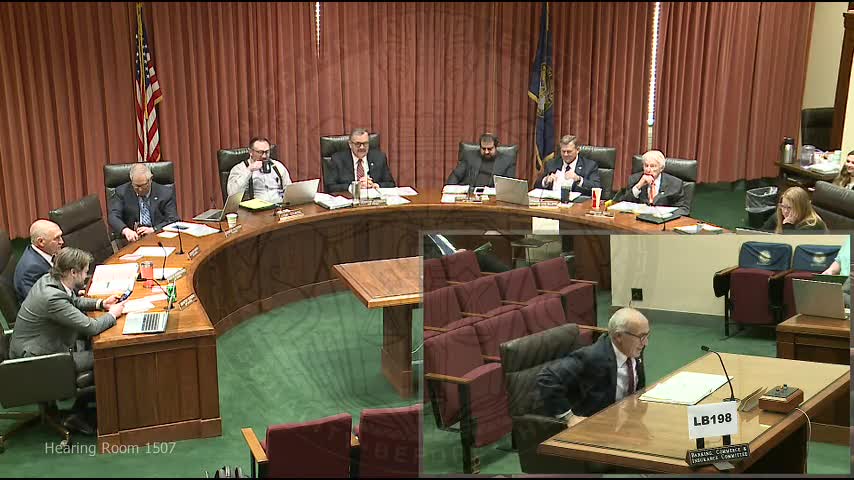
At a public hearing of the Nebraska Legislature’s Banking, Commerce and Insurance Committee, Senator Tony Sorrentino introduced LB198, a bill that would add new regulations on pharmacy benefit managers, or PBMs. Sorrentino said the bill targets practices such as spread pricing, patient steering, and below-cost reimbursements.
Supporters — led by independent pharmacists and the Nebraska Pharmacists Association — told the committee that current PBM practices are pushing community pharmacies to close and diminishing local access to medications and basic health services. Opponents, including PBM trade groups and several insurers, said the bill could raise costs, would be difficult to implement, and could expose the state and plans to litigation.
Why this matters: PBMs administer pharmacy benefits for many public and private plans and act as gatekeepers to drug reimbursement and networks. Proponents said lack of transparency and some PBM contracting practices have left community pharmacies financially unsustainable, especially in rural Nebraska; opponents said changes should be coordinated with insurers and other supply‑chain actors to avoid unintended cost shifts.
Senator Tony Sorrentino, the bill’s introducer, framed LB198 around three goals. "The main intent of LB 198 is to do 3 things, provide transparency and direct pricing, protect community pharmacies, and prohibit spread pricing," he told the committee. He described spread pricing as a practice in which a PBM keeps a portion of the difference between what a health plan pays the PBM and what the PBM reimburses the pharmacy.
Pharmacists and pharmacy owners gave examples they said show the effect of current PBM practices on Nebraska communities. David Randolph, president‑elect of the Nebraska Pharmacists Association and owner of Dave’s Pharmacies in Hemingford and Alliance, told the committee: "We are continuing to see a national crisis unfold in the closing of community pharmacies... According to the Nebraska Board of Pharmacies, since 02/2020, we have seen 69 community pharmacies close, that's around 14%."
Owner testimony emphasized rural impact and the role pharmacies play beyond dispensing drugs, such as triage and vaccinations. Geoff Kilborn, owner of Elmwood Pharmacy in Omaha, said he fills many prescriptions reimbursed below acquisition cost and asked the committee for "guardrails on PBMs." Pharmacy chain and hospital representatives (including Hy‑Vee and Nebraska Medicine) supported the bill as a way to preserve access and improve transparency.
PBM and insurer opponents urged caution. Bill Head of PCMA, the PBM trade association, said spread pricing is a contractual choice of plans and employers and that LB198’s requirement that pharmacies never be paid below acquisition cost would be difficult to implement. He asked how a state could determine every pharmacy’s true acquisition cost and warned against guaranteeing a profit on every dispensed item.
Representatives from Prime Therapeutics and Blue Cross and Blue Shield of Nebraska also testified in opposition, arguing the bill could increase costs for consumers by reducing incentives to obtain lower wholesale prices and by shifting costs to premiums. Jeremiah Blakey of Blue Cross said rising drug prices — including a median list price for new drugs cited by national reports — lie at the heart of affordability challenges.
Committee discussion ranged across constitutional questions, ERISA preemption, and precedent. Sorrentino pointed the committee to the U.S. Supreme Court’s Rutledge v. PCMA decision and to Nebraska’s existing PBM law, which he said LB767 (2022) authorized the Department of Insurance to regulate PBMs. He told senators that states can address PBM practices without necessarily running afoul of ERISA, citing Rutledge as persuasive guidance.
No bill vote or committee action occurred at the hearing. The record includes dozens of in‑person proponents and written proponent submissions; witnesses said few or no opponents had submitted written materials.
What’s next: Committee members asked technical and fiscal questions and signaled more hearings and stakeholder negotiation may follow. Supporters urged rapid action to prevent further pharmacy closures; opponents pressed for additional study and for negotiations that include wholesalers and other supply‑chain entities.
Ending: The hearing brought a wide range of practical examples and policy trade‑offs to the committee’s attention — from community pharmacies reporting routine reimbursements under pharmacy acquisition cost to trade groups warning of broader market effects — and left the committee with technical, legal and fiscal issues to resolve before any bill could advance.