Get Full Government Meeting Transcripts, Videos, & Alerts Forever!
Get email alerts on the Rail Crew Insurance Uim topic
No spam. Unsubscribe anytime.
Lawmakers consider raising uninsured/underinsured minimums for rail‑crew carriers after PSC docket recommendation
Summary
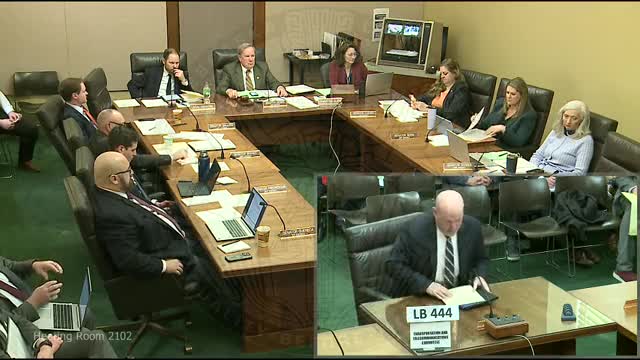
Senators heard proponents push LB444 to raise uninsured/underinsured (UIM) minimums for rail‑crew carriers toward $1 million per person, citing a 2020 PSC docket recommendation; rail contractors, insurers and railroads warned of practical and legal problems, including market availability of policies and overlapping federal frameworks (FELA).
Senator George Dungan introduced LB444 to raise the statutory minimums for uninsured and underinsured motorist coverage for certain intrastate carriers that transport railroad crews.
"This has not been addressed since 1996," Dungan said, noting current statutory minimums date to that year and explaining the bill was brought at the request of the SMART Transportation Division union. The sponsor said the intent is to target contractors that transport rail crews; he offered to clarify the bill by amendment if the committee desired.
Andrew Faust, Nebraska legislative director for SMART TD, described a 2020 Public Service Commission public investigation that recommended $1,000,000 minimums for rail‑crew carriers. Faust told senators that Attorney General opinion limited the PSC’s authority to set higher minimums and that a legislative fix is needed if lawmakers want higher UIM floors.
Rail‑crew contractor RailCrew Express opposed LB444. Sandy Walker, a RailCrew Express representative, said her company already carries $5 million in auto liability and that insurers told the company they could not obtain $1,000,000 UIM per occupant coverage. Walker warned that requiring the higher UIM limits ‘‘would be an enormous cost to our business’’ and could prompt companies to stop operating in Nebraska.
Jeff Davis, counsel for BNSF Railway, argued to the committee there is no gap in coverage for railroad employees riding in crew vans. He said injured rail employees receive off‑track benefits and can pursue Federal Employers Liability Act claims. Davis noted the PSC already required $100,000 per person and $300,000 aggregate UIM coverage and cautioned that LB444 could create a windfall for claimants rather than fill a documented problem.
Several senators probed whether $1,000,000 is practical or necessary and whether insurance markets offer the requested product. RailCrew and the American Property Casualty Insurance Association testified they had not found underinsured/uninsured policies available at the proposed per‑occupant levels and warned of market distortion and higher costs that would be passed to railroads or contractors.
Public Service Commissioner Christian Merch testified neutrally that the PSC currently requires $100,000/$300,000 UIM limits and that increasing minimums could impose significant burdens on carriers; he also noted it would leave TNCs and other parts of the market at lower requirements and create marketplace disparity.
Supporters including the union and rail labor advocates said the change would better protect rail employees if struck by an uninsured motorist; opponents urged caution and asked for more evidence about whether the proposed level is available and needed. The committee received proponent and opponent letters and closed the hearing without a recorded vote.