Get Full Government Meeting Transcripts, Videos, & Alerts Forever!
Get email alerts on the Released Time Religious Instruction topic
No spam. Unsubscribe anytime.
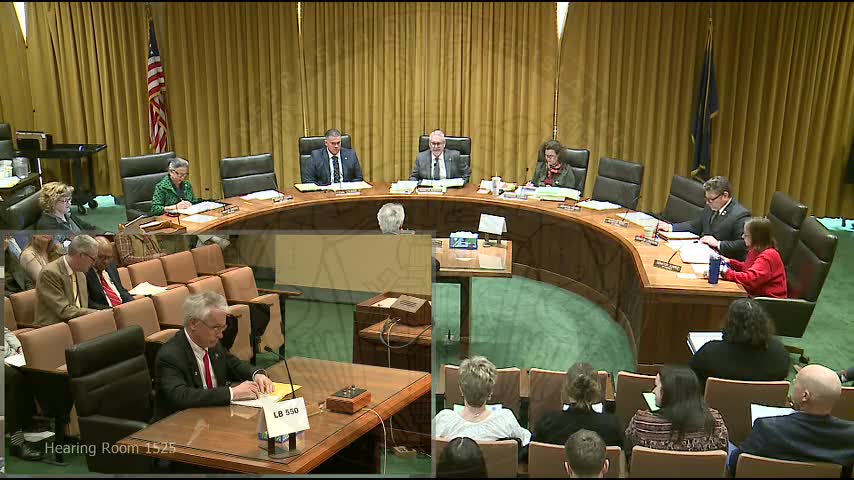
Senate committee hears hours of testimony on bill to allow weekly off‑campus religious instruction for public school students
Summary
Supporters told the Education Committee LB550 would let parents send students to voluntary, off‑campus religious instruction one class period per week with parental consent and no school funds; opponents raised concerns about academic disruption, promotion and equity and whether districts or the courts should set boundaries.
Senator Lauren Lippincott, sponsor of Legislative Bill 550, told the Education Committee she introduced the bill to give parents a formal option for weekly, released‑time religious instruction (RTRI) during the school day and to require school districts to adopt policies allowing it.
Lippincott said the program would be off campus, require written parental consent, use no school district funds and be limited to one class period per week. “This bill would be at no cost, 0, to the school district,” she told the committee, and she cited a 1952 U.S. Supreme Court decision as the controlling precedent for constitutionality.
Proponents — including representatives of Lifewise Academy, the Nebraska Family Alliance, faith‑based youth groups and public school parents and officials — said RTRI programs already operate in other states, that some Nebraska families had asked for access, and that programs had shown improved attendance and reduced disciplinary incidents in outside studies presented to the committee.
Jesse Bowinkle of Lifewise Academy said Lifewise operates programs in multiple states and that more than 70 school districts in Nebraska have contacted the organization about starting a local offering. “Each week over 40,000 public school students are attending Lifewise classes,” Bowinkle testified. Lifewise told the committee it charges a small per‑student fee to cover curriculum and insurance but does not bill districts or parents for participation.
Other proponents described personal and community concerns they said RTRI would address. Karen Dittbrenner, a Beatrice educator and former participant in release‑time instruction, cited statewide youth mental‑health statistics and referenced research summarizing a correlation between religious participation and lower rates of depression and substance use.
Opponents — including some school officials and the Nebraska Association of School Boards (NASB) representative — urged caution, saying the bill delegates too much of the decision about instructional time to the state and could undermine local control. Piyush Srivastav, representing Lincoln Public Schools and the Nebraska Association of School Boards, told the committee that LPS supports parental choice but opposes a statewide mandate that would constrain local decisions about instructional time and could lead to inequality or peer‑pressure effects.
Doris Martin, a Beatrice pastor and retired educator who testified in opposition, told the committee that removing students from class on a regular weekly basis can create extra work for teachers and may disadvantage students who remain in school. Martin said schools need stable, predictable time for instruction and that some families already provide religious education outside school hours.
Committee members pressed for details on how programs would be scheduled so students would not miss core instruction, how districts would record attendance and liability, and whether districts could award academic credit. Lippincott repeatedly emphasized the bill’s limits: off‑campus instruction, parental consent, and no district funding. An attorney testifying for the Nebraska Family Alliance said the bill’s language tracked the parameters the U.S. Supreme Court approved in Zorach v. Clauson (1952) and that awarding credit could be constitutionally permissible if districts used neutral, secular evaluation criteria.
Senators asked proponents for evidence. Lifewise representatives said third‑party studies and internal evaluations showed attendance improvements and behavioral decreases after program adoption in other states; they offered to provide the committee a copy of the study cited. Several Nebraska public‑school parents and local officials — including Beatrice board members and local pastors — testified that their communities had surveyed families and reported local interest.
The committee heard two dozen proponents and multiple opponents over roughly three hours of testimony, with several public‑school board members, educators and faith‑based organizatons urging different approaches. No formal action or vote on LB550 was recorded during the hearing.
The committee’s closing discussion focused on balancing parental choice against local control of instructional time. Senator Lippincott said she would continue to work with committee members to clarify operational details and to provide the studies supporters cited.