Get Full Government Meeting Transcripts, Videos, & Alerts Forever!
Get email alerts on the Release Time Policies topic
No spam. Unsubscribe anytime.
Committee advances substitute for release-time policy requiring background checks and adding liability protections
Summary
The House Committee on Education advanced a substitute for House Bill 133 (LC492330) that lets local education agencies choose whether to adopt release‑time policies, requires criminal background checks for providers of release‑time courses, and adds a liability shield for local officials in specified transit circumstances.
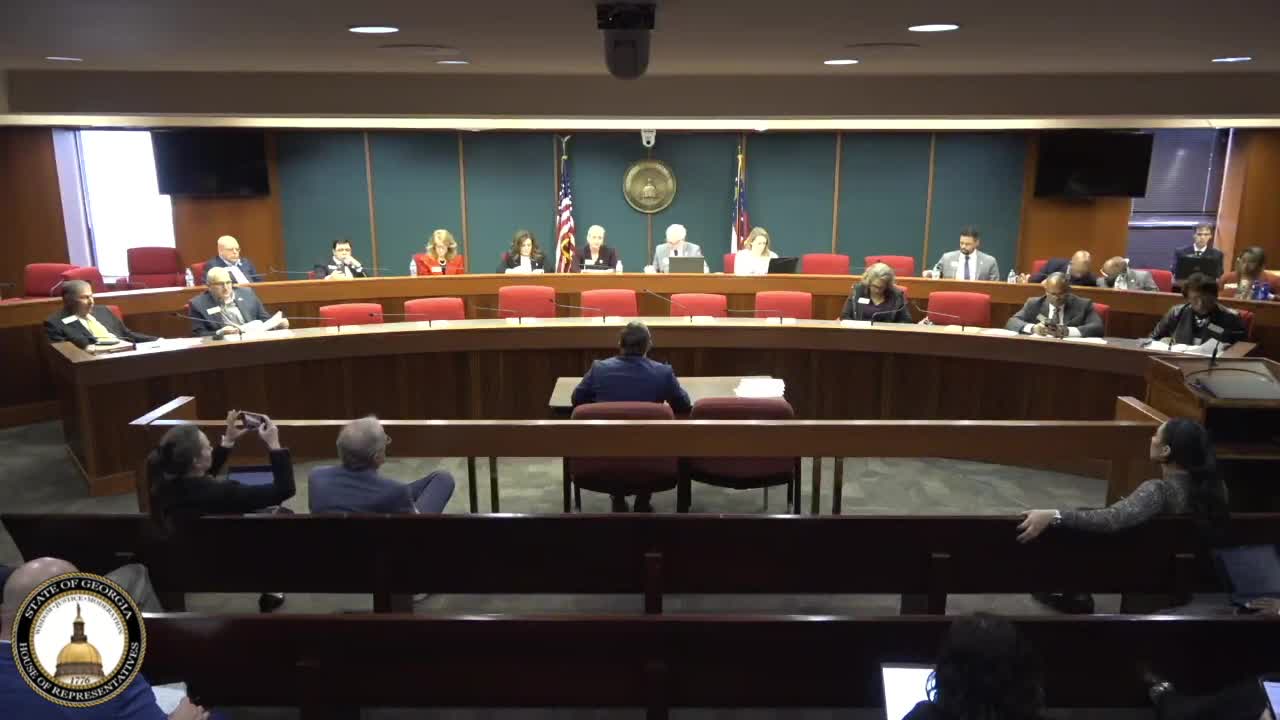
The Georgia House Committee on Education took HB 133 (substitute LC492330) off the table, considered changes introduced in a substitute and voted to report the measure favorably. The substitute alters earlier language to make adoption of release-time policies permissive and adds new safeguards for local school systems.
What changed in the substitute The sponsor explained three main edits in the substitute bill: the word “shall” in an earlier provision was changed to “may” to make local adoption permissive rather than mandatory; a requirement was added that any local education agency policy adopted under the code include criminal background checks for individuals providing a release‑time course; and the substitute added a provision that a local education agency or its officials shall not be civilly liable for injuries alleged to arise from a student’s transit to or from a release‑time course when private transportation is used under a district policy.
Questions and committee response Committee members thanked the sponsor for making the “may” change and for adding background checks and liability protections. One member asked that public participation be allowed; committee leadership said this bill had been through subcommittee and public participation would be limited at the full committee. Legislative counsel noted that the changes addressed concerns raised in prior hearings and confirmed the substitute text reflected those adjustments.
Committee action A motion to report the substitute favorably (“do pass”) was made and seconded. The committee approved the substitute by voice vote; the transcript records the vote as recorded by the presiding chair without a roll-call tally.
Notes and next steps Committee members said they appreciated the changes and moved the bill forward. The transcript does not include the names of the mover and seconder for the final motion, nor a roll-call tally. The substitute remains subject to any further amendments later in the legislative process.