Get Full Government Meeting Transcripts, Videos, & Alerts Forever!
Get email alerts on the Long Term Care Testing Repeal topic
No spam. Unsubscribe anytime.
Committee debate over bill to remove COVID testing requirement for long-term care centers grows heated
Summary
Lawmakers debated House Bill 645, which would repeal a pandemic-era legal requirement that long-term care facilities test new residents and new hires for COVID-19. Supporters called the measure a "return to normalcy"; opponents raised concerns about risks to elderly residents and staffing realities.
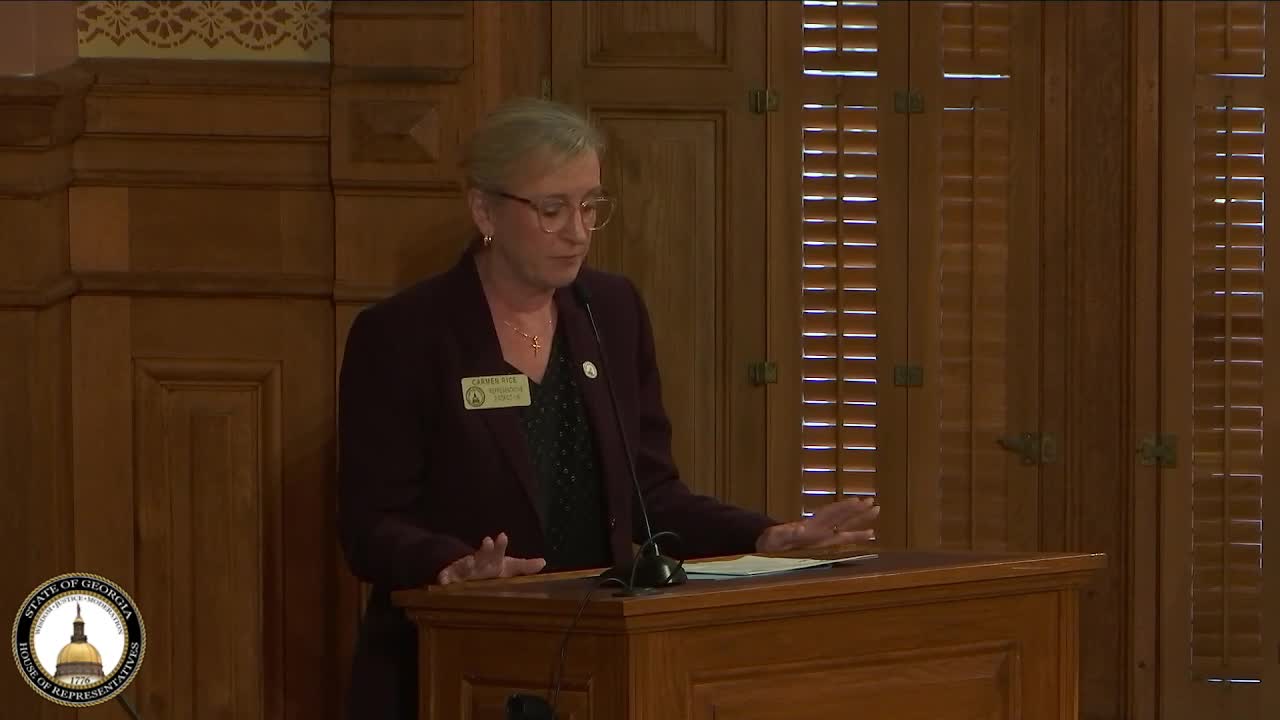
A state representative presented House Bill 645 to a Georgia House committee, saying the measure would repeal a pandemic-era requirement that long-term care facilities test new move-ins and new hires for COVID-19.
The sponsor said the change would be a "return to normalcy" and that state regulators and providers already rely on physician evaluations and longstanding infection-control policies, including tuberculosis screening. "This is just a simple return to normalcy," the bill's sponsor said when presenting the measure.
Why it matters: The bill targets a testing requirement that was added during the height of the COVID-19 pandemic. Supporters told the committee the requirement is not currently enforced and that removing the statutory testing mandate would let providers focus on broader infection‑control work and ease staffing shortages. Opponents argued the elderly are among the state's most vulnerable residents and urged caution.
Committee discussion centered on patient safety, staffing and what other screening requirements would remain. Representative Miller asked whether the sponsor agreed that "the elderly are some of the most susceptible of our constituents to COVID and other viruses," a point used to press the sponsor on how the bill would protect residents. The sponsor replied that physician evaluations remain in place and that tuberculosis testing and other checks have long been required for new residents. "If they're symptomatic, of course, the physician will catch that on the physician evaluation report, and it'll be handled that way," the sponsor said.
Proponents, including one committee member identified as Pro Tem, noted the original testing requirement predated vaccines. "This was put in place also before we had a vaccine," the Pro Tem said, arguing it was appropriate to reconsider a temporary pandemic-era rule. Chairman Cooper and other supporters said the Department of Community Health and providers are not enforcing the current testing law and that the change would allow front-line managers to prioritize care, not paperwork.
Opponents raised implementation and risk questions: multiple members asked whether other screening remains in place and whether the change could reduce protections for residents, given that older adults remain vulnerable to respiratory disease. The sponsor repeatedly characterized the bill as a narrow cleanup of pandemic-era law rather than a broad rollback of infection-control authority.
No formal vote on House Bill 645 was recorded in the transcript. The bill was presented and discussed; committee members asked for clarifying information and made remarks for the record.
Clarifying details: The sponsor described Section 1 of the one-page bill as "the meat" and said the statute being repealed required testing of new admissions and new hires during the pandemic. The sponsor said physicians still complete an evaluation report for new residents and noted an existing tuberculosis screening requirement. Committee members said the Department of Community Health was "not enforcing" the testing requirement in practice. The transcript did not provide statutory citations for the current testing requirement or the precise statutory language to be repealed.
Next steps: The bill was presented and discussed in committee; the transcript does not show a committee vote or referral outcome.