Get Full Government Meeting Transcripts, Videos, & Alerts Forever!
Get email alerts on the Facilities And Enrollment topic
No spam. Unsubscribe anytime.
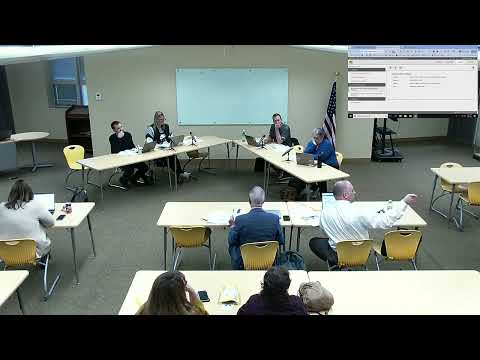
Buckeye Valley board discusses enrollment surge, land acquisition and 2030 levy timeline
Summary
Buckeye Valley Board of Education trustees and district staff reviewed updated enrollment projections, facility options and a recommended timetable that would place a bond/levy on the ballot no later than 2030 to fund a new high school and other capital needs.
Buckeye Valley Board of Education members spent more than an hour Thursday reviewing enrollment history, recent development indicators and facility options, and agreed the district needs to plan now for land acquisition and a likely bond measure that should be ready by 2030.
Board members and district staff said updated enrollment figures and multiple pending housing projects mean the district is trending toward the higher end of prior projections. Board member Donald and district staff identified a planning scenario that would require a new high school plus at least one additional elementary (and intermediate) building if high-growth projections materialize.
Why it matters: district leaders said acting early on land acquisition and staged construction would be less expensive than scrambling later and would give the district flexibility to avoid short-term fixes such as trailers. Several speakers stressed that a ballot campaign will require multi-year community engagement and a robust communications strategy to reach voters across Buckeye Valley’s large geographic area.
Most important details - Enrollment trajectory and projections: Trustees reviewed historic enrollment back to 2012 and newer projections produced by outside consultants (documented as the student buildout analysis and Walker/Walnut strategies in board materials). While the district’s total student count has fluctuated since 2012, current counts and recent unplanned student inflows (for example, families transferring from St. Mary’s) place the district near the consultant-recommended projection and trending toward the high scenario. - Near-, mid- and long-term facility strategy: Staff recommended a phased approach. Short term: add classroom capacity (a proposed Phase 1 middle-school addition configured for roughly 16 classrooms, ~40,000 square feet, and multipurpose/commons space). Mid term (5–10 years): prepare for a new high school and site acquisition; the recommended ballot timetable would allow a new high school to open around the 2033–34 school year if community support and approvals follow the suggested schedule. Long term: build to a district capacity aligned with a 4,700-student buildout (three elementaries, one intermediate, existing middle, one high school) if growth follows the highest projection. - Cost and phasing: Preliminary hard-cost estimates discussed ranged around $16M–$19M for the 16-classroom addition (the higher number includes design and construction management fees). Trustees discussed phasing options and called out that rates and construction costs will influence timing and sizing. - Bonds, levies and funding constraints: Staff noted the district’s current ability to self-fund new construction is limited and that at least one bond/levy will likely be necessary. Trustees set an internal goal to have a ballot measure plan and campaign structure in place by 2030 so construction could be ready for the 2033–34 school year if growth continues. District finance staff warned that state funding formula changes or property-tax law changes could materially affect revenues. - Land acquisition and site planning: Multiple trustees urged starting land acquisition now. Staff said potential parcels exist near central campus and elsewhere in the district; the board agreed to continue executive-session conversations about specific parcels and revisit options at the March regular meeting.
Additional considerations and operations - Grade-band flexibility: Trustees discussed intermediate-school models (e.g., 4–5 or 4–6) to relieve pressure on middle and elementary grade bands and to provide scheduling and transportation flexibility. - Extracurricular and community facilities: Trustees noted that a larger high school project would likely include expanded auditorium, gym, and multiple athletic fields to meet anticipated program needs and league requirements. - Communications and community engagement: Trustees emphasized an ongoing, multi-year campaign to inform residents, including improved district web/social channels and community outreach to address misinformation and convert “no” voters. Board members volunteered to help form or lead citizens’ engagement teams.
Votes at a glance - Motion to approve the meeting agenda — recorded as approved (motion, second; roll call affirmations recorded in the transcript). Details of mover/second not specified in the meeting transcript. - Motion to adjourn — recorded as approved unanimously (mover/second not specified in transcript).
Next steps: Staff will circulate the architect/CMR materials and a timeline; trustees asked for an updated enrollment projection to be completed prior to major design milestones. The board also scheduled further executive-session discussion on land acquisition at the next meeting.
Ending: Trustees agreed to review enrollment updates quarterly and to begin a multi-year outreach and planning cadence so the district can present a coherent package to voters if growth warrants a bond.