Get Full Government Meeting Transcripts, Videos, & Alerts Forever!
Get email alerts on the Spp Prudency And Cost Allocation topic
No spam. Unsubscribe anytime.
Public Counsel warns SPP approvals lack front-end prudency checks; urges broader discussion of who pays
Summary
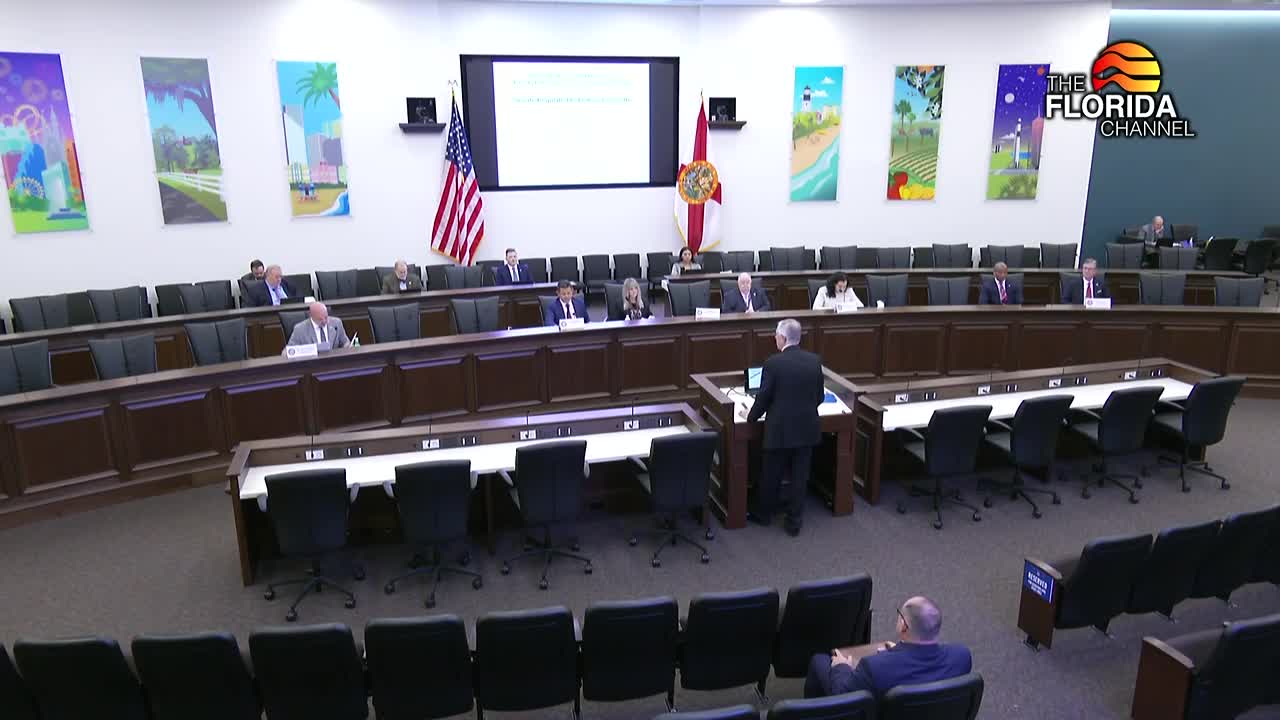
Public Counsel and PSC staff told the Senate Regulated Industries Committee that storm protection plans are approved under a public-interest standard, while prudency is determined later during cost-recovery proceedings, constraining front-end review of large infrastructure spending.
Public Counsel and Florida Public Service Commission staff told the Senate Regulated Industries Committee that the state’s storm protection plan (SPP) framework has two distinct stages: plan approval under a public-interest standard and later cost-recovery proceedings where the commission evaluates the prudency of actual expenditures.
Mark Futrell, deputy executive director for technical matters at the Florida Public Service Commission, outlined the statutory background dating to post-Hurricane Andrew changes and later 2005 financing rules. Futrell described the SPP process as a rolling three-year review: the commission reviews actual restoration costs from the prior year, partial current-year costs and projected next-year costs together to set recovery rates. He summarized the prudency concept and its timing: "The key concept with prudency is that once it's determined in this clause, it's not subject to disallowance, except for fraud, perjury, or intentional withholding of key information," Futrell said, explaining that prudency is judged after spending occurs.
Walt Treueweiler, Public Counsel for the state of Florida, told the committee that while SPPs and utility hardening have reduced outage times and restoration costs, the existing approval and recovery process may not give the commission adequate authority to weigh large, long-term infrastructure trade-offs. Treueweiler said SPPs and cost-recovery mechanisms reduce costs when they work but leave IOU customers carrying a disproportionate share of near-term spending: "These costs already fall heavily upon IOU customers primarily and... we would greatly appreciate any form of relief for Florida IOU customers who have been bearing the brunt of storm after storm," he said.
Treueweiler recounted that his office appealed aspects of the SPP regime to the Florida Supreme Court; the court concluded that the statute did not create the prudency standard Public Counsel sought at the plan-approval stage. He also told senators that independent audits of the IOUs’ storm-cost filings had improved reporting and excluded inappropriate costs, but he urged policymakers to consider whether ratepayers alone should shoulder future multi‑billion-dollar resilience investments if intense, frequent storms are the new normal.
Senators pressed both witnesses on alternatives. Senator Randolph Fine asked whether Public Counsel had shared these concerns earlier with bill sponsors; Treueweiler said his office had enforced the terms of enacted statutes and brought litigation because of how the commission applied the law. Senator Jason Pizzo asked whether Public Counsel would present draft statutory changes or recommendations; Treueweiler said his office would be willing to provide recommendations and engage with the legislature.
Why it matters: Committee members heard that while SPP programs are reducing outage times, the statutory design delegates prudency review to retrospective recovery proceedings. That sequencing limits the commission's ability at plan approval to weigh long-run cost‑benefit trade-offs across very large infrastructure portfolios. Public Counsel urged consideration of broader cost-sharing measures for state-level economic benefits from rapid restoration.
Next steps: Public Counsel volunteered to provide draft recommendations and work with legislators; PSC staff described the current rolling, three-year cost-recovery schedule and said the commission applies the statutory factors during SPP review and the separate prudency review during cost-recovery proceedings.