Get Full Government Meeting Transcripts, Videos, & Alerts Forever!
Get email alerts on the School Transportation Bus Capacity topic
No spam. Unsubscribe anytime.
Board debates 90- vs. 78-passenger buses as staff present cost and routing trade-offs
Summary
Transportation staff presented seat-capacity, price and route-efficiency figures for 90-, 84- and 78-passenger school buses; trustees discussed contractor choices, used-bus purchases and risks of losing capacity on busy routes.
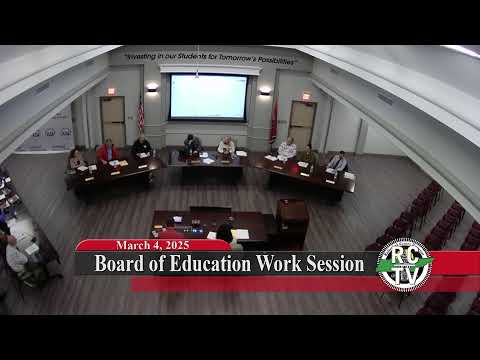
Rutherford County Schools transportation staff reviewed bus sizes, seat rates and routing trade-offs at the March 6 work session as trustees questioned whether contractors should be allowed to operate smaller, lower-cost buses on district routes.
Transportation staff provided comparative figures for common bus sizes: the transcript lists a 90-passenger bus priced at about $173,000 (no tax), an 84-passenger bus at about $171,641 and a 78-passenger “flat-nose” bus at about $169,864. Staff said annual operating incidentals for a 90-passenger bus run roughly $7,200 per school year (10 months) for routine maintenance, and that contractors are paid a route rate that, for a typical 60-mile route, appears in the figures discussed as about $71,700 (transcript figures provided by staff during the session).
Staff cautioned that allowing contractors to substitute smaller-capacity buses could create capacity shortfalls on routes that combine elementary, middle and high-school runs. A transportation official said many county routes are at or near capacity, especially on runs serving more rural areas; the official warned that swapping to lower-capacity buses could trigger the need to add routes or swap vehicles later in the year if enrollment or subdivisions grow.
Trustees and staff discussed the used-bus market as one reason contractors might prefer 78-passenger buses: used buses can be cheaper up front but may have fewer remaining service years and higher maintenance demands. Staff said the district has contract enforcement tools if contractors cannot keep buses running and suggested any board decision should make duties and risk clear to bidders.
Board members asked staff to include fuel-index options in contracts and to consider both diesel and gasoline/propane/natural-gas options. Transportation staff said adding flexibility on fuel indexes is feasible and could benefit contractors and the district depending on future fuel-price trends.
No vote was taken. Staff said they would return more detailed seat-rate scenarios and contract language options for board consideration.