Get Full Government Meeting Transcripts, Videos, & Alerts Forever!
Get email alerts on the Elections Public Records Redaction topic
No spam. Unsubscribe anytime.
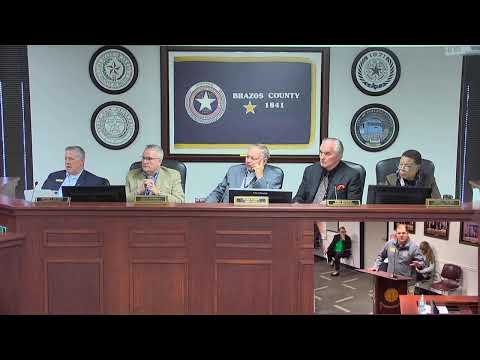
Brazos County approves redaction software after public records dispute over cast vote records
Summary
Commissioners approved a $12,875 amendment to add a ballot/CVR redaction module after a resident complained the county charged $750 to produce a cast vote record; officials said the software will let the county comply with attorney general and secretary of state redaction requirements and reduce costs.
Brazos County Commissioners Court voted to approve Amendment No. 1 to Contract 22-150 with VISTA SG, authorizing a $12,875 purchase of a redaction module designed to speed redactions of ballots and cast‑vote records (CVR).
The vote followed public comment from resident Karen Simpson, who said Brazos County quoted her $750 to produce a CVR from the Nov. 5, 2024, general election and argued the need for redaction showed countywide voting undermined ballot secrecy. “By admitting they need to redact the CVR before release, they are admitting that ballots cast are not secret,” Simpson told the court during the citizen input period.
Supporters of the software told the court the county is required by guidance from the Office of the Attorney General and the Texas Secretary of State to remove personally identifiable information before releasing some election records. A county official said the manual process used for large records sets was time consuming and expensive; the VISTA module would be limited to ballots and CVR reports and could substantially lower the per‑request cost. Court discussion included a brief motion to table until counsel verified constitutional issues; the motion was retracted and the amendment passed with no oppositions recorded.
Why it matters: The software aims to reduce staff time and public records costs for large, redaction‑intensive requests while ensuring compliance with state guidance. Speakers noted the county’s prior $750 estimate for a CVR copy was conservative and could have been higher without automation.
The court’s action: Commissioners moved and seconded approval; after discussion the motion carried with no recorded dissent. The amendment is intended only for ballots and CVR reports, not for general redaction tasks, according to county staff.
What was not decided: The court did not adopt any change to election procedures such as moving from countywide to precinct voting; Simpson’s constitutional claims were recorded in public comment but not acted on by the court.
Ending: County staff said the software would let future CVR requests be processed more efficiently and would better align fees with the actual staff time required to meet redaction requirements.