Get Full Government Meeting Transcripts, Videos, & Alerts Forever!
Get email alerts on the Judiciary Staffing Compensation topic
No spam. Unsubscribe anytime.
State Court Judge asks for second judge; presents proposal to tie local elected officials’ pay to judicial salary
Summary
State Court Judge Josh Thacker presented a resolution asking the Board to support adding a second state court judge and described a countywide compensation framework linking judges and elected officials to a chief-judge salary index. County attorney warned pending state legislation could preempt local action.
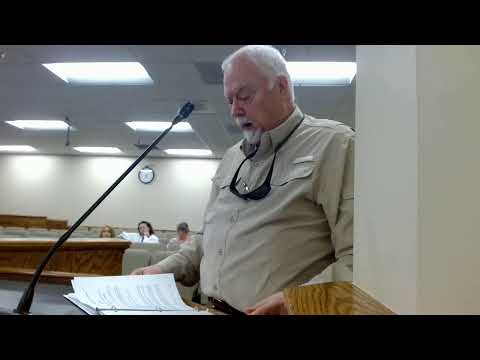
State Court Judge Josh Thacker asked the Spalding County Board of Commissioners on March 3 to approve a resolution adding a second state court judge and outlined a system to tie judicial and certain elected officials’ pay to a judicial salary index intended to keep local pay competitive.
Thacker said his office’s caseload has risen and the court’s “judge weight” score now approaches the level that justifies additional judges. “I'm asking you for 2 judges,” he told the board, adding that including camera-ticket dockets pushed the grade higher; he said the court even currently "qualif[ies] now for 3 judges" if all counts are included. He requested board support for adding the second judge and described a phased staffing plan: limited staff additions July 1 to start small calendars, with the new judge appointed by the governor (Thacker said he expected a January 1 appointment) and further team expansion after the appointment.
At the same meeting Thacker presented a separate compensation proposal that would link the pay of judges and specified elected officials to a moving benchmark based on the chief state court judge’s salary, with additional longevity increments (roughly a 1% increase per completed term up to five terms). Thacker said he modeled the approach on DeKalb County’s system and that it was designed so judicial and elected officials would not have to request ad hoc raises.
Legal caution from county counsel: County attorney Stephanie (last name not specified) told commissioners the proposal risks becoming impractical if the Georgia legislature passes House Bill 85, a pending reform of superior‑court judicial compensation that is likely to pass and would limit local control. "In light of House Bill 85, I would not be in a position to give you the legal advice that going the local legislative route would be a good thing," she said, adding the bill contains a suspension provision intended to let counties disentangle local pay linkages if necessary. Stephanie recommended revisiting existing local ordinances that already provide supplementals and pursuing a less risky schedule of reviews or targeted adjustments.
Board response: Commissioners voiced general sympathy for the goals of both requests — addressing the court backlog and making judicial/elected pay competitive — but expressed caution about timing and budget exposure. One commissioner noted the county will need to work with the county manager on the budget implications; no formal vote occurred in the work session. Thacker said he had discussed the proposals with fellow elected officials and that the package had broad local support among the county’s elected officers.
Ending: The board did not take action. Commissioners asked staff to continue budget discussions and invited further analysis of legal and fiscal implications before any formal local legislation or budget commitments.