Get Full Government Meeting Transcripts, Videos, & Alerts Forever!
Get email alerts on the Infrastructure Cip topic
No spam. Unsubscribe anytime.
Lewiston council reviews $500,000 canal repairs tied to FERC penstock requirement
Summary
Council heard details of a $500,000 request in the five-year capital improvement plan to plug and fill penstocks and repair Mill 5 intake structures to meet Federal Energy Regulatory Commission safety requirements; staff said major work should be completed within five years.
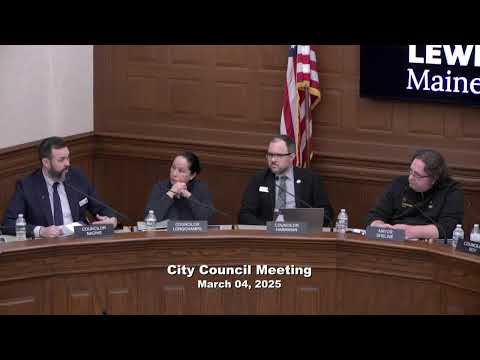
Lewiston city staff asked the City Council on March 4 to include $500,000 in this year’s Local Capital Improvement Program for structural and operational repairs to the city’s roughly 175‑year‑old canal system. Of that amount, $300,000 would go to “plug and fill” the upper A penstocks and $200,000 toward repairs at Mill 5, including intakes and caps.
The work responds to requirements from the Federal Energy Regulatory Commission. Dan Rodrigue, electrical superintendent, said FERC and other safety divisions visited the site and required the city to fill penstocks as a “safety condition.” "Before we could forfeit or close our agreement with FERC, we'd have to meet all the existing requirements, which was filling the penstocks," Rodrigue said.
Why it matters: the penstocks are large, century‑old pipes that connect canals to hydro generation facilities. Staff and councilors framed the work as both a safety priority and part of a larger multi‑year rehabilitation. "The projects we have outlined in those five years tackle the biggest issues," staff said, adding that the bulk of major repairs are expected to be completed within the five‑year plan but that some continuing projects will remain afterward.
Councilors asked about deadlines and operational impacts. Staff said the city has an extension to 2028 to meet the FERC requirement. Councilor Schutten asked whether capping penstocks would prevent future canal water use; staff clarified the penstocks route water through hydro facilities and that capped penstocks would redirect flow so some historic mills would no longer receive water through those conduits.
On jobs and local work, staff described the work for this line item as largely temporary city work such as grounds upkeep and summer help rather than a multi‑year private construction workforce. "That's...estimated time for city workers to mow the grass and keep general upkeep of the canals," staff said.
Councilors generally supported moving forward but pressed for clarity on long‑term needs, costs and the timeline for the multi‑year rehabilitation.